Crown thinning, crown raising, and crown reduction are three separate pruning techniques, and your tree almost never needs all three at once. Crown thinning removes small interior branches to let light and air through the canopy. Crown raising removes lower limbs to clear space underneath the tree. Crown reduction cuts back the outer branches to make the whole tree smaller. If you're staring up at an overgrown tree in your yard trying to decide which one applies to your situation, the short answer is this: the right technique depends entirely on where the problem is happening, not on how "overgrown" the tree looks in general.
Below, we'll break down each method in plain language, show you how to spot which one your tree actually needs, and explain why guessing wrong can do more harm than good.
What Is Crown Thinning?
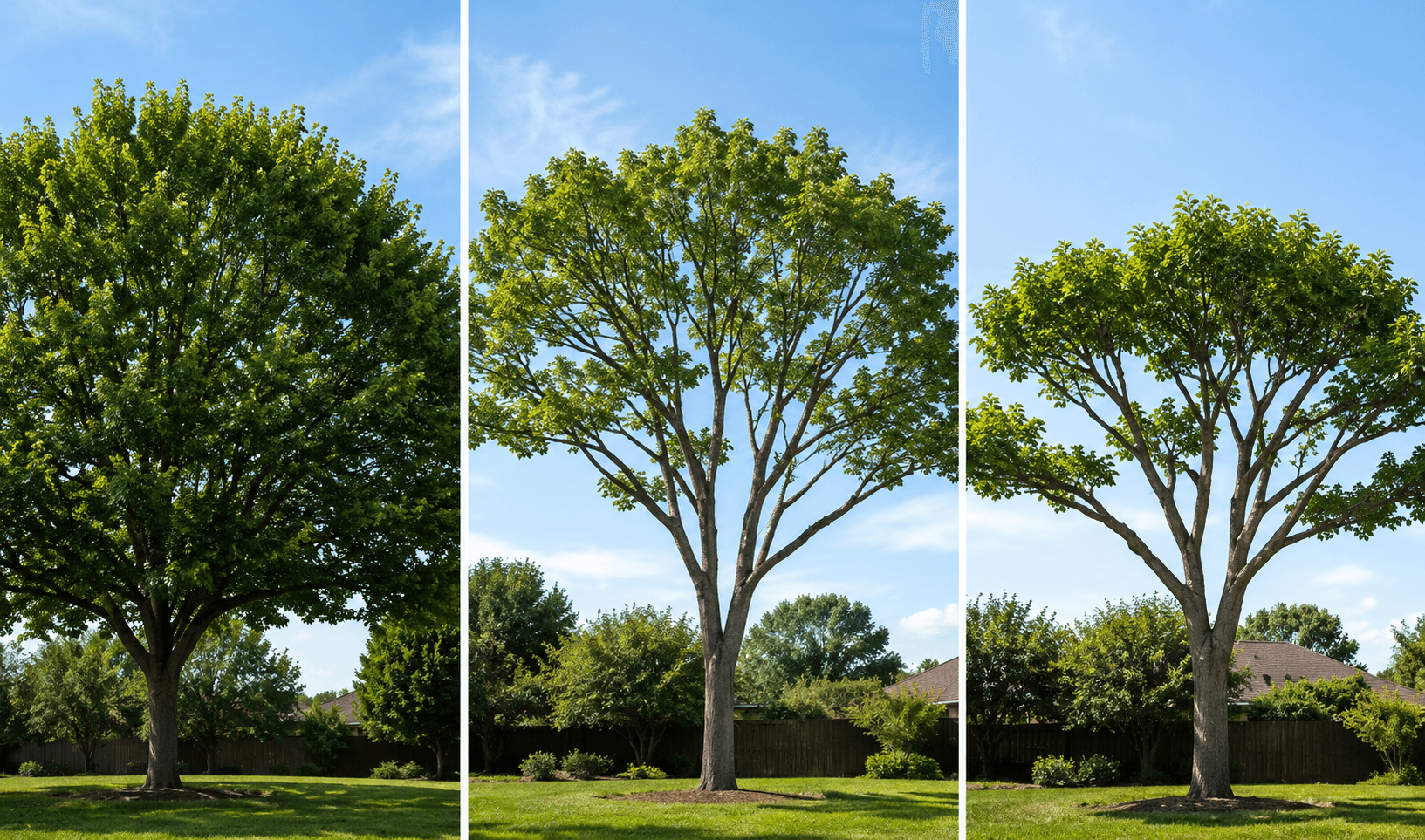
Crown thinning means selectively removing smaller, live branches from throughout the canopy, usually the crossing, rubbing, or crowded ones in the interior. The goal isn't to make the tree shorter or narrower. It's to open up the structure so sunlight and air can move through it.
You'd reach for crown thinning when:
- The canopy is so dense that grass or plants underneath the tree are struggling
- Wind resistance is a concern, since a thick canopy catches more wind than a properly thinned one
- You want to reduce the weight on specific limbs without changing the tree's overall shape
- Fungal or mildew issues keep showing up because the foliage stays damp too long
A properly thinned tree should still look full and natural from a distance. If a passerby can tell the tree was pruned, it was probably thinned too aggressively. Most certified arborists cap thinning at around 15 to 25 percent of the live canopy in a single visit, and going much beyond that in one season can shock the tree and trigger a flush of weak, fast growing water sprouts.
What Is Crown Raising?
Crown raising is the removal of lower branches to lift the bottom edge of the canopy higher off the ground. Think of it as creating headroom, not changing the tree's silhouette from the sides or top.
Crown raising is the answer when:
- Low limbs are blocking a driveway, walkway, or line of sight at an intersection
- Branches are scraping a roofline, fence, or parked vehicle
- You're trying to mow, park, or walk comfortably under the tree
- A municipality or utility requires a set clearance height above a street or sidewalk
The mistake most homeowners make with raising is removing too many lower limbs at once. A tree's lower branches help feed the trunk and keep it structurally balanced while it's young. As a general rule, live branches should still make up at least 60 percent of a tree's total height after raising. Take more than that in one go and you risk a long, bare trunk with a small, top heavy crown that's more prone to failure in storms.
What Is Crown Reduction?

Crown reduction is the only one of the three that actually makes the tree smaller in height and spread. It's done by cutting back individual branches to a lateral branch large enough to take over as the new leader, rather than just hacking limbs off at an arbitrary point.
Crown reduction fits when:
- The tree has outgrown its space and is now too close to a structure, power line, or another tree
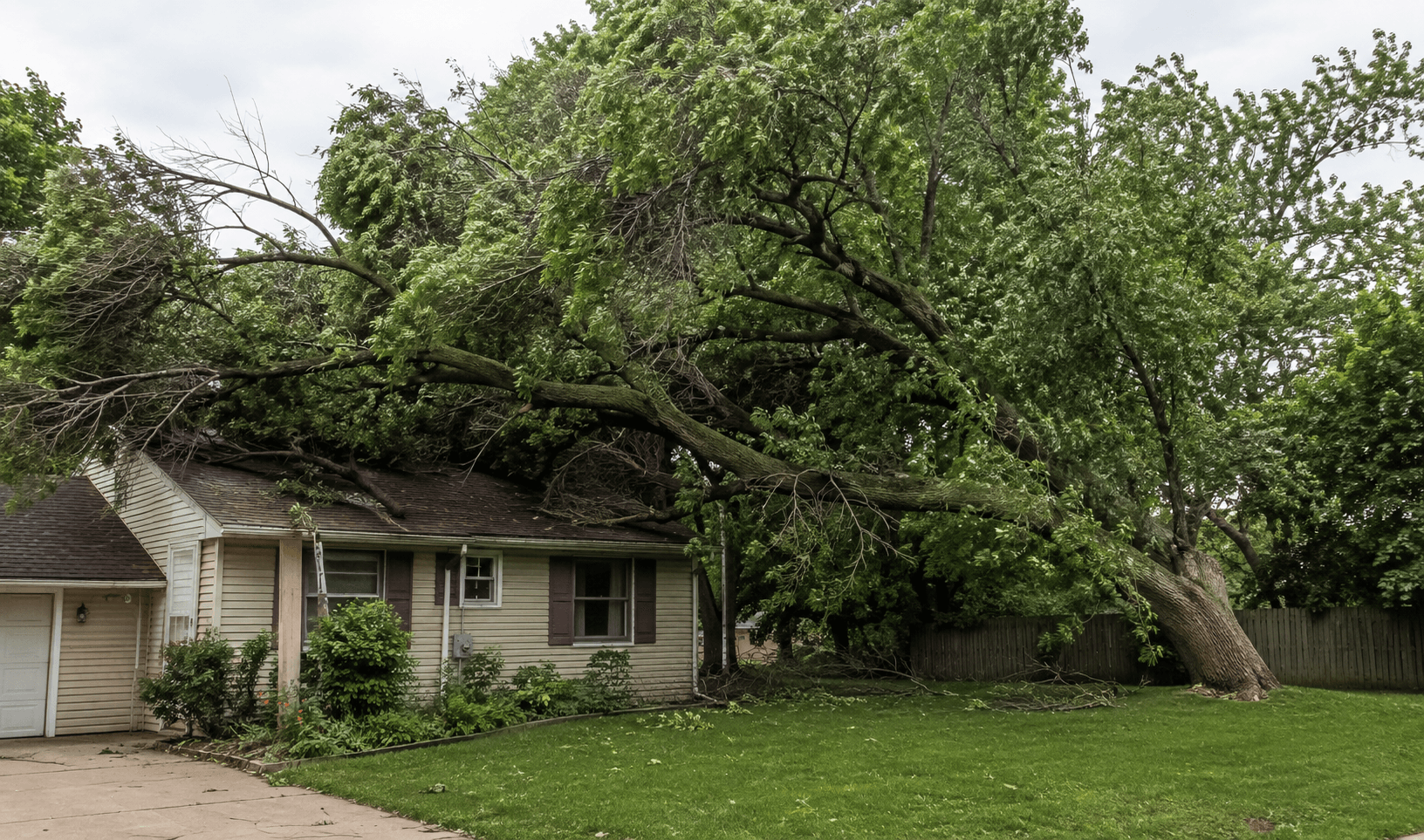
- A storm damaged the upper canopy and the remaining structure needs rebalancing
- An older tree is developing heavy, extended limbs that put stress on the trunk or major unions
- You need to reduce sail area ahead of high wind season without removing the tree entirely
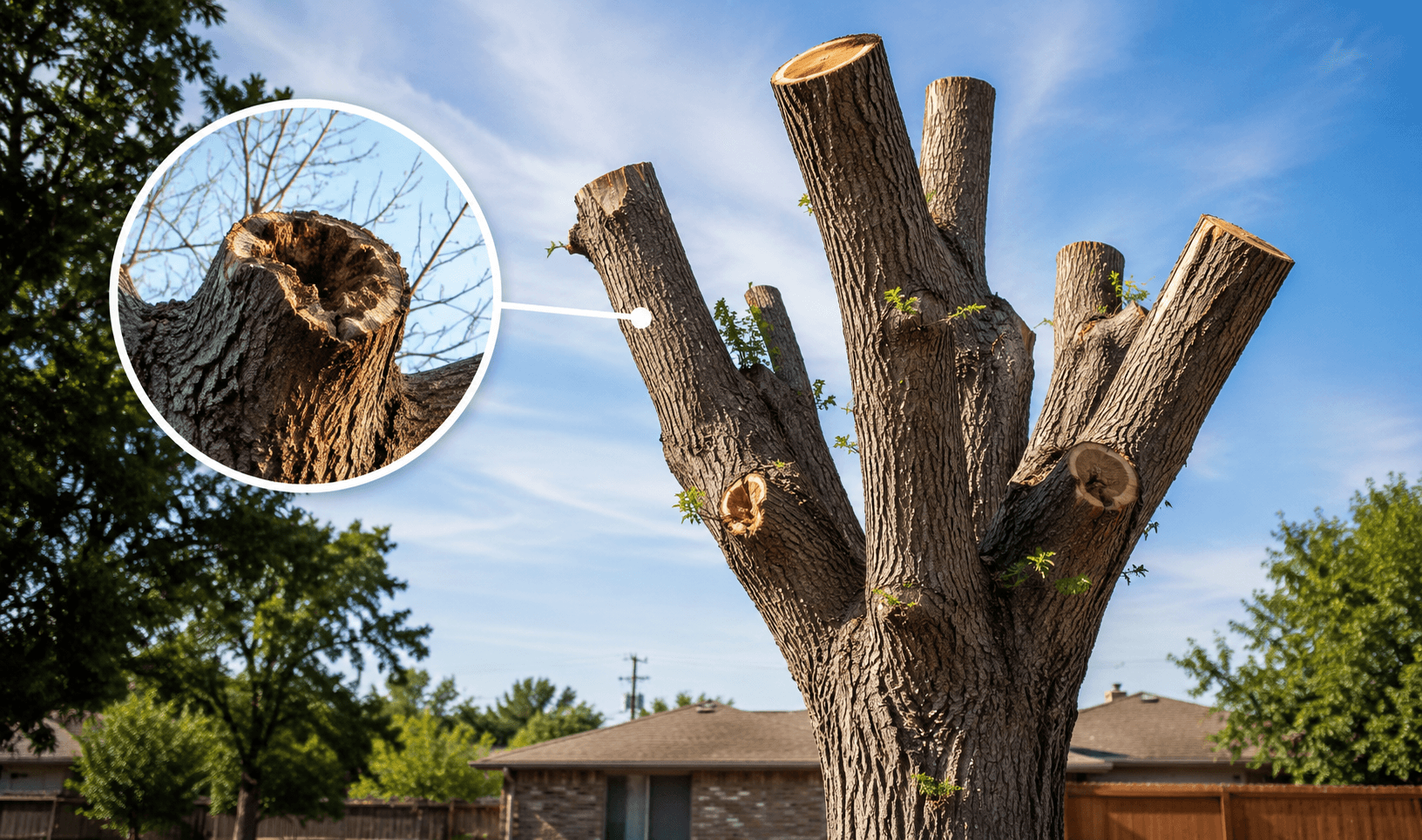
Reduction is also the technique most often confused with topping, and the two are not the same thing. Topping means cutting branches off at random points regardless of where a lateral limb exists, which leaves the tree with stubs that decay from the inside and regrow weak, poorly attached shoots. A proper reduction always cuts back to a lateral branch at least one third the diameter of the limb being removed, which lets the tree heal cleanly and keeps the new growth structurally sound.
How to Tell Which One Your Tree Actually Needs
Instead of starting with the technique, start with the symptom you're seeing.
If the problem is underneath the tree (a low branch hitting your roof, blocking your porch light, or scraping your truck), that's a clearance issue, and clearance issues call for crown raising.
If the problem is inside the tree (thick, shaded foliage, moss or mildew developing, poor grass growth below it, or a canopy that feels like it's catching too much wind), that's a density issue, and density issues call for crown thinning.
If the problem is the overall footprint of the tree (branches reaching a power line, hanging over the neighbor's fence, or the tree simply outgrowing the yard it's in), that's a size issue, and size issues call for crown reduction.
It's also common for a tree to need a light version of more than one technique in the same visit, especially on mature shade trees that haven't been pruned in several years. An arborist might raise the lower limbs for clearance, thin a few crowded interior branches for airflow, and reduce one overextended limb that's leaning toward a structure, all in a single, coordinated visit rather than three separate jobs.
Why This Matters More in West Texas Conditions

Trees around Amarillo deal with a specific combination of stressors: strong, sustained wind, low humidity, clay heavy soils, and wide temperature swings between seasons. That combination changes how these three techniques should be applied.
A tree with a dense, untinned canopy is catching far more wind resistance than the same tree properly opened up, which raises the risk of limb failure or a full uproot during a spring wind event. On the other hand, over thinning a tree in a drought prone area can expose bark that isn't used to direct sun, leading to sunscald on the south and west facing sides of the trunk. Species like Siberian elm and cottonwood, both common across the Texas Panhandle, are also fast growers with weaker wood, which means reduction cuts need to be placed carefully to avoid leaving long, heavy limbs that snap under ice or wind load.
This is exactly why "just trim it back" is rarely the right instruction to give a crew. The right call depends on the species, the tree's current structure, and what's actually stressing it, not a one size fits all approach.
Can You Combine These Techniques?
Yes, and on a mature tree that hasn't seen regular maintenance, a combination approach is often the standard recommendation. The sequence usually matters: raising for clearance and reduction for size are typically planned together so the final shape stays balanced, while thinning is layered in afterward to manage density without removing so much growth that the tree is stressed in one visit.
A good rule of thumb across all three methods, combined or separate, is to avoid removing more than 25 percent of a tree's living canopy in a single year. Trees recover best from small, deliberate cuts spread across a couple of seasons rather than one aggressive pass.
Should You Do This Yourself or Call an Arborist?

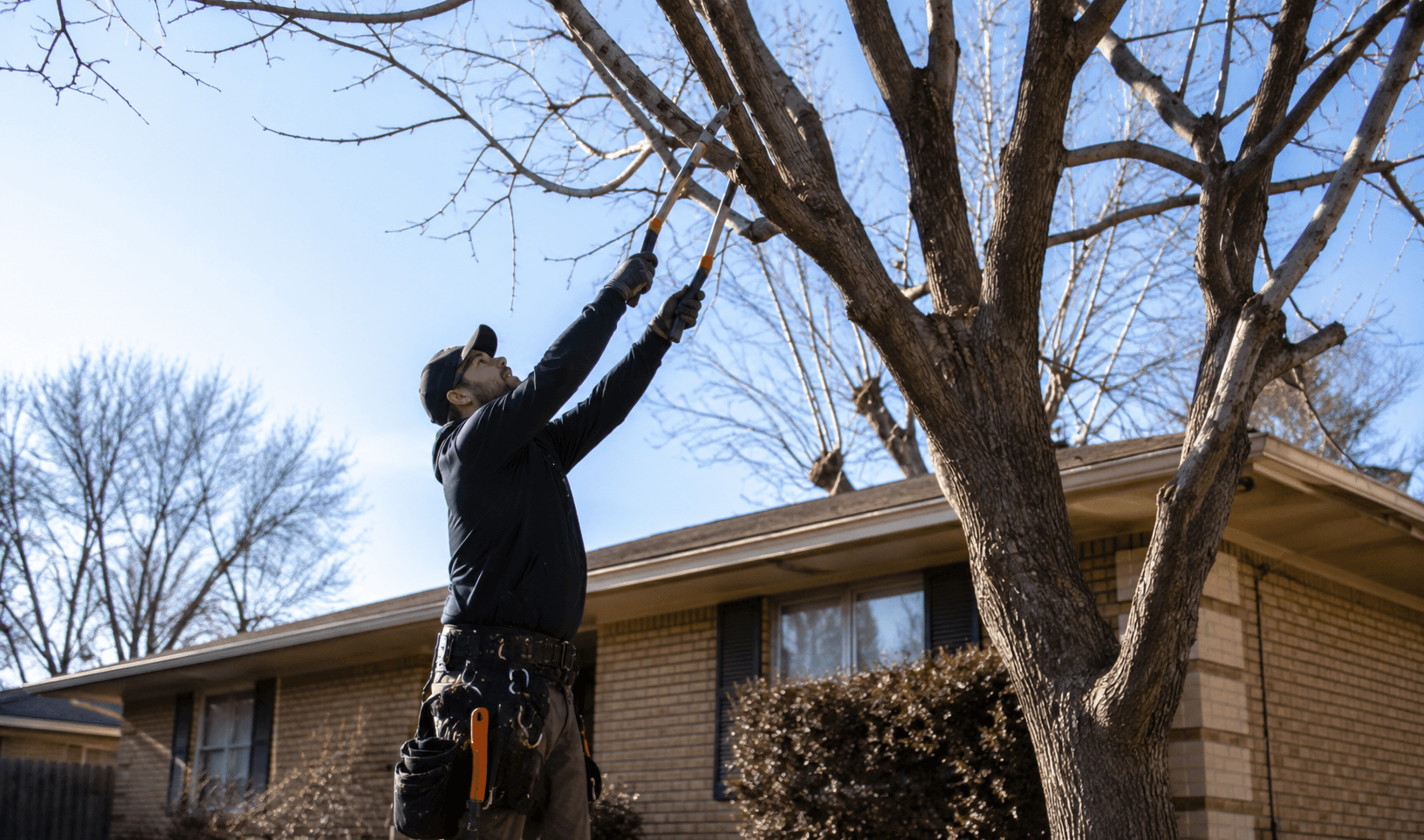
Small, low limbs on a young tree are reasonable for a homeowner with the right tools and basic knowledge of where to cut. Anything involving a ladder, a limb over 2 inches in diameter, proximity to a power line, or a tree near a structure is a different situation entirely. Incorrect cuts don't just look bad, they create entry points for decay and disease, and a poorly executed reduction or raise can permanently change how a tree grows for the rest of its life.
A certified arborist will also know the tolerance level of the specific species in front of them. A crown reduction that's perfectly safe on an oak might be too aggressive for a thin barked species, and what counts as healthy thinning changes tree to tree.
Frequently Asked Questions
1. Does crown thinning make a tree grow back thicker?
Not usually, as long as thinning stays within the recommended range. Overthinning can trigger a stress response that produces a flush of weak new shoots, which is the opposite of the intended effect.
2. Is crown raising bad for a tree?
Not when it's done gradually and the tree keeps a healthy proportion of live crown. Removing too many lower limbs at once in a short window is what causes problems, not raising itself.
3. How much can you reduce a tree's crown at one time?
Most arborists recommend staying between 15 and 30 percent of the crown per visit, depending on the species and the tree's current health.
4. Which technique is best for storm damaged trees?
Crown reduction is typically used to rebalance a canopy after storm damage, often paired with crown cleaning to remove any broken or hanging limbs first.
5. Can one tree need thinning, raising, and reduction at the same time?
Yes. Mature trees that haven't been maintained in several years often need a combination, applied carefully so the tree isn't overstressed in a single visit.
If you're not sure which technique your tree needs, the safest move is a quick assessment from someone who prunes trees for a living rather than guessing based on how the tree looks from the ground. A short visit can tell you exactly what's going on and what the tree actually needs to stay healthy and structurally sound for years to come.