Stay at least 10 feet away from the branch, do not trim it yourself, and call Xcel Energy, the utility that serves Amarillo. If the branch is touching a line, sparking, or the line is down, call 911 first and keep everyone back. That is the short version, and the rest of this guide explains what to do in each situation, who pays, and how to keep it from happening again.
Why Branches and Power Lines Are a Bad Mix
Overhead lines are rarely insulated. A wet branch can carry current, and anyone touching the tree or a ladder resting on it can be hurt badly. Branches also cause outages, and in dry, windy weather a branch rubbing a line can start a fire. The Texas Panhandle has seen this: investigators in the Windy Deuce Fire found power lines strung through the branches of a small tree at the spot where the fire started.
Amarillo adds its own pressure. Spring wind can push a branch into a line it never touched before. Ice and heavy snow add weight, and past Panhandle storms have dropped plenty of frozen branches onto power lines.
Step 1: Check Your Distance From the Lines

Look up from a safe spot on the ground. Do not climb, and do not use a ladder or pole saw anywhere near the wires.
- 10 feet or more away: you can usually plan normal tree trimming, ideally with a professional.
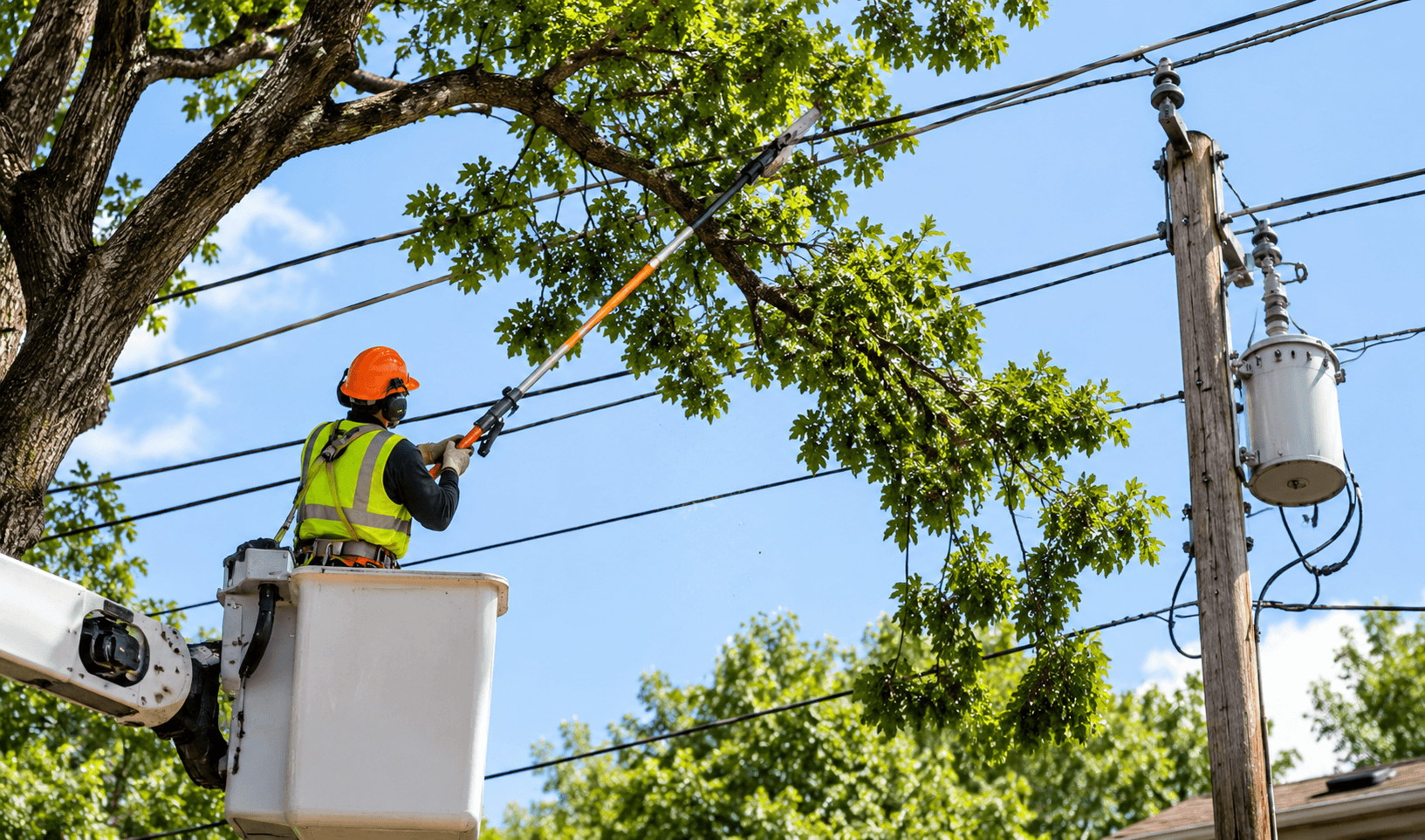
- Inside 10 feet: treat it as a utility job. Xcel’s crews work to six feet of horizontal and 10 feet of vertical clearance and handle the lines on the street side.
- Touching a line: emergency. Keep people and pets away.
Step 2: Figure Out Which Wire Is Involved
Most homeowners mix this up, and it decides who is responsible.
Primary lines run along streets and alleys, usually at the top of the pole. Xcel hires a trimming contractor to keep branches away from these lines at no charge to you. Most towns in the area are on a roughly five year trimming cycle, so a branch can grow in between visits.
The service drop is the single wire running from the pole to your house. Xcel says that line is the customer’s responsibility. One exception: if a branch falls onto the service drop, it counts as an immediate safety hazard, so call Xcel right away.
Step 3: Call Xcel Energy
Report the tree through Xcel Energy customer service. A news report quoting an Xcel spokesperson lists 1.800.895.4999 for arranging a temporary disconnect, so confirm the current number on Xcel’s website before you dial. Tell them:
- Your address and the closest pole or cross street
- Whether the branch is near, touching, or hanging on a line
- If it is on the service drop to your house
Xcel may trim the portion closest to the lines and leave the rest to you. That creates a safety zone so you or your contractor can finish the pruning or removal.
Step 4: Hire a Qualified Tree Service for Your Side of the Work
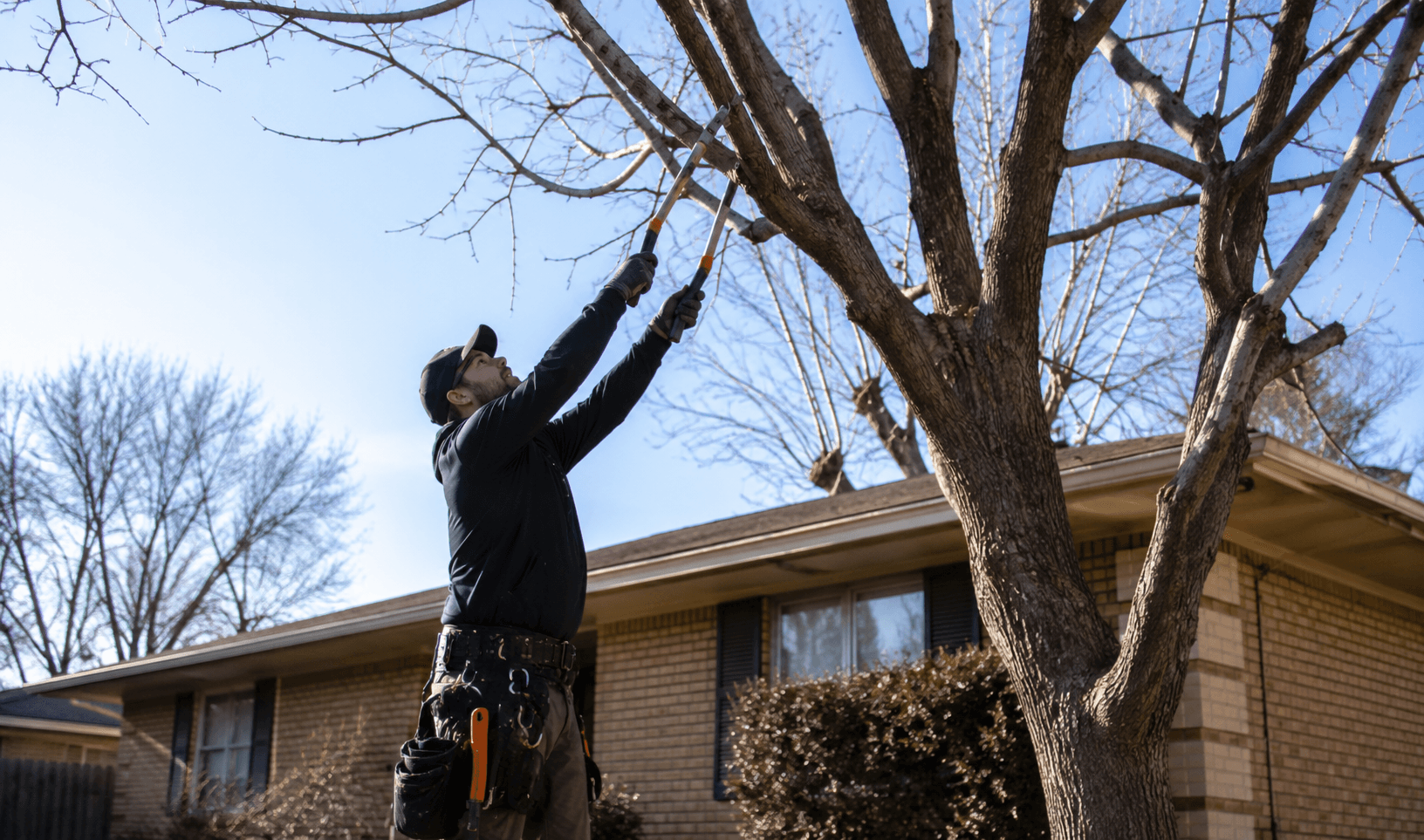
For anything near your service drop, you want a crew trained for electrical hazards. Utilities recommend that work within 10 feet of lines be done by an electrically qualified tree contractor whose workers are trained for those hazards.
Questions worth asking any company before you hire:
- Do your climbers have training for work near energized lines?
- Will you coordinate the power disconnect with Xcel first?
- Are you insured, and can I see proof?
- Who hauls away the debris?
Good tree companies are happy to answer these. Vague answers are a reason to keep looking.
What Happens After a Storm

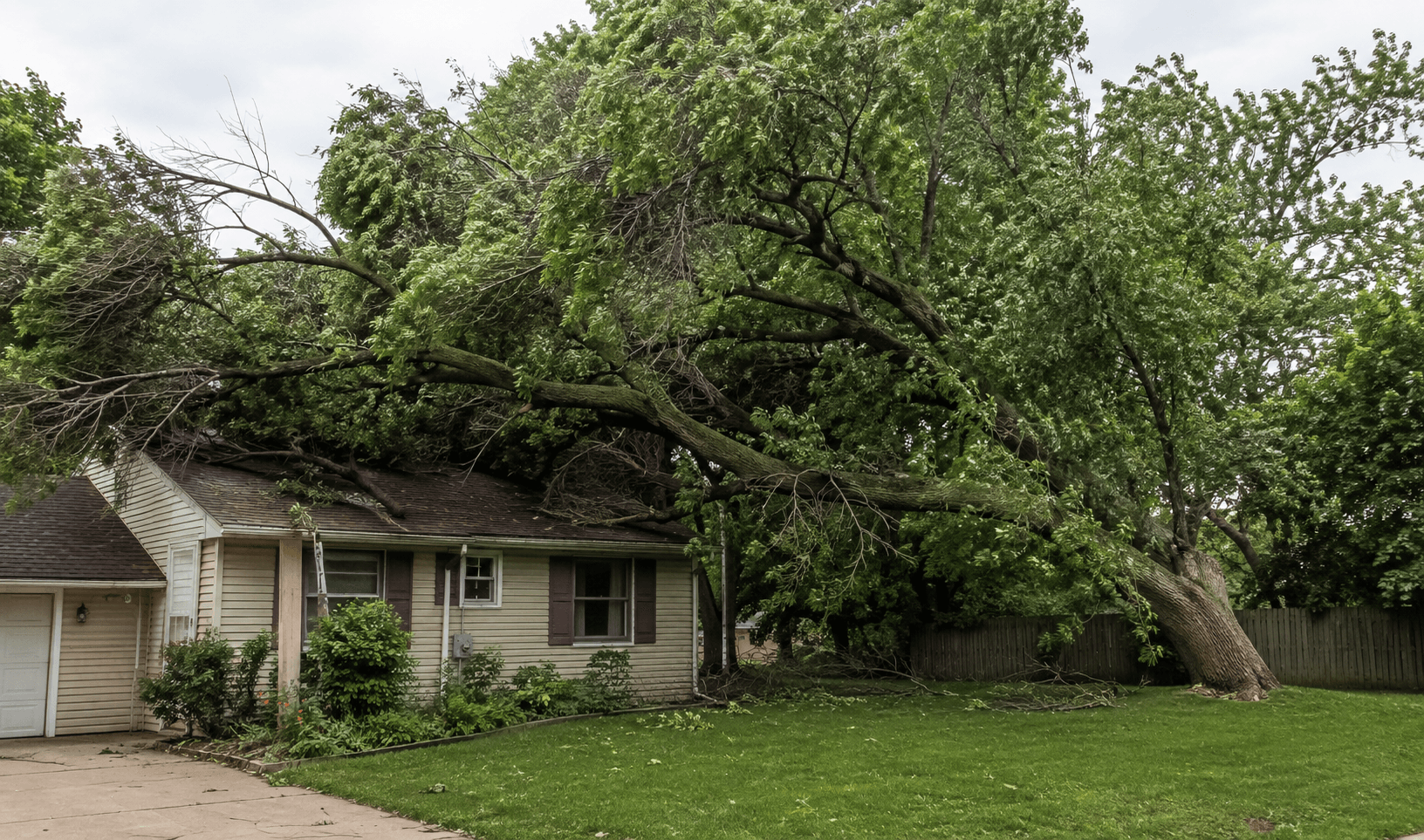
When Xcel clears a branch from a line after a storm, the wood is often left behind. The utility’s guidance puts debris disposal on the tree owner. Plan on arranging cleanup yourself, and if the damage is serious, a local emergency tree service can handle the mess once the lines are safe.
You may also see longer outages than you expect in high fire risk weather. Xcel uses protective settings that can cut the flow of power when a branch or other object touches the line, and crews must check the line before restoring service.
Which Trees Cause the Most Trouble in Amarillo
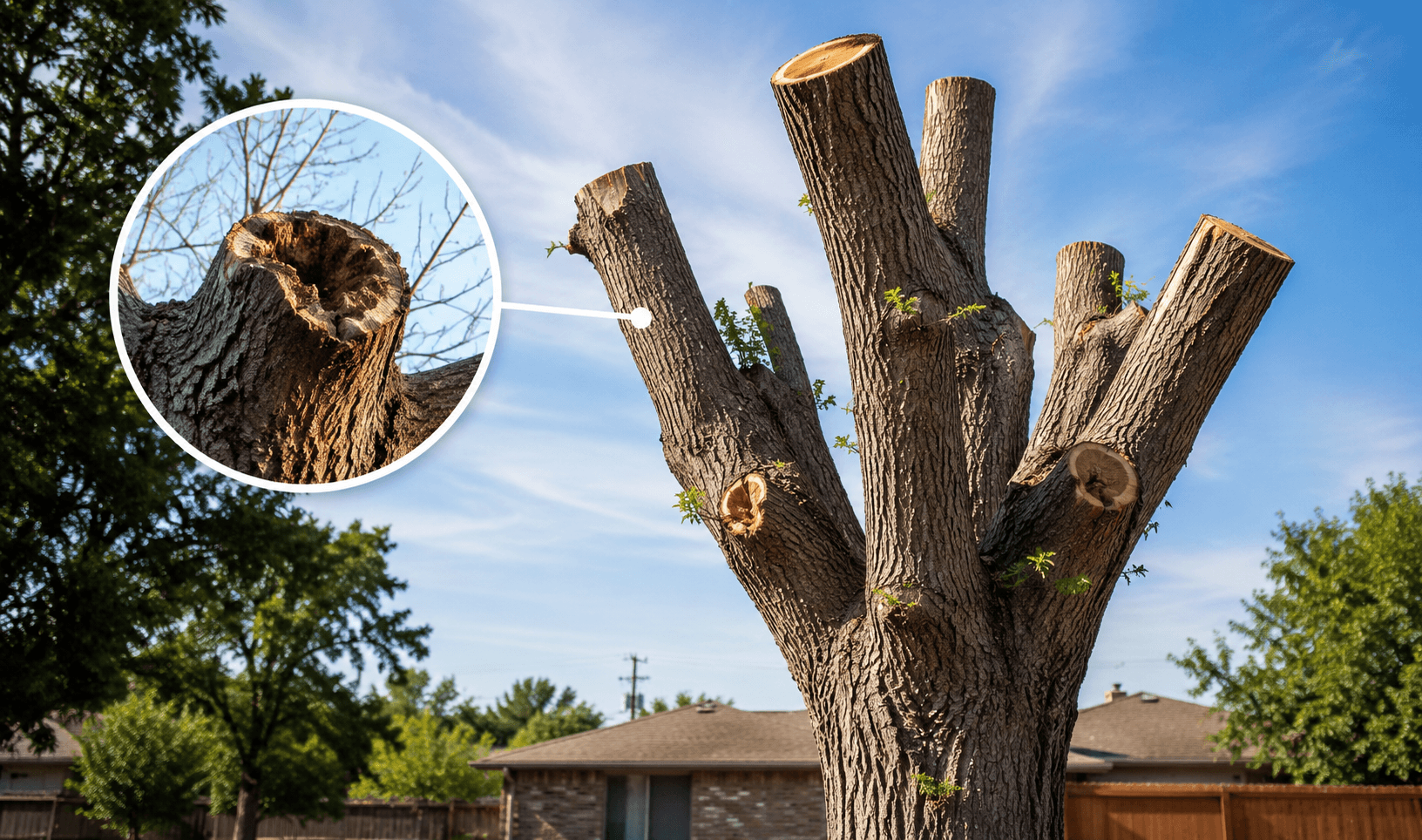
Fast growing, brittle trees are the usual suspects. In the Panhandle that often means Siberian elm, cottonwood, and silver maple, which drop limbs in wind and ice. A tree that looked fine five years ago can now be reaching toward the line. Dead branches, cracks, hollow spots, and heavy lean are all reasons to get it looked at, since large dead limbs and rotten wood in the trunk or main branches are classic signs of higher risk.
How to Prevent the Problem

- Prune early. Keep branches well clear of lines before they become a utility problem.
- Plant smart. Trees planted near power lines should stay under about 25 feet at maturity. Put taller species far from any wire.
- Call 811 before digging. Underground lines need to be marked before you plant anything.
- Schedule a yearly look. Check after each spring wind season and after winter storms.
FAQ
1. Is it legal to trim a branch touching a power line myself? No, and it is dangerous. Texas treats work near high voltage lines seriously, and only qualified workers should go within the safe distance.
2. Does Xcel trim trees for free in Amarillo? Xcel trims near its own primary lines at no charge. The line to your house and the debris are on you.
3. Who pays if a tree falls on my service line? The service line is generally the homeowner’s responsibility. Call Xcel and your insurance company about repairs and cleanup.
4. Can a branch near a line cause a power outage? Yes. Trees are a common cause, and Panhandle storms have knocked out power to thousands of customers.
5. What should I do if a branch is already sparking? Move everyone away, call 911, then call Xcel. Do not touch the tree or anything near it.
Need Help With the Part That Is Yours?
If branches are growing toward your service line, or storm damage has left a mess in your yard, Open Sky Tree Service can look at the tree, explain what falls under Xcel and what falls on you, and help you plan safe pruning or tree removal around the lines. Call for a free estimate in Amarillo, Canyon, Bushland, and nearby areas.