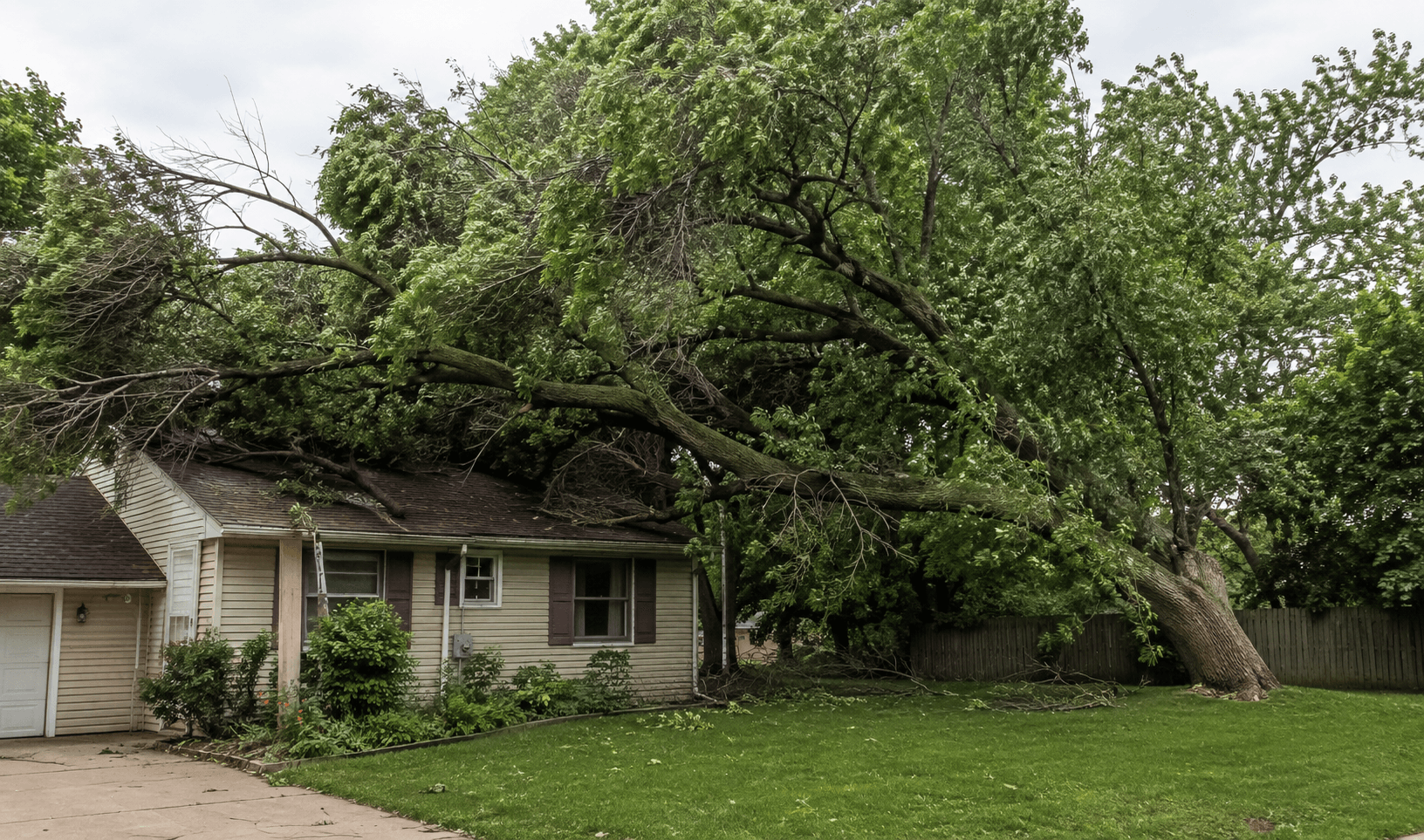
Topping a tree is bad because it strips away most of the leaves a tree needs to make food, forces it into a stress response that drains its energy reserves, and leaves behind stubs that rarely heal and often rot from the inside out. In Amarillo, where Panhandle wind gusts regularly top 40 miles per hour, a topped tree does not just look damaged. It becomes a genuine safety risk to your roof, your fence, and anyone standing underneath it during the next storm.
If you have ever looked at a tree with a flat, chopped off canopy and wondered why it looks that way, or if a crew has offered to "top" your tree to make it smaller, this guide explains exactly what topping does to a tree, why it is especially risky here in the Texas Panhandle, and what actually works instead.
What Is Tree Topping, Exactly?
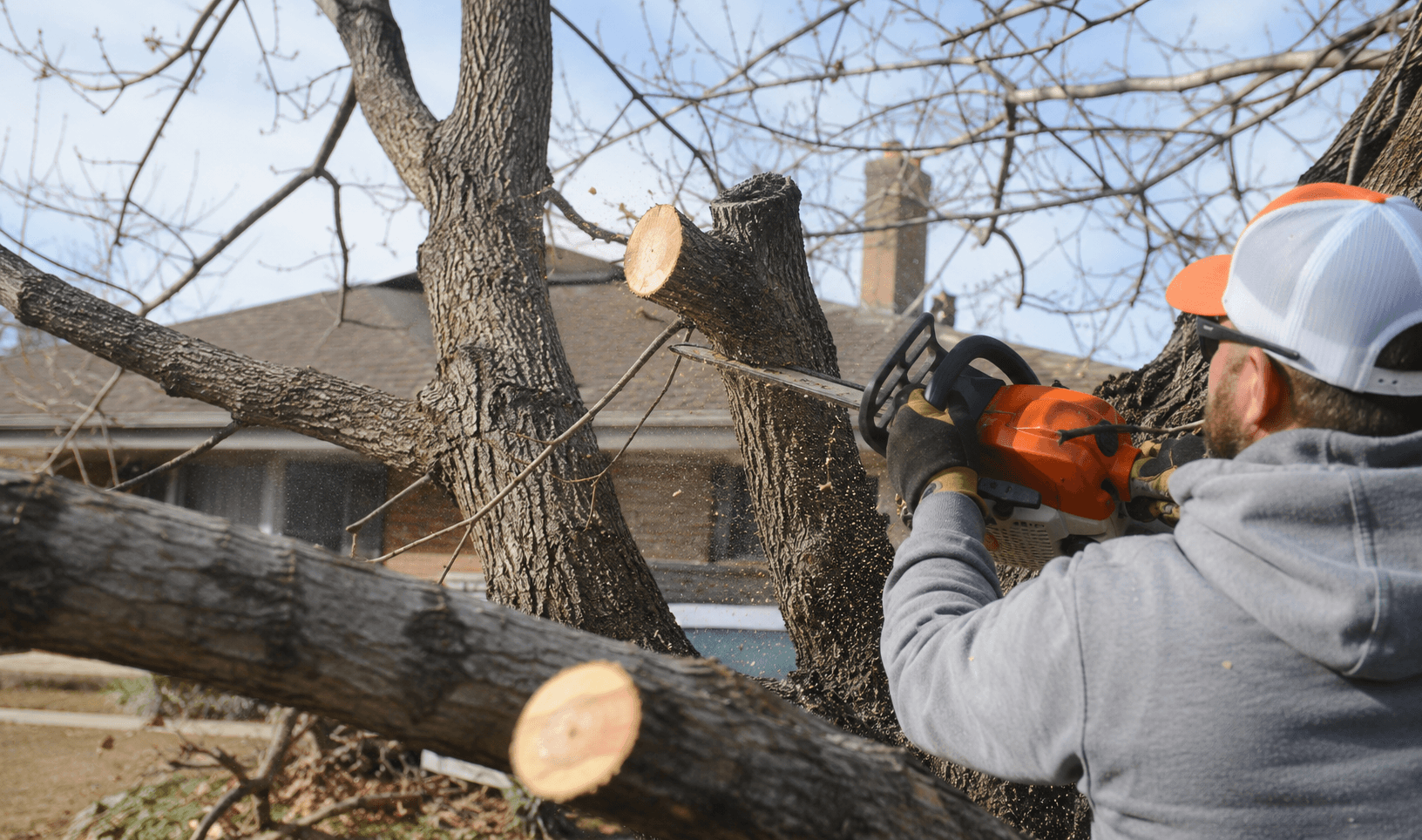
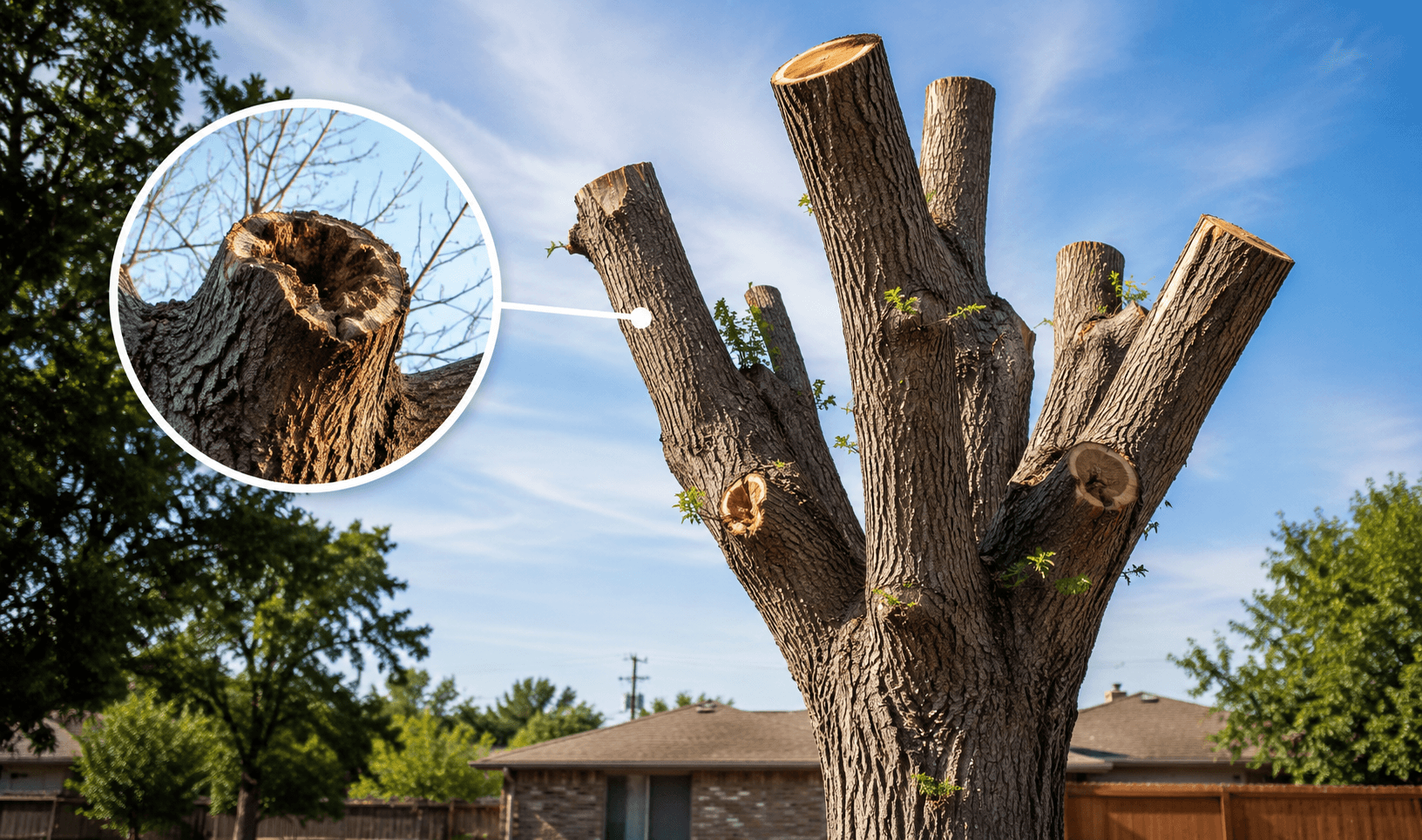
Topping is the practice of cutting large branches down to stubs, or to smaller side branches that are too thin to take over as the new leader. Arborists sometimes call it heading, hat racking, or rounding over. Whatever name it goes by, the goal is usually the same: make a tree shorter, fast, without much regard for where the cuts land.
That last part is the problem. A proper pruning cut is made just outside the branch collar, the slightly swollen ring of tissue where a limb meets the trunk or a larger branch. That collar contains the cells a tree uses to seal off a wound. Topping cuts blow right through that natural boundary, leaving a raw, exposed stub with no way to close itself off.
Why Amarillo Trees Are Especially at Risk
Trees in the Texas Panhandle already deal with more stress than most. Add topping on top of that, and the damage compounds quickly.
1. Wind: Amarillo sits in one of the windiest regions in the country. A topped tree responds to that wind by sending up a flush of fast, weakly attached sprouts near the cut. Those sprouts grow in dense clusters, catch more wind resistance than a naturally branched canopy, and snap off far more easily in a gust.
2. Species: Common Amarillo yard trees such as Siberian elm, cottonwood, hackberry, and Bradford pear are all fast growers by nature. Topping accelerates that regrowth even further, so the tree is often back near its original height within a few seasons, except now it is full of poorly attached limbs instead of a natural branch structure.
3. Soil and drought: Panhandle clay soil and periodic drought already put root systems under pressure. A topped tree loses a large share of its leaf surface, which means less food production right when the roots need support the most.
4. Dust storms: Sudden dust storms and microbursts are a regular part of West Texas weather. A tree with decayed, poorly attached regrowth is far more likely to drop a limb or fail outright during one of these events than a tree that has been properly pruned.
The Real Damage Topping Causes

It Starves the Tree
A mature tree relies on its canopy to photosynthesize and build up energy reserves. Topping can remove 50 to 100 percent of that canopy in a single visit. With so little foliage left, the tree has to burn through stored energy just to push out new growth, leaving it with far less reserve to fight off insects, disease, or the next drought.
It Invites Decay
Because topping cuts bypass the branch collar, the tree usually cannot seal the wound. Water gets into the exposed wood, decay organisms move in, and rot works its way down through the stub and often into the parent branch or trunk. This process can take years to become visible from the outside, which is part of why topping seems harmless at first and turns into a real hazard later.
It Creates Weak, Fast Growing Sprouts
In a desperate bid to replace lost leaves, a topped tree pushes out dozens of thin, upright shoots called water sprouts near each cut. These sprouts grow quickly but attach to the tree only in the outer bark layer, not in solid wood. That shallow attachment is exactly why topped trees drop limbs so easily in wind, ice, or heavy rain.
It Raises Liability and Lowers Property Value
A well maintained tree can add measurable value to a home. A disfigured, topped tree does the opposite. It signals deferred maintenance to buyers and, more seriously, creates a documented hazard. If a branch from a topped tree falls and causes damage or injury, insurers and courts have historically treated topping as an unacceptable pruning practice, which can complicate a liability claim.
It Costs More Money Over Time
Because a topped tree grows back full of weak sprouts, it needs far more frequent follow up pruning than a properly maintained tree, and that follow up work is often more labor intensive since crews have to manage dense clusters of regrowth. What looked like a quick, cheap fix usually turns into a recurring expense.
Signs a Tree Has Already Been Topped

- Flat or rounded cuts on the ends of major limbs instead of clean cuts near a branch junction
- Dense clumps of thin, straight up shoots sprouting near the cut points
- A canopy that looks noticeably bushier and more uneven than a naturally shaped tree of the same species
- Visible stubs, cavities, or dark staining where large limbs were removed
If your property has a tree showing these signs, it is worth having it looked at. Our guide on what happens if you never trim your trees covers the flip side of the same issue, since both neglect and topping tend to produce structurally unsound trees over time.
What to Do Instead of Topping
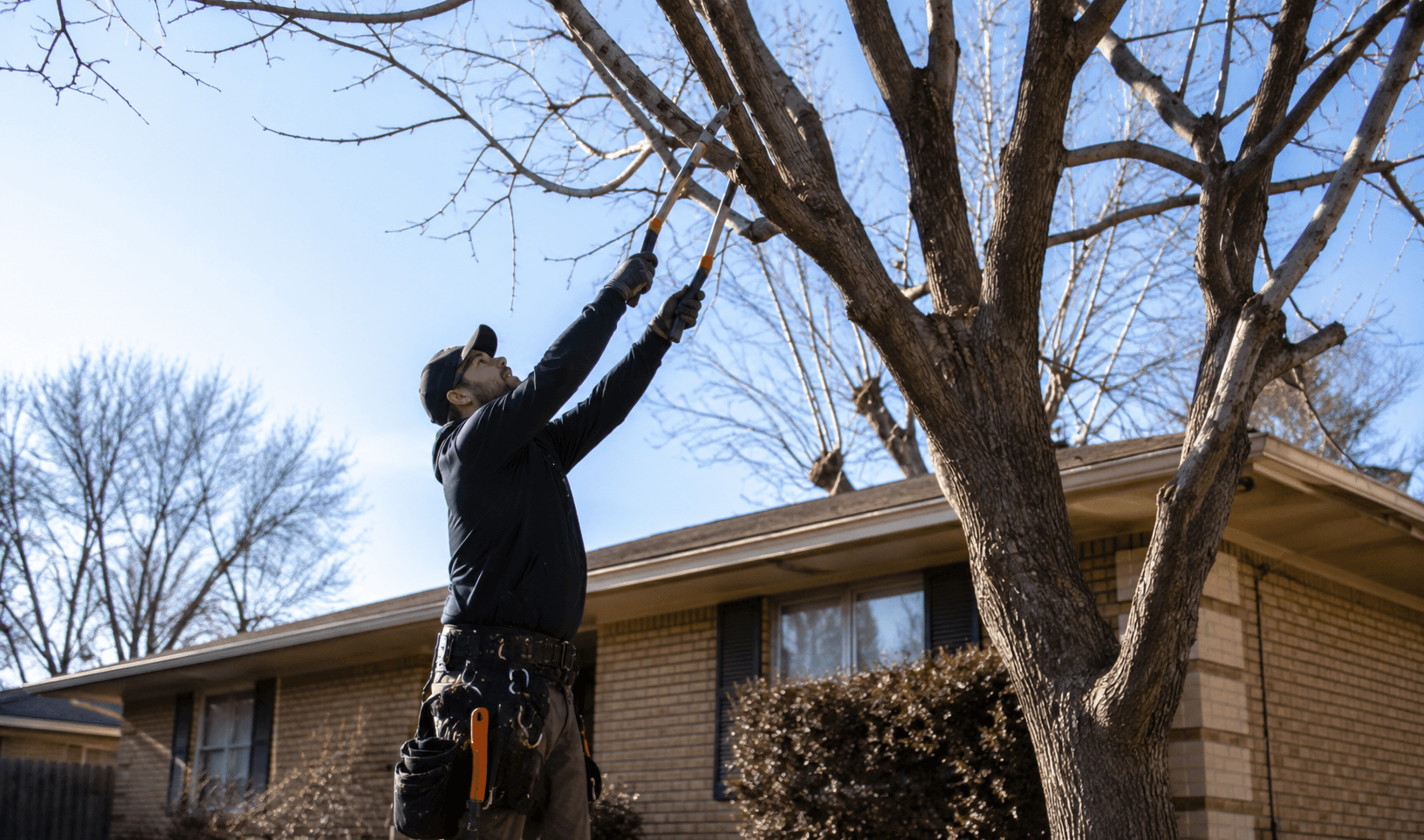
If a tree genuinely needs to come down in size, whether for utility clearance, storm damage, or a safety concern near your home, there are pruning methods that reduce a tree's height or spread without triggering the same decay and regrowth problems.
Crown reduction shortens select limbs back to a lateral branch that is large enough, generally at least one third the diameter of the limb being removed, to take over as the new leader. This preserves the tree's natural shape while still bringing down its overall size.
Crown thinning removes selected branches throughout the canopy to reduce density and wind resistance without shortening the tree at all. This is often the better option when the real concern is wind risk rather than height.
Our breakdown of crown thinning versus crown raising versus crown reduction goes deeper into how each technique works and which situations call for which approach. And if you are unsure whether your tree needs a light trim or a more involved pruning job, our article on tree trimming versus tree pruning walks through the difference.
When Topping Might Seem Necessary, but Usually Is Not

Homeowners typically ask for topping in a few common situations, and there is almost always a better path.
1. The tree feels too big for the yard: A properly trained arborist can usually reduce a tree's size gradually through crown reduction over one or two seasons rather than shocking it with a single drastic cut.
2. Branches are near power lines: Utility clearance pruning follows specific standards that remove only what is necessary near the lines while preserving the tree's structure elsewhere.
3. The tree was damaged in a storm: Storm damaged trees need an assessment, not a blanket topping. Sometimes selective removal of broken limbs is enough. Sometimes the safest and most cost effective option is full removal and replanting with a species better suited to the space.
4. The species is simply wrong for the location: If a tree was planted too close to a structure or will always outgrow its spot, removal and replacement is often more sensible than repeated topping every few years. Our tree removal service is built for exactly this kind of call, giving Amarillo homeowners a straightforward, honest read on whether a tree should stay or go.
How Open Sky Tree Service Approaches Amarillo Trees
We get asked to top trees more often than people might expect, usually by homeowners who were told it was a normal, harmless option somewhere else. It is not. Our crew uses proper pruning cuts, crown reduction, and crown thinning techniques suited to the species and the site, so your trees come out safer and healthier instead of scarred and unstable. If a tree in your yard needs real size management, our tree pruning service is the place to start, and we will always tell you plainly if a tree is a poor candidate for reduction versus removal.
Frequently Asked Questions
1. Is topping ever an acceptable way to prune a tree?
No. Every major arboriculture organization, including the International Society of Arboriculture, considers topping an unacceptable pruning practice. There are situation specific alternatives, like crown reduction, that achieve similar height control without the same damage.
2. Will a topped tree die?
Not always, and not immediately. Many topped trees survive for years while quietly declining, becoming more hazardous and more expensive to maintain along the way. Some species, especially older or already stressed trees, can die within a few years of being topped.
3. How can I tell if a company is planning to top my tree instead of properly prune it?
Ask exactly where the cuts will be made. If a crew describes cutting main branches down to a set height or stub regardless of where side branches are, rather than pruning back to a branch collar or a lateral limb large enough to take over, that is topping by another name.
4. Can a topped tree be fixed?
Sometimes. An arborist can work with the new sprout growth over several years to select and train stronger replacement limbs, gradually restoring a more natural structure. It takes patience and it will never fully undo the internal decay from the original cuts, but it can improve the tree's long term safety and appearance.
5. What should I ask for instead of topping?
Be specific. Ask for crown reduction or crown thinning by a qualified arborist, and mention your reason, whether that is height, wind resistance, or utility clearance, so the pruning plan actually matches the problem you are trying to solve.
If you are dealing with a tree that has already been topped, or you want an honest opinion before anyone touches your trees, reach out to Open Sky Tree Service for a free estimate. We will walk your property, tell you what your trees actually need, and never recommend a cut that is going to cost you more down the road.