Yes, there is a real difference. Tree trimming is a cosmetic service that shapes a tree and controls its size, while tree pruning is a health focused practice that targets weak, dead, or poorly placed branches to protect the tree's long term structure. The two terms get used as if they mean the same thing, but a homeowner who understands the distinction ends up with healthier trees and fewer surprise repair bills down the road.
If you have ever called a company for "trimming" and had them talk to you about deadwood, canopy thinning, and branch collar cuts, you already sensed something didn't quite match up. That confusion is common, and it's worth clearing up properly.
What Tree Trimming Actually Means
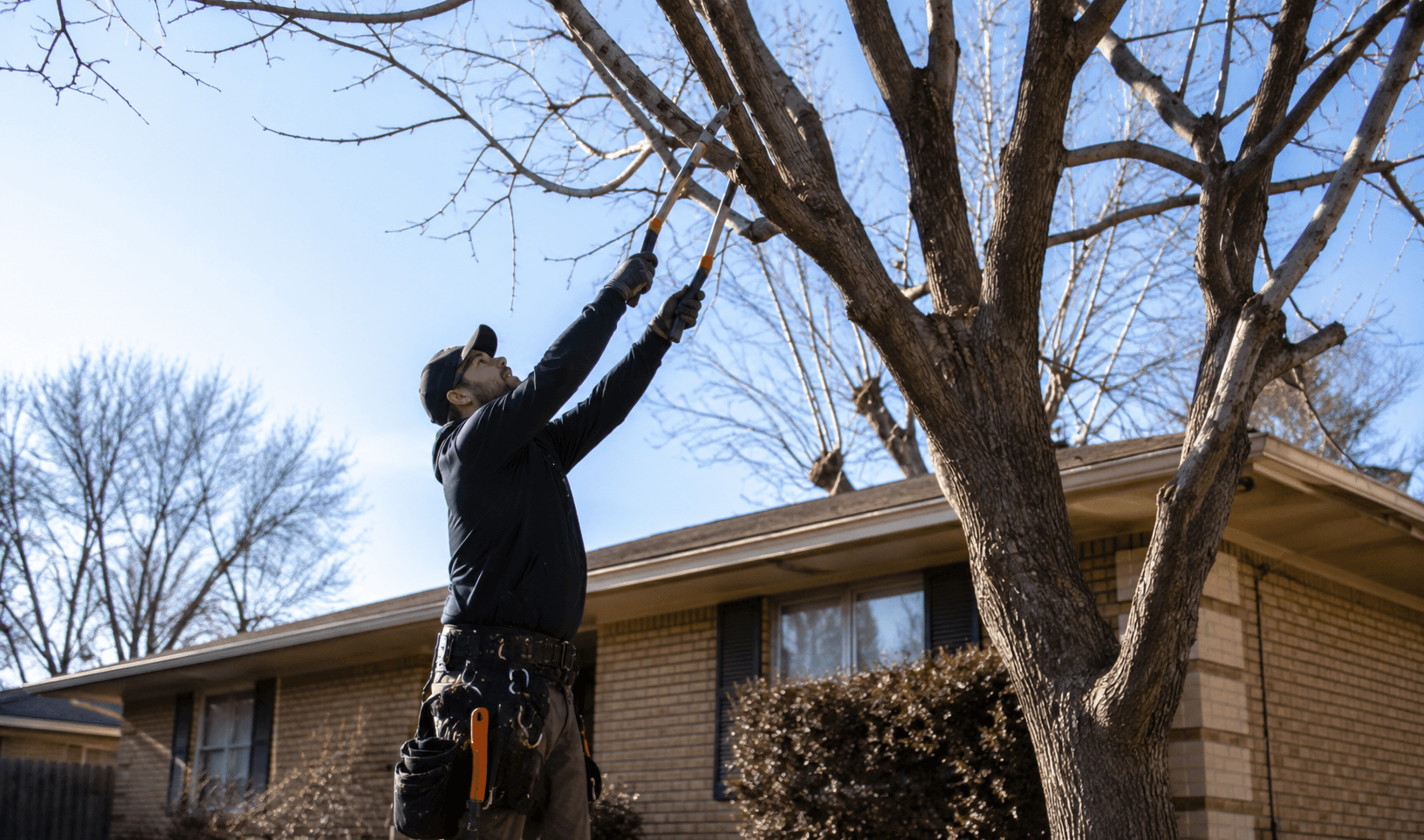
Tree trimming is about appearance. It's the work that keeps a tree, hedge, or shrub looking neat and matching the shape you want for your yard. A trimming job usually involves:
- Cutting back branches that have grown into a walkway, driveway, or roofline
- Reducing overall height or width so a tree fits its space
- Shaping hedges and ornamental trees into a clean, uniform look
- Clearing limbs away from power lines, windows, or fences
Trimming is typically light work done on the outer canopy. It doesn't require deep knowledge of a tree's internal structure, though a trained crew still needs to know how much can be safely removed at once. Most trees benefit from a trim once or twice a year, and shrubs often need it more frequently to stay in shape.
What Tree Pruning Actually Means
Pruning is a more deliberate, health driven process. An arborist looks at the whole tree, not just its outline, and makes specific cuts to support its structure and longevity. Pruning typically covers:
- Removing dead, damaged, or diseased limbs before they become a hazard
- Thinning a dense canopy so air and sunlight reach the interior branches
- Correcting weak branch unions or crossing limbs that could split during a storm
- Elevating the canopy by removing lower limbs, which is common on street trees and shade trees near driveways
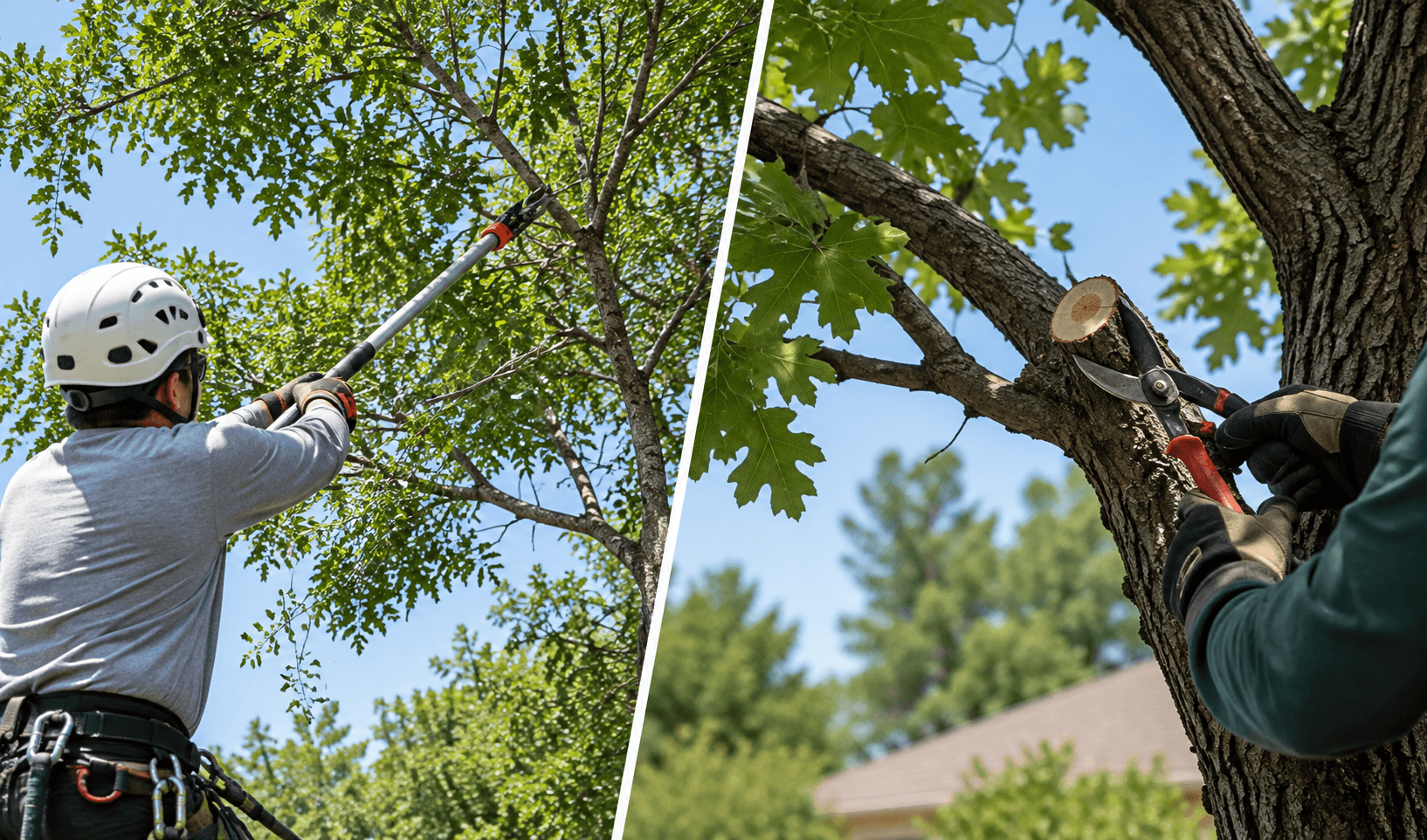
Because pruning affects how a tree grows in the years ahead, timing matters. Many species do best when pruned during dormancy in late winter, while flowering trees are often pruned right after their bloom cycle ends. Cutting at the wrong time, or making an incorrect cut, can stress the tree and open the door to pests or decay. Texas A&M AgriLife Extension's guide on proper pruning techniques breaks down the correct three part cutting method for larger branches, which is worth a look if you want to understand why a clean cut matters so much.
The Core Difference, In One Line
Trimming asks "how does this tree look." Pruning asks "how does this tree grow." A good tree care program uses both, since a tree that's only ever trimmed for looks can eventually develop hidden structural problems, while a tree that's only pruned for health might grow into an unmanageable size or shape.
Why This Distinction Matters for Panhandle Trees

Amarillo and the surrounding Texas Panhandle bring their own challenges. Strong spring winds, occasional ice events, and long stretches of drought put real stress on species like cedar elm, Bradford pear, Chinese pistache, and crape myrtle, which are common across yards in Canyon, Bushland, and the Lake Tanglewood area. A tree that only gets a cosmetic trim every year can be hiding weak limbs or early decay that becomes a real problem the next time a windstorm rolls through. Routine tree pruning catches those issues early, while seasonal tree trimming keeps the property looking sharp and keeps branches clear of rooflines and driveways.
Signs Your Tree Needs Pruning, Not Just a Trim
- Branches that look dead, brittle, or have no leaves during the growing season
- Limbs rubbing or crossing against each other
- A canopy so thick that light barely reaches the ground underneath
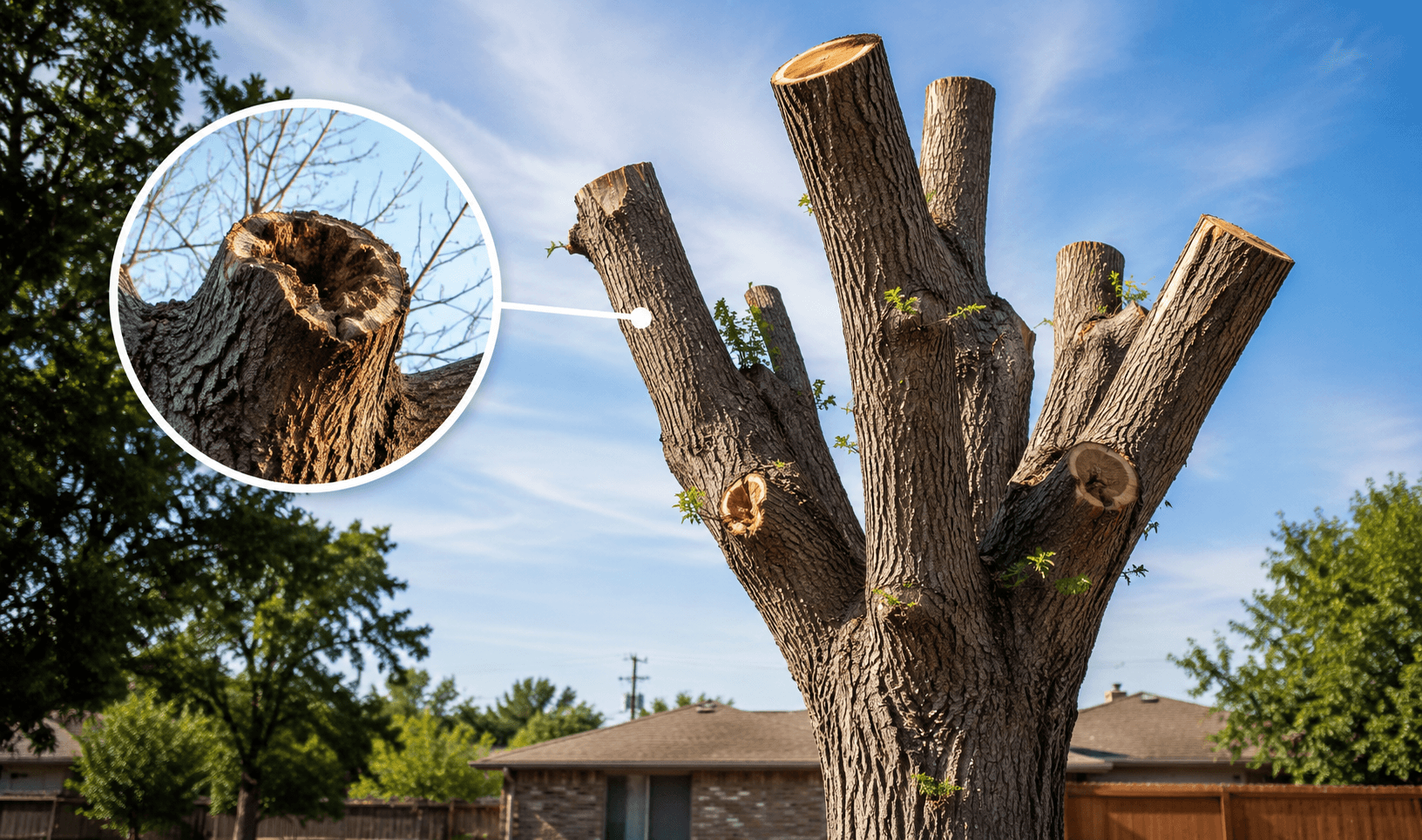
- Visible cracks, cavities, or fungal growth on the trunk or major limbs
- New growth pushing out at odd angles after a storm
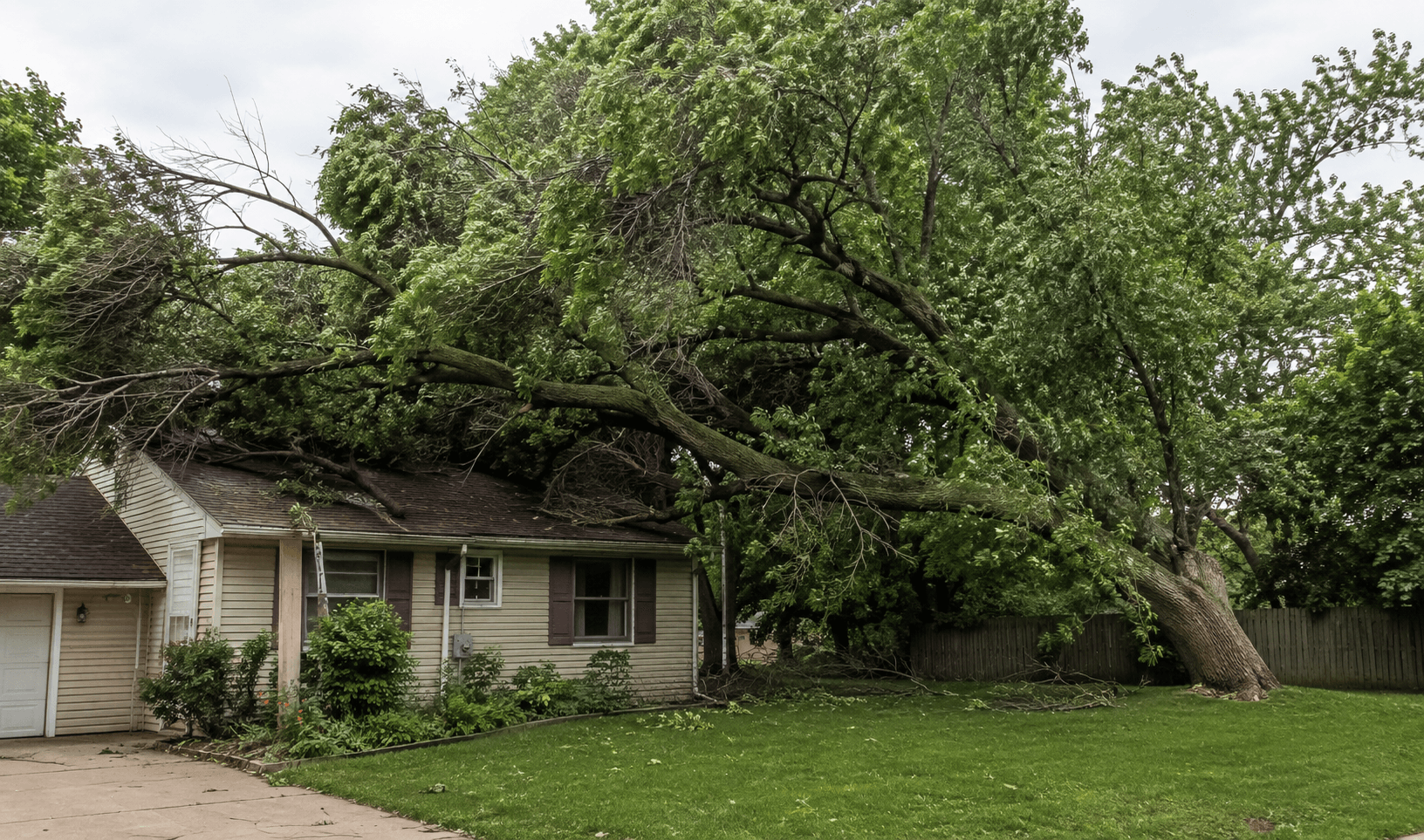
If you're noticing any of these, a trim alone won't fix it. That's a job for pruning, and in some cases the damage has gone far enough that removal is the safer option, which is where emergency tree removal comes in for limbs or whole trees that pose an immediate risk.
Tools and Technique Also Differ

Trimming usually calls for hand shears, pole pruners, or hedge trimmers, since most of the work happens on smaller outer growth. Pruning often requires bypass loppers, pruning saws, or chainsaws for larger limbs, along with a working knowledge of proper cut placement. A poor cut, one made too close or too far from the branch collar, can leave a wound that never seals correctly. This is one reason larger pruning jobs are best left to a trained crew rather than a weekend do it yourself project.
Can You Do One Without the Other?
You can, but it's not ideal long term. A tree that only gets aesthetic trims may look tidy on the outside while developing weak structure underneath, since nobody is checking for dead wood or poor branch angles. On the flip side, a tree that only gets health pruning but never a trim can grow lopsided or oversized for a smaller yard. Most healthy landscapes benefit from a combination, trimming for shape and pruning for structure, spaced out through the year based on the species and season.
Who Should Do This Work

Light trimming on small shrubs or young trees is manageable for most homeowners with basic tools. Anything involving a ladder, large limbs, or work near power lines is a different story. Pruning larger or mature trees calls for someone who understands branch structure, proper cut angles, and how a species responds to different seasons. An improperly pruned tree can actually end up worse off than one left untouched. If your property has established shade trees, hiring a crew that offers both services makes it easier to build a maintenance schedule that covers appearance and health together.
Frequently Asked Questions
Is tree trimming the same as tree pruning?
No. Trimming focuses on shape and appearance, while pruning focuses on the tree's health and structure. They can overlap in the cuts made, but the intent behind each is different.
How often should trees be trimmed or pruned?
Most trees do well with a trim once or twice a year and a structural pruning check every one to three years, though fast growing species or trees near structures may need more frequent attention.
What's the best time of year to prune a tree?
Late winter, while most trees are dormant, is generally the safest window. Flowering trees are often better pruned right after they finish blooming so you don't cut off next season's buds.
Does topping a tree count as trimming or pruning?
Neither, really. Topping is an outdated and harmful practice that removes large sections of the canopy indiscriminately. It weakens the tree and often triggers weak, fast growing regrowth that's more likely to break in a storm.
Can over pruning hurt a tree?
Yes. Removing too much live growth at once stresses the tree and can leave it vulnerable to pests, sunscald, or disease. A general rule is to avoid removing more than about a quarter of the canopy in a single season.
The Bottom Line
Trimming and pruning aren't interchangeable, even though they're often talked about that way. One keeps your trees looking good, the other keeps them structurally sound, and a well maintained property usually needs both at different points in the year. If you're not sure which service your trees actually need, a quick assessment from a local crew familiar with Panhandle growing conditions, including neighborhoods around Randall County and Tascosa, is the easiest way to find out. Our team at Open Sky Tree Service can walk your property and put together a plan that fits your trees and your yard.