If you never trim your trees, they don't just get bigger and messier. They develop weak branch unions, carry dead wood that can drop without warning, become easier targets for disease and pests, and lose the structural strength that keeps them standing through wind and ice. None of this happens overnight. It builds in stages, and by the time it's visible, the fix usually costs a lot more than routine trimming ever would have.
Here's what that timeline actually looks like, and why it matters more in the Texas Panhandle than in most places.
Year One and Two: Nothing Looks Wrong Yet

This is the trap. In the first year or two without trimming, most trees don't look noticeably different, so there's no urgency to call anyone. But underneath the canopy, a few things are already starting:
- Small dead twigs and branches stay on the tree instead of being cleared out while they're easy to remove
- Branches that should have been spaced apart begin competing for the same sunlight
- Weak branch unions, especially the V shaped joints called codominant stems, keep growing without the early correction that would have strengthened them
Fast growing species common around Amarillo, like Siberian elm and hackberry, are especially prone to this. They put out a lot of growth quickly, which sounds good until you realize it's often weak, poorly attached growth that a trained eye would have thinned out early.
Year Three to Five: Structural Weakness Sets In
By this point, the small issues from year one have compounded. Branches that were competing for light are now shading each other out, canopy density has increased, and the tree's structure has grown around its own defects instead of away from them.
This is also when you start to see visible problems: crossing branches that rub against each other and wound the bark, included bark at branch unions (where bark gets trapped inside a joint instead of growing around it, weakening the connection), and canopies that lean or grow lopsided because one side never got balanced against the other.
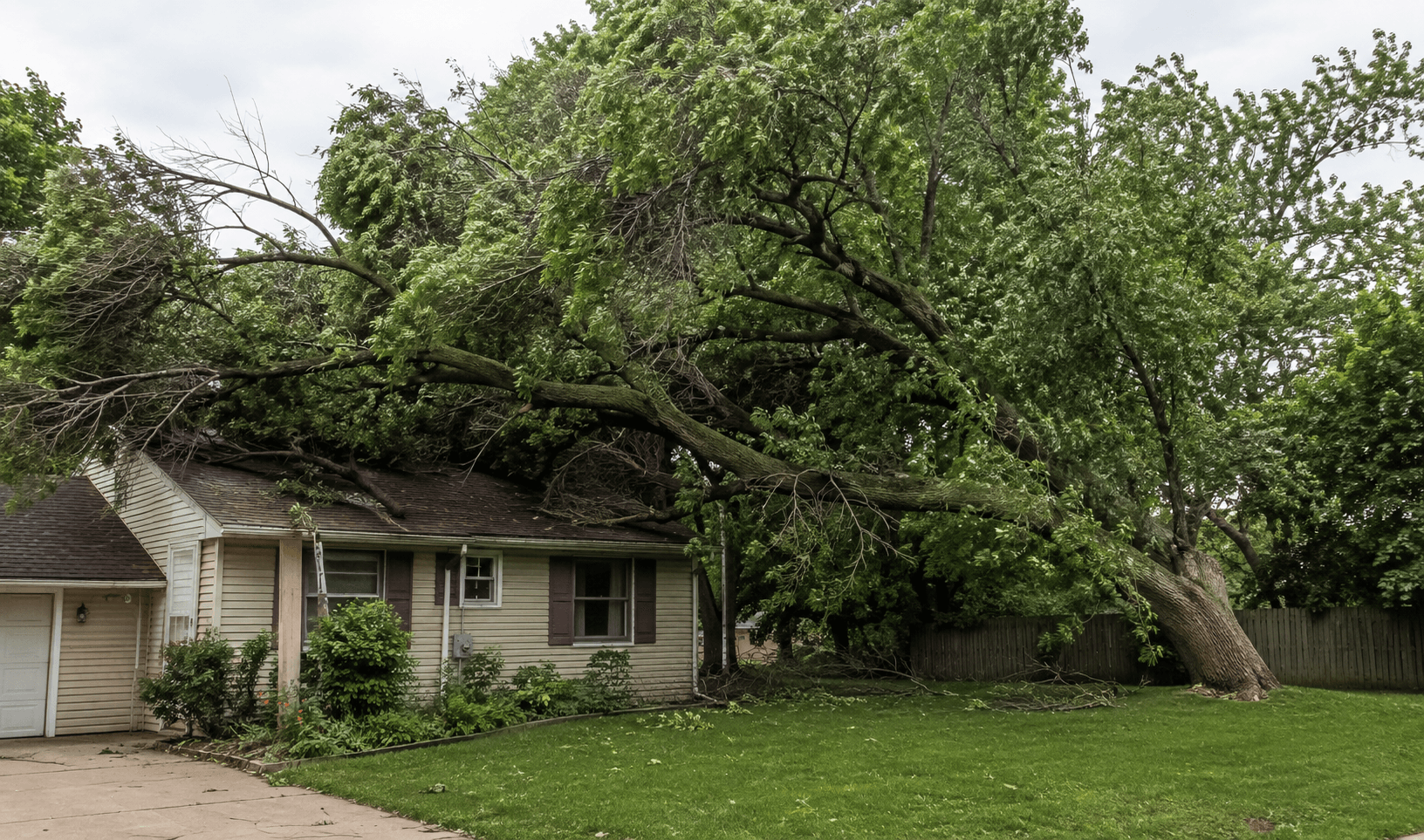
A tree with this kind of structure is exactly the kind that fails during a storm, not because it was sick, but because nobody corrected the weak growth pattern while it was still cheap and simple to fix.
The Long Term Toll: Disease, Decay, and Dead Limbs

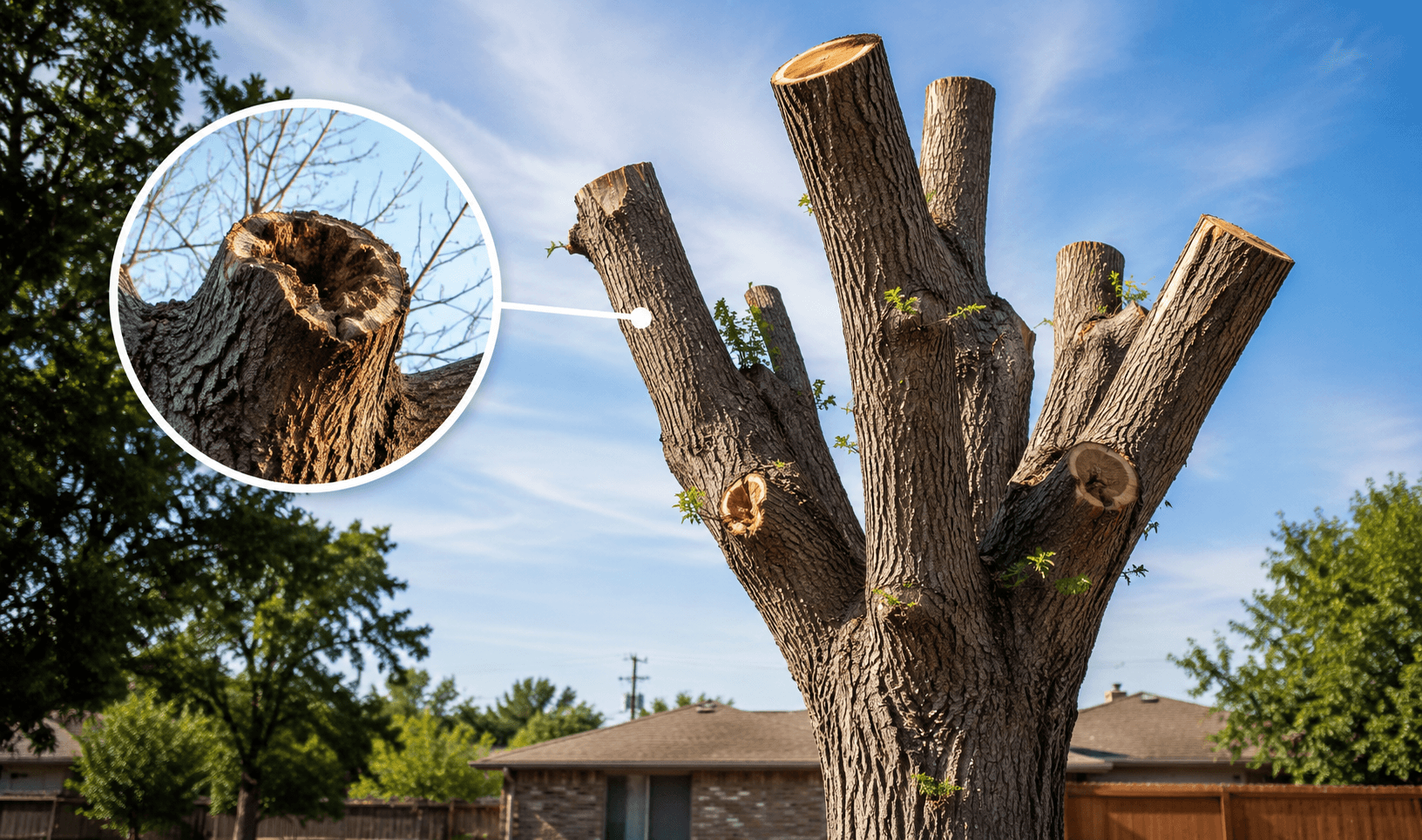
Deadwood doesn't heal. Once a branch dies, it just sits there, disconnected from the tree's living tissue, until gravity or wind brings it down. Left untrimmed for years, a tree can end up carrying multiple dead limbs at different heights, each one a separate failure point.
Dead and damaged wood is also where disease and insects get a foothold. Fungal decay, borers, and other pests tend to move into stressed or wounded tissue first. Once established, they can spread from a dead limb into healthy wood, and eventually into neighboring trees. Cottonwoods and elms, both common in this region, are particularly susceptible to decay once dead wood accumulates in the canopy.
Why This Is a Bigger Deal in the Panhandle
Amarillo and the surrounding areas deal with two things that make neglected trees riskier than in milder climates: high wind and drought stress.
A tree with poor structure from years of no trimming is carrying extra weight and surface area in exactly the wrong places when a high wind event rolls through. Add drought stress, which is common here in summer, and a tree already has less energy reserve to compartmentalize wounds or fight off decay. Combine drought stressed wood with unmanaged deadwood and weak limb attachments, and you get the kind of tree that fails during a wind event, not because the storm was unusual, but because the tree was never given the structural correction it needed.
The Hidden Cost to Tree Health
Trimming isn't just about appearance or safety. It directly affects how well a tree functions.
Dead and weak limbs drain a tree's energy without giving anything back. Every bit of resources the tree spends maintaining tissue it can't use is energy it isn't putting toward new, healthy growth, stronger roots, or fruit and flower production. Overgrown canopies also block sunlight from reaching lower branches and the ground beneath, which weakens the lower canopy and can prevent grass or other plants underneath from growing well.
Arborists generally recommend never removing more than about 25 percent of a tree's foliage in a single trimming, since taking off too much at once limits its ability to photosynthesize and recover. That guideline matters here too: a tree that's gone years without trimming often needs its correction spread across two or three seasons rather than one aggressive cut, precisely because so much has been left unaddressed.
Property and Liability Risks
An untrimmed tree isn't just a landscaping issue, it's a liability. Overgrown branches hanging over sidewalks, driveways, or your neighbor's fence line create real risk. If a dead limb falls and damages a structure, a vehicle, or a person, the property owner is often the one on the hook, especially if the limb was visibly dead beforehand.
There's also a simpler cost: curb appeal and home value. Overgrown, lopsided, or messy looking trees are one of the fastest ways to make an otherwise well kept property look neglected.
What To Do If Your Trees Haven't Been Trimmed in Years

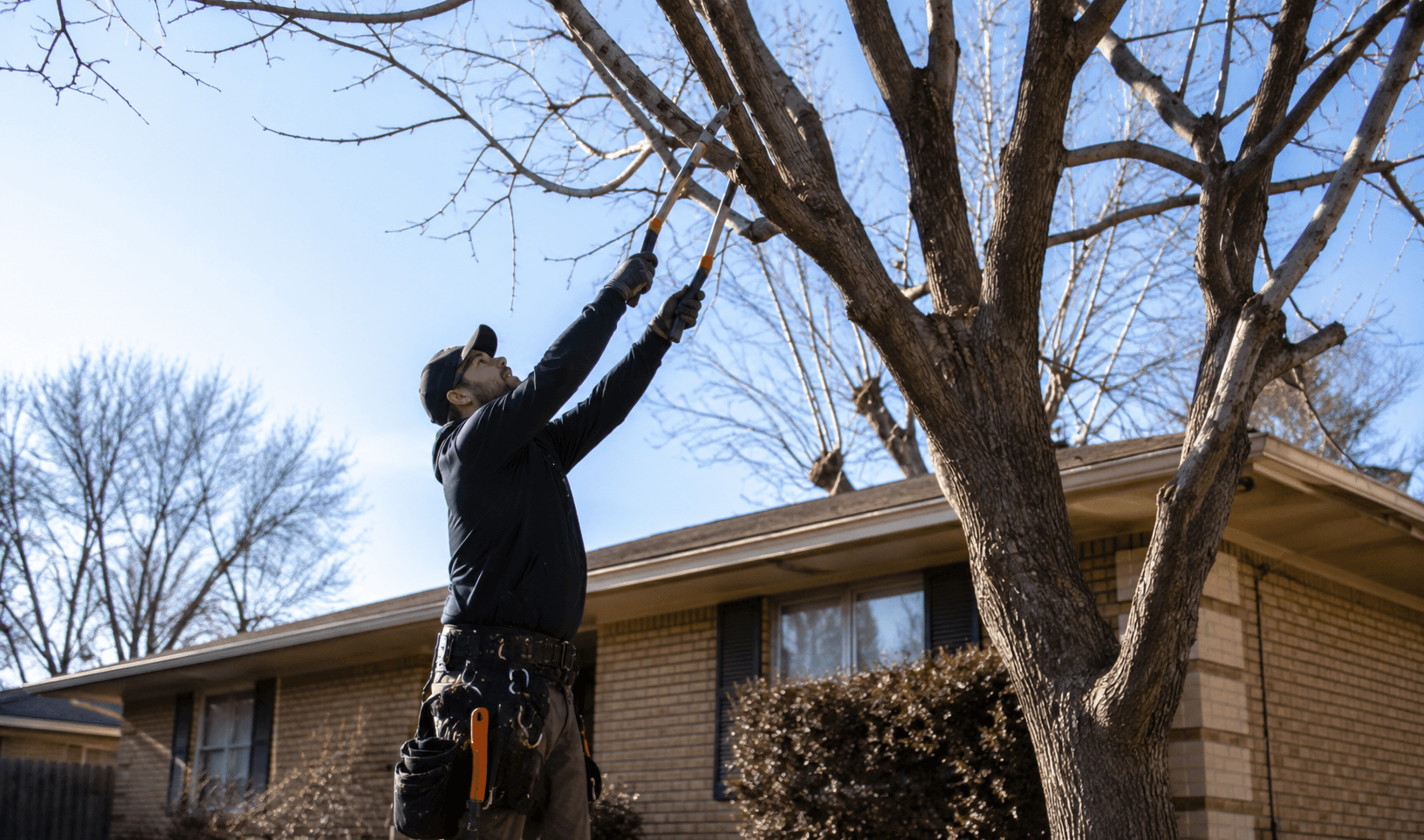
If it's been several years since your trees had any professional attention, the fix isn't necessarily one big cut. A certified arborist will typically assess:
- How much deadwood needs to come out first
- Whether structural pruning can be done now or needs to be staged over a couple of seasons
- Which branch unions are weak enough to need correction before they become a storm risk
- Whether any decay or disease is already present and needs treatment, not just pruning
Frequently Asked Questions
How often should trees actually be trimmed?
Most established trees benefit from a structural check every one to three years, depending on species and growth rate. Fast growing trees like Siberian elm often need more frequent attention than slower growing species.
Can a tree recover after years of no trimming?
In most cases, yes. It usually takes a staged approach over a couple of seasons rather than one aggressive cut, so the tree isn't stressed by losing too much canopy at once.
Is it too late to trim an old, overgrown tree?
Rarely. Even trees that have gone a decade without attention can usually be corrected. The main exception is when decay or structural failure has already progressed too far, which is why an assessment matters before any cutting starts.
What's the first sign a neglected tree needs attention?
Visible dead branches, crossing limbs that rub against each other, and a canopy that looks noticeably lopsided or one sided are the most common early warning signs.