Your Amarillo tree needs trimming right now if you notice dead or hanging branches, limbs rubbing against your roof or power lines, lopsided growth after a windstorm, thinning leaves in the middle of summer, cracked bark, or a cluster of small shoots sprouting around the base of the trunk. Any one of these signs on its own is worth a closer look. Two or more together usually mean it is time to schedule a trim before the next Panhandle storm rolls through.
Amarillo trees deal with a rougher year than most. Between the constant wind, the swings from freezing mornings to hot afternoons, the hail that shows up almost every spring, and the heavy clay soil across neighborhoods like Wolflin and Sleepy Hollow, our cedar elms, bur oaks, and cottonwoods work harder just to stay upright. That stress shows up in the canopy long before a tree becomes an actual emergency, and knowing what to look for can save you a much bigger bill later.
Dead or Broken Branches Hanging in the Canopy
This is the sign homeowners spot first, and it is also the one that gets ignored the longest. A dead limb will not leaf out in spring, the bark often looks dry or is starting to peel, and the wood snaps cleanly instead of bending. Broken branches that are still attached but hanging loosely are sometimes called hangers, and they are dangerous because they can drop without warning, especially during one of Amarillo's sudden wind gusts. If you can see daylight through a bare, brittle limb while the rest of the tree is full and green, that branch needs to come out.
Branches Rubbing the Roofline or Touching Power Lines
Trees planted near a house often grow faster on the side facing more sun, which pushes limbs straight toward the roof, gutters, or siding. Constant rubbing wears through shingles and bark alike, and it opens the door for moisture and pests to get into both the tree and the structure. Branches that have crept close to overhead power lines are a separate and more serious issue. If a limb is within a few feet of a line, do not attempt to trim it yourself. Call your utility provider or a professional crew that knows how to work safely around electrical equipment.
Lopsided or Unbalanced Growth After Panhandle Winds
Anyone who has lived in Amarillo for a while has noticed the slight lean many mature trees develop, shaped by years of prevailing wind out of the southwest. Some lean is normal. What is not normal is a tree that suddenly looks heavier on one side after a big storm, or one where the canopy has grown so unevenly that it looks like it is reaching in one direction. An unbalanced canopy puts extra strain on the trunk and root system, and it raises the odds of a limb failure the next time we get one of our 60 or 70-mile-per-hour wind events. Corrective trimming redistributes that weight before it becomes a structural problem.
Thinning Leaves or Bare Patches in the Middle of Summer
A tree that looks noticeably thinner than it did last summer, or that has patches of bare branches scattered through an otherwise full canopy, is telling you something is wrong internally. In our climate, this is often tied to drought stress, root competition from turf, or an early stage of disease such as oak wilt, which has been documented in trees across the Panhandle. Selective trimming that removes the weakest, most stressed growth allows the tree to put its energy into the branches that are still healthy, and it gives an arborist a chance to check for disease before it spreads.
Cracked Bark, Cankers, or Sap Oozing From the Trunk

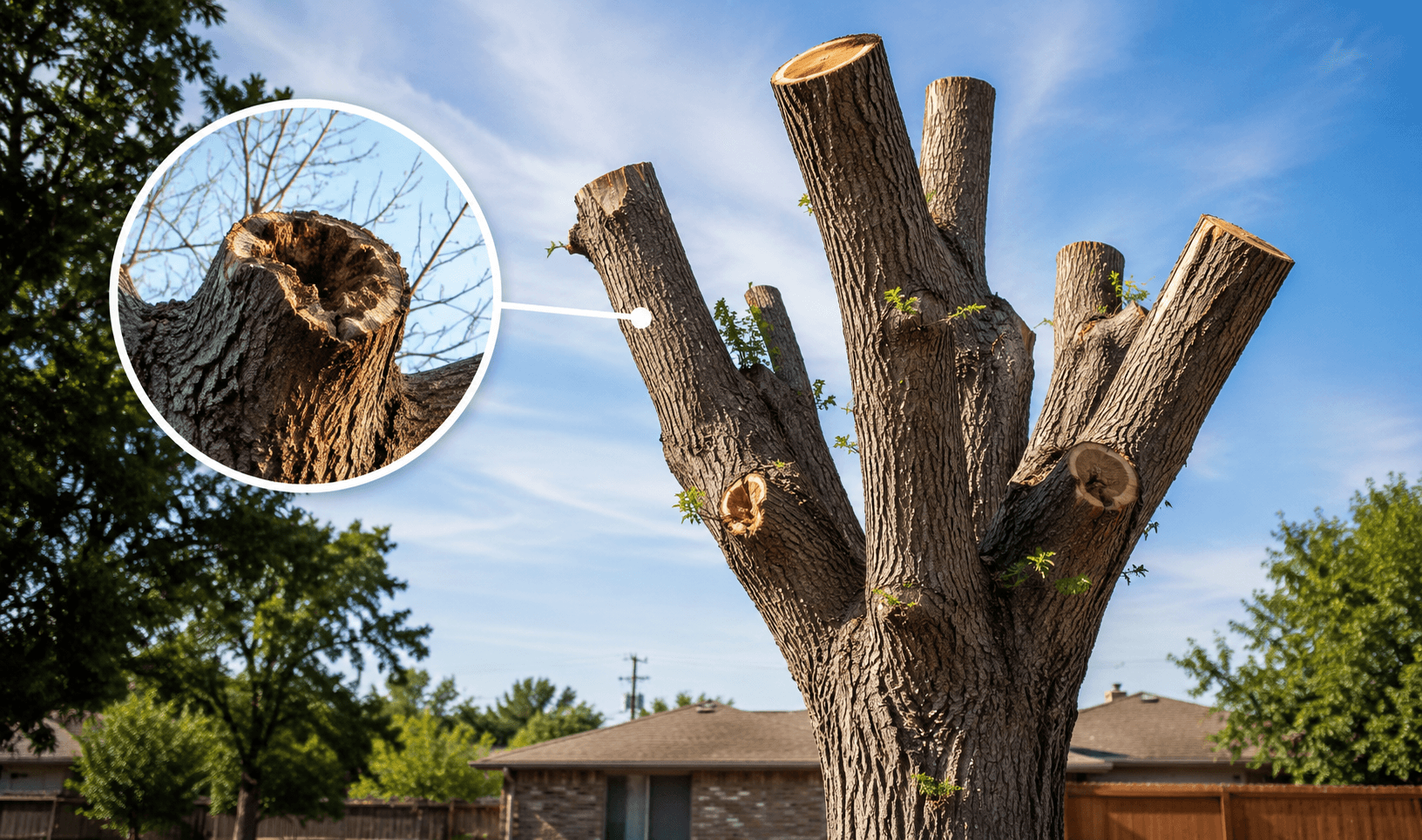
Run your eyes down the trunk and main branches every few months. Vertical cracks, sunken dark patches called cankers, or sap seeping from a wound are all signs of stress, injury, or infection. These issues are common on trees that have taken hail damage in past storms, since even small hail wounds can become entry points for fungus and insects over time. Trimming away the affected limb, when caught early, can stop the problem from moving into the main trunk.
Suckers and Watersprouts Taking Over the Base
Thin, fast-growing shoots at the base of the trunk or shooting straight up from major limbs are called suckers and watersprouts. They usually appear after a tree has been stressed by drought, storm damage, or a hard pruning cut. They grow quickly, attach weakly, and pull energy away from the rest of the tree without adding any real structure. A trim that removes this growth redirects the tree's resources back into its established branches.
Storm Damage From Amarillo's Spring Hail and Wind Season
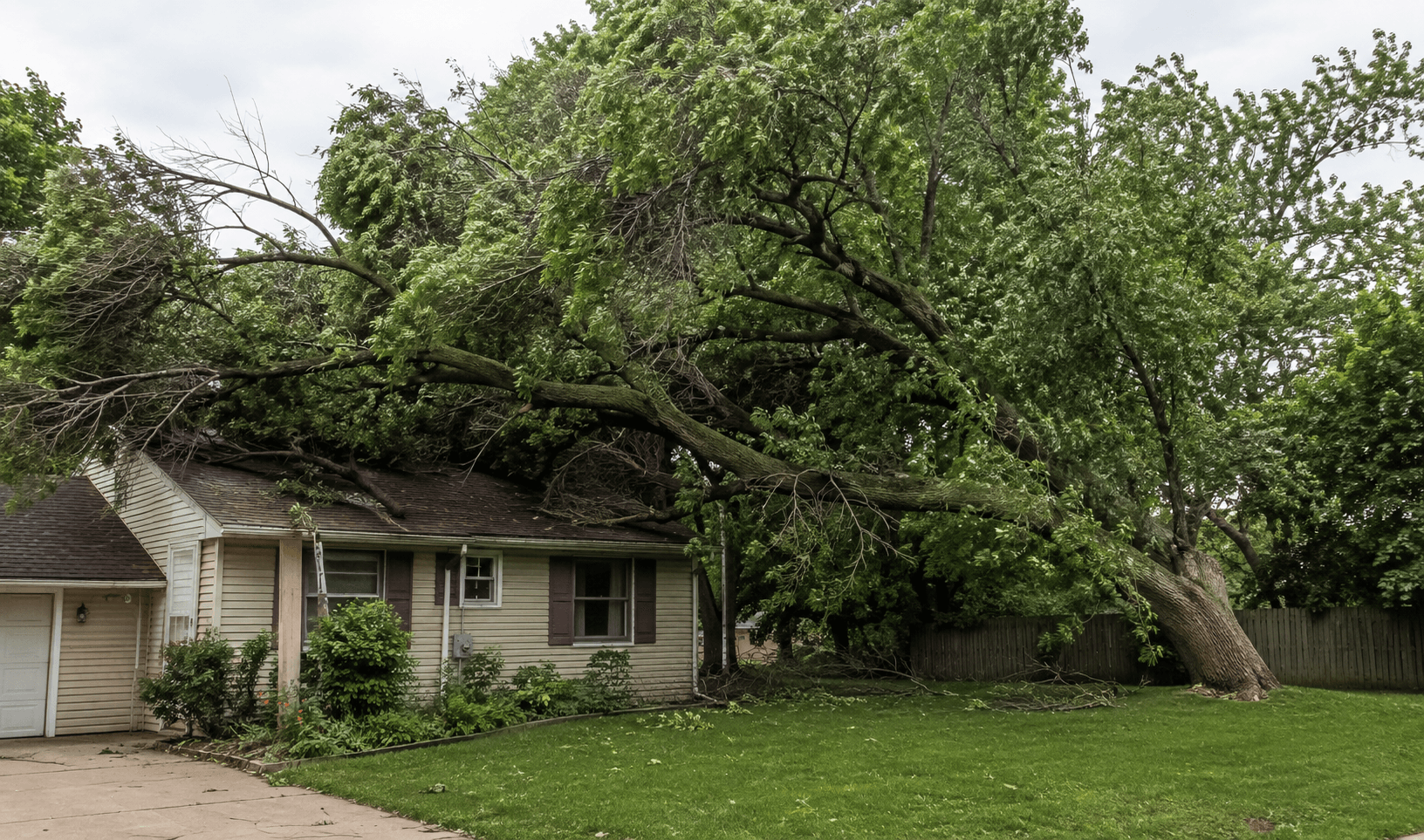
Late spring through early summer is our busiest stretch for severe weather, and trees across Canyon, Bushland, and the rest of Randall County take a beating from straight line winds and hail almost every year. Even damage that looks minor right after a storm, like a split fork or a cracked branch collar, can worsen over the following weeks as the tree tries to heal. A post storm inspection and trim, done soon after the weather clears, is one of the most effective ways to prevent a small injury from turning into a full limb failure months later.
When to Call a Professional Arborist in Amarillo

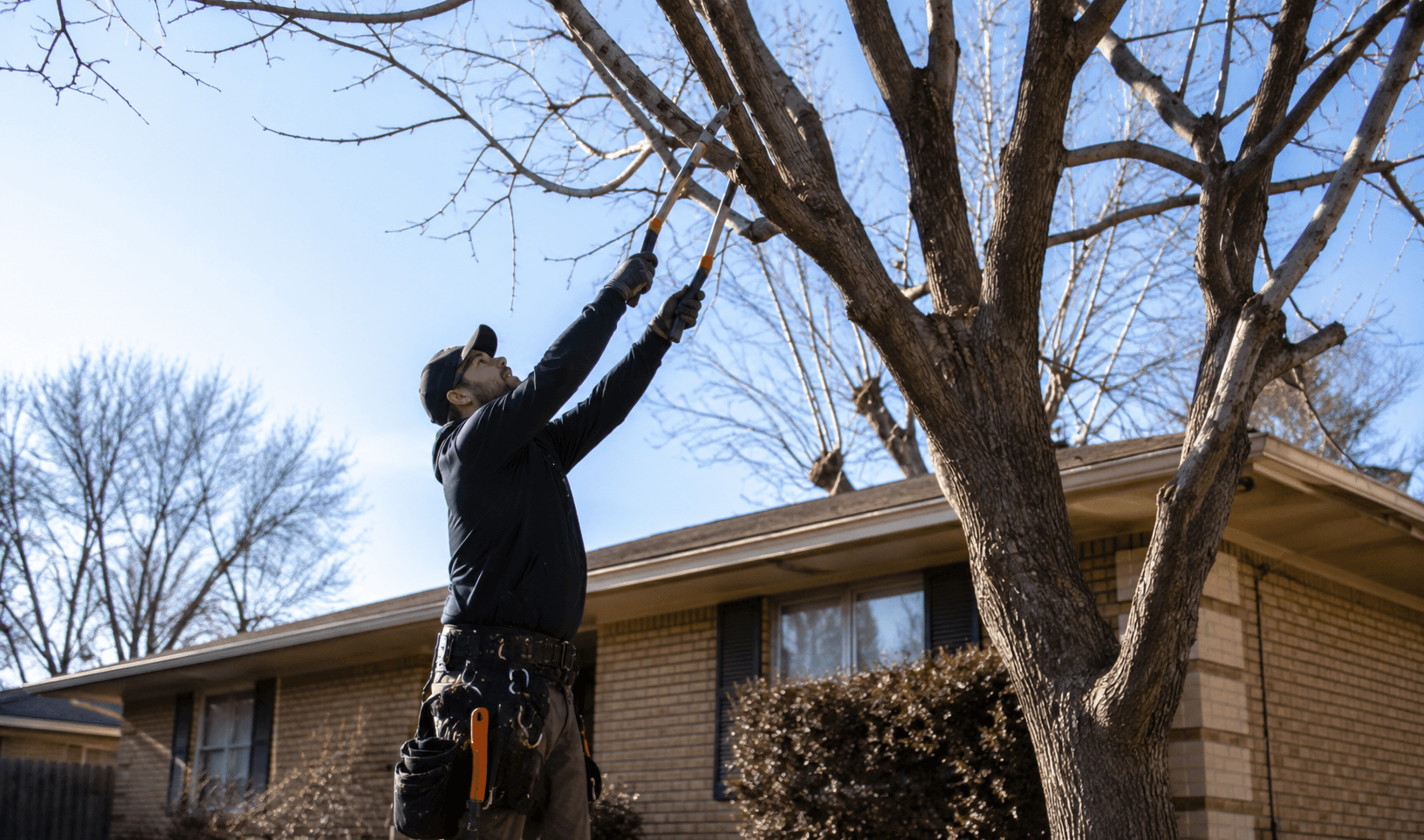
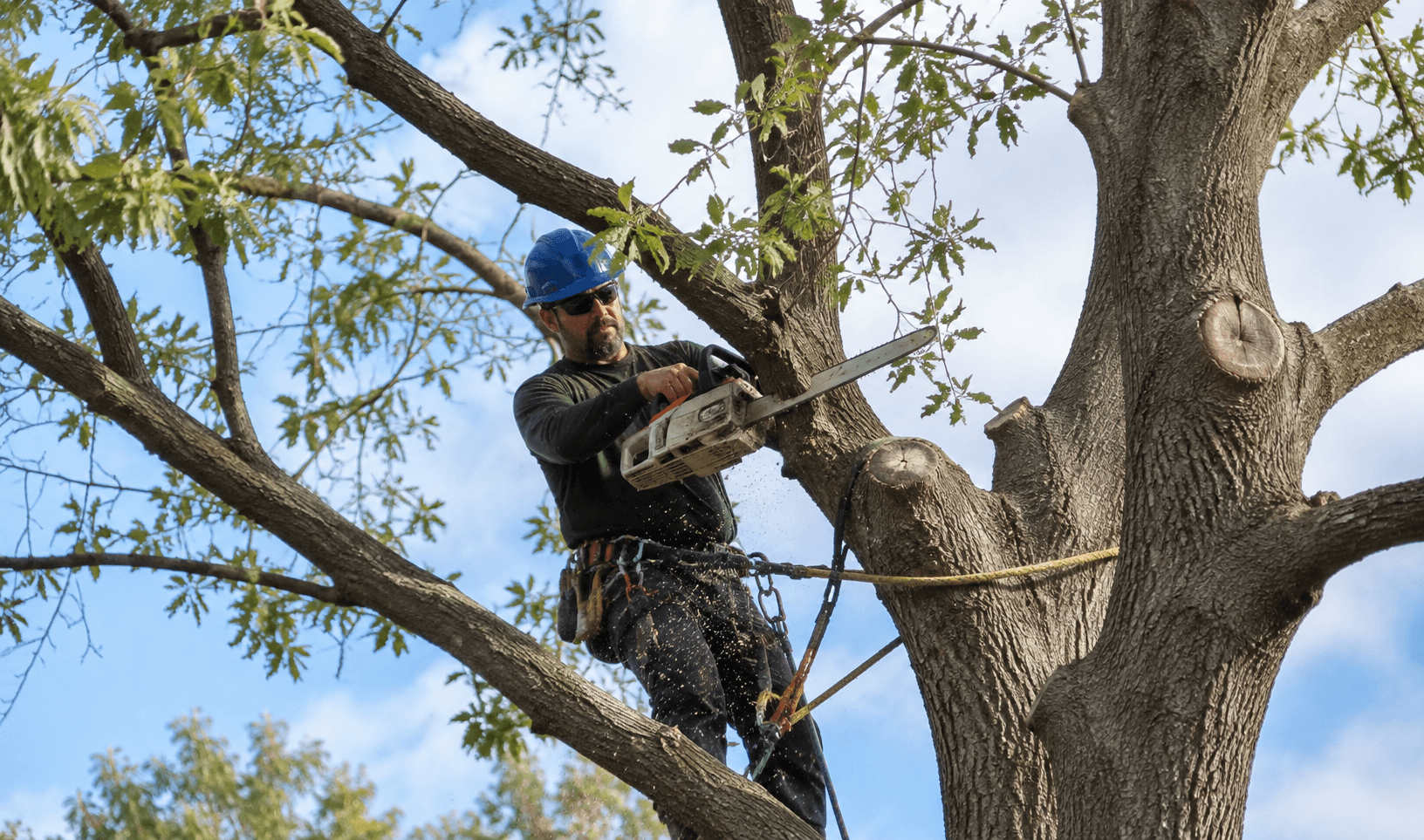
Light trimming on small branches near ground level is manageable for most homeowners. Anything involving a ladder, a limb over ten feet up, growth near power lines, or a tree that has already shown signs of disease or structural weakness is worth handing off to a professional. An arborist familiar with Panhandle conditions will know how our wind patterns, clay soil, and hail exposure affect pruning decisions in ways that generic advice from other regions simply does not account for.
Frequently Asked Questions
How often should trees be trimmed in Amarillo?
Most shade trees do well with a trim every three to five years, while evergreens can often go five to seven years between prunings. Trees that have taken recent storm damage may need an off cycle check sooner.
What is the best time of year to trim trees in Amarillo?
Late fall through winter, while trees are dormant, is generally the best window. It reduces stress on the tree and lowers the risk of disease spreading through fresh pruning cuts, and it gets the canopy ready before spring storm season.
Can I trim my own tree if branches are near power lines?
No. Any branch growing near an overhead power line should be handled by a professional crew or reported to your utility company rather than trimmed on your own.