Tree trimming for new homeowners starts with a walk, not a saw. In your first year, inspect every tree, deal with safety hazards first, schedule the main trim for late winter, and keep notes and photos as you go. In Amarillo, that plan matters even more, because Panhandle wind, hail, and drought are hard on weak branches.
You just got the keys. There is a lot on your list, and the trees in the yard probably did not make the top ten. That is normal. But the previous owner’s tree habits are now your responsibility, and a neglected cottonwood does not care that you have not unpacked the kitchen yet.
The First Year Checklist at a Glance
- Walk the property and photograph every tree in the first month.
- Mark anything dead, cracked, leaning, or hanging over your roof, fence, or driveway.
- Check for power lines, and call your utility before anyone trims near them.
- Look up HOA rules and any local requirements before cutting or removing anything big.
- Schedule your main trim for late winter, when trees are dormant.
- Water young and stressed trees deeply during dry spells.
- Inspect again after every major storm.
Keep reading for the reasoning behind each step.
Why the First Year Matters
When you buy a house, you inherit its trees exactly as they are. Some have been pruned well. Many have not been touched in years. A home inspector usually looks at your roof, foundation, and HVAC, but rarely gives a tree the close look it deserves.
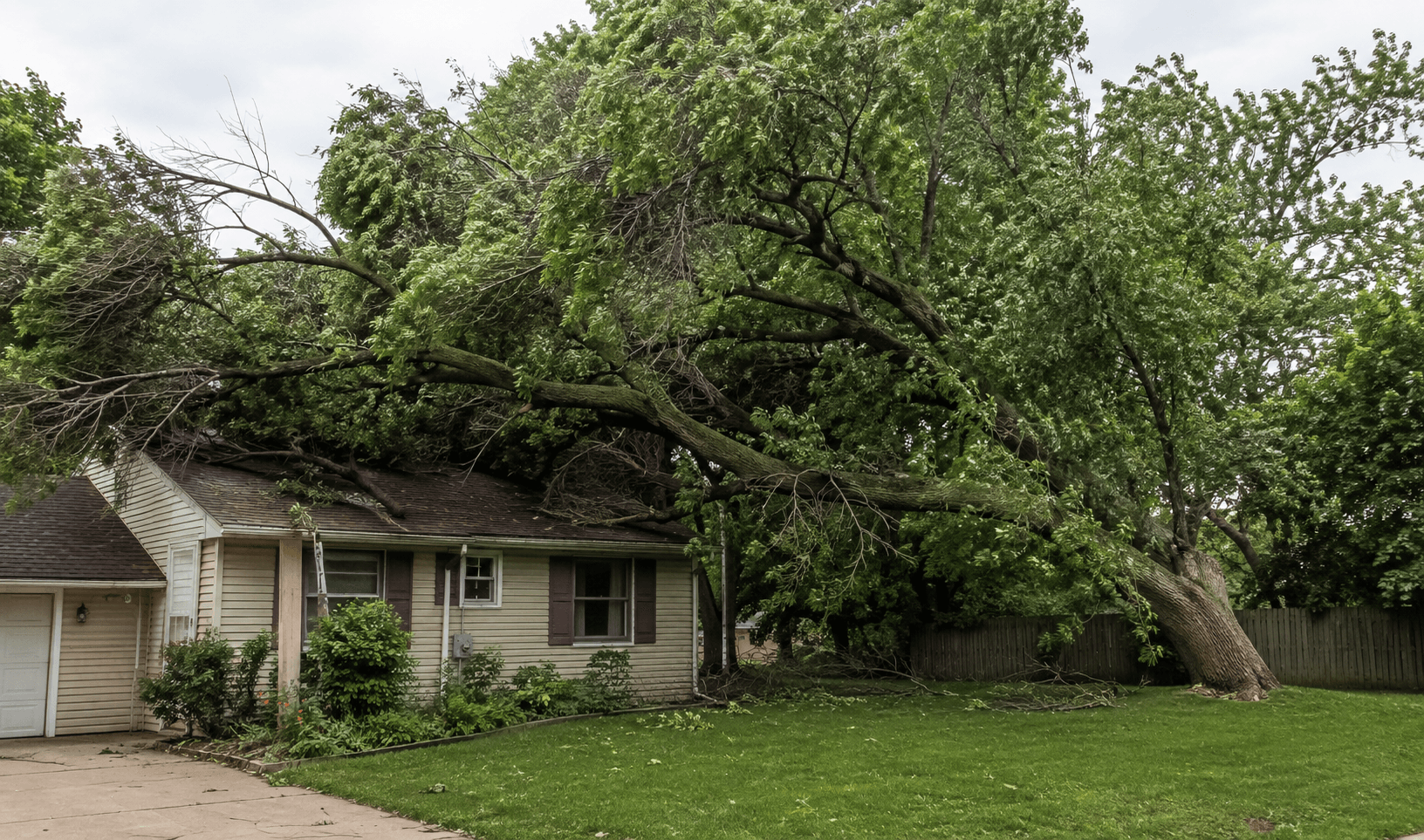
Your first year is when you learn what you actually own. It is also when small problems are cheap to fix. A dead limb removed in winter is a modest job. The same limb coming through a window during a spring windstorm is a very different bill.
Month by Month: What to Do and When

Start wherever you are on the calendar. The order stays the same.
Weeks 1 to 4: Walk, Look, and Photograph
Take a slow lap of your property with your phone. Photograph each tree from a few angles, then look up. You are checking for:
- Dead branches with no leaves in the growing season, or brittle limbs in winter
- Cracks, splits, or included bark where two trunks squeeze together
- Mushrooms or soft, crumbling wood near the base
- Branches touching the roof, siding, chimney, or power lines
- A trunk that leans more than it used to, or soil lifting near the roots
Save the photos in a folder. They give you a baseline, and they help if you ever need to show an insurance adjuster what a tree looked like before a storm.
Also confirm who owns what. Trees near property lines can be shared responsibility, and some HOAs require approval before significant cuts. Ask early, not after the saw is running.
Spring: Handle Hazards and Watch New Growth
Spring is when problems show themselves. Trees that leaf out unevenly, with one section bare, often have dead wood inside the canopy. Note those spots.
This is a good time to book a professional assessment. A certified arborist can tell you which trees only need a light trim, which need structural work, and which are not worth saving. Good companies will also tell you when you do not need much at all.
Skip big cuts on healthy trees right now unless a branch is a safety issue. Fresh growth is the tree’s engine for the year.
Summer: Water, Mulch, and Leave the Heavy Pruning Alone
In the Panhandle, summer is about keeping trees alive. Deep, slow watering beats a quick spray. Add a few inches of mulch around the base, but keep it pulled back from the trunk so it does not rot the bark.
Avoid heavy trimming in extreme heat or drought. Stressed trees recover slowly from large wounds. Pull deadwood and hazards if you must, then wait for cooler months for anything bigger.
Fall: Plan, Clean Up, and Book the Winter Trim
Leaves are dropping, so structure is easier to see. Walk the yard again and compare against your spring photos. Rake debris, clear gutters, and note any branches that rubbed or broke over the summer.
Fall is also the time to call for estimates. Reputable tree services fill up, and getting on the schedule now means you are not scrambling in February.
Winter: The Main Trim
Late winter, roughly January through early March in Amarillo, is the best window for most trimming. Trees are dormant, you can see the branch structure clearly, and the cuts heal before spring growth starts.
This is when your first real trim should happen: removing dead, crossing, and weak branches, lifting low limbs off the roof and driveway, and correcting any obvious structure problems. If you want help from a pro, this is the season to book a local tree trimming service in Amarillo.
Dead or dangerous branches are the exception. Do not wait for the calendar if a limb is hanging over your kid’s bedroom.
Amarillo Specifics: Know Your Trees

Panhandle yards tend to hold a mix of tough survivors, and each has quirks:
- Siberian elm: Fast growing and common across the High Plains, but known for brittle wood that sheds branches in wind.
- Cottonwood: Big, thirsty, and messy. Large cottonwoods need careful trimming because of their size and weight.
- Honey locust and other locusts: Handle wind reasonably well, but benefit from structural pruning while young.
- Cedar elm and Chinese elm: Hardier, more drought tolerant options that hold up well when properly pruned.
- Mesquite and juniper: Common on larger lots and acreage, especially toward Canyon and Bushland.
Wind is the big stress factor. Gusts above 60 miles per hour show up several times a year in this part of Texas, and a tree with hidden rot or a heavy canopy on one side is a bad bet. Hail and ice storms add to the load. That is why trimming for structure, not just looks, matters here.
If you are in Canyon, Bushland, Lake Tanglewood, or Randall County, the same rules apply, with larger lots often meaning more trees to look at.
What You Can DIY and What to Leave to a Pro
Reasonable DIY, from the ground:
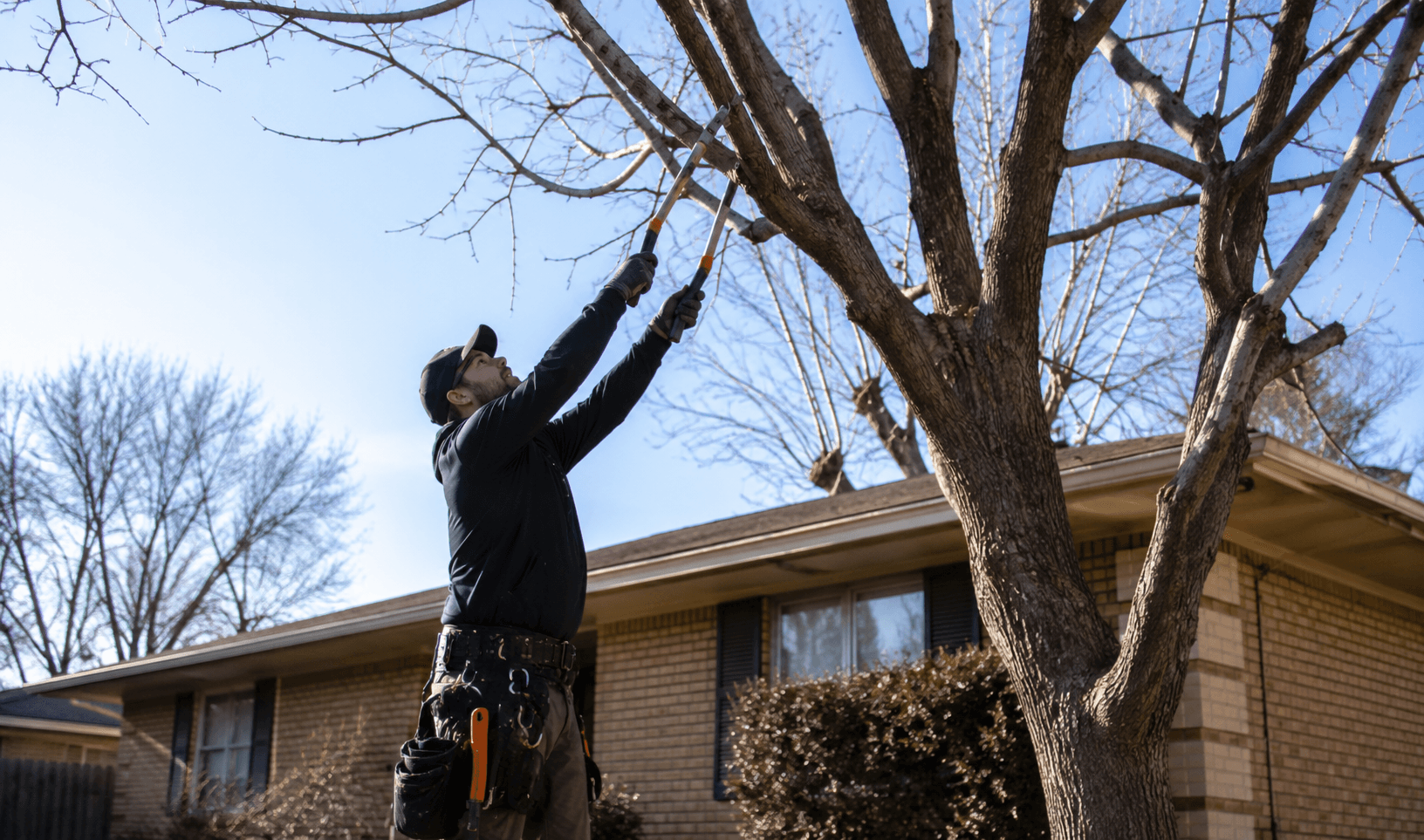
- Snipping small branches you can reach with hand pruners
- Removing a thin, dead twig or sucker growth at the base
- Raking, mulching, and watering
Call a professional if:
- The branch is thicker than a few inches or above head height
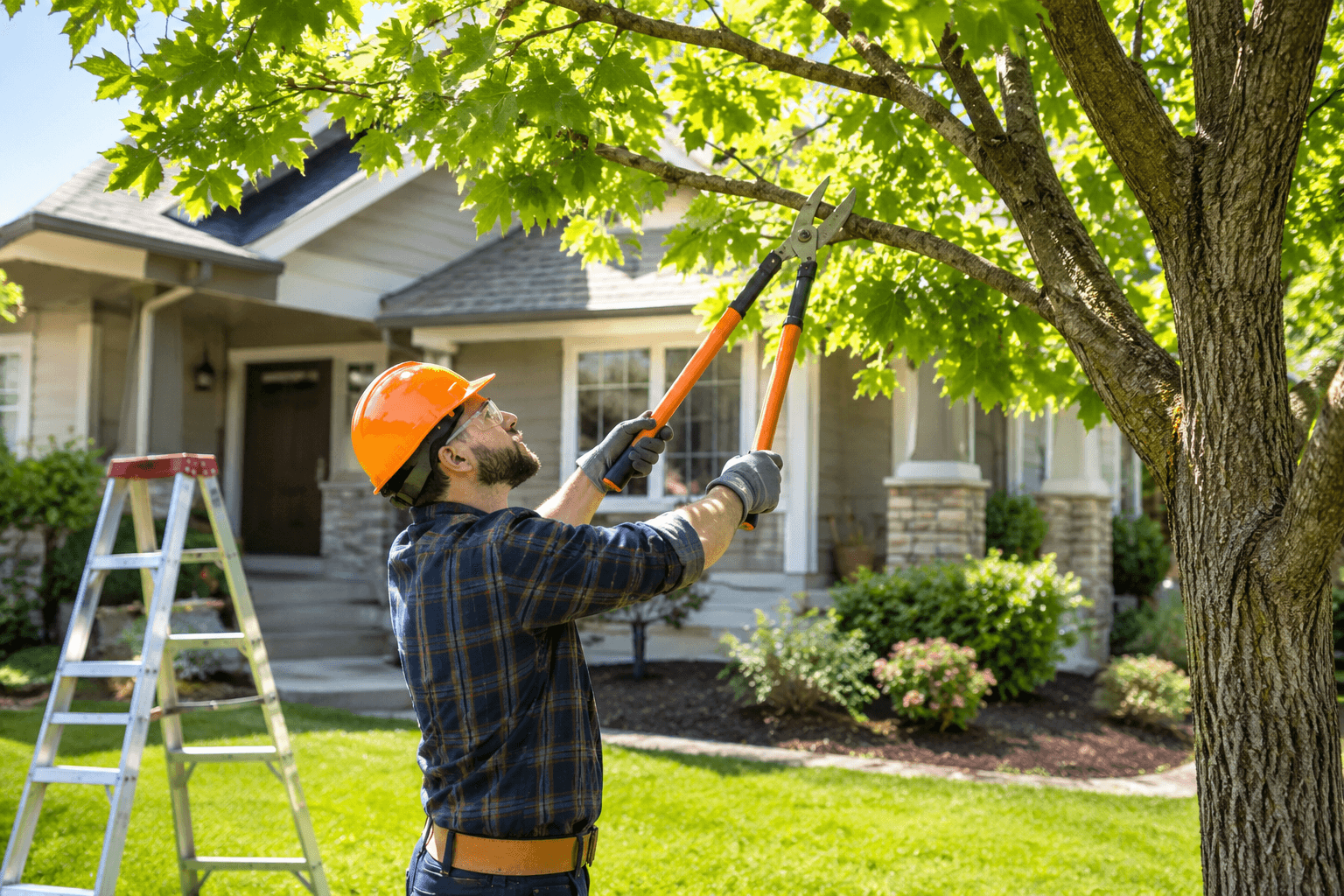
- You would need a ladder to reach it
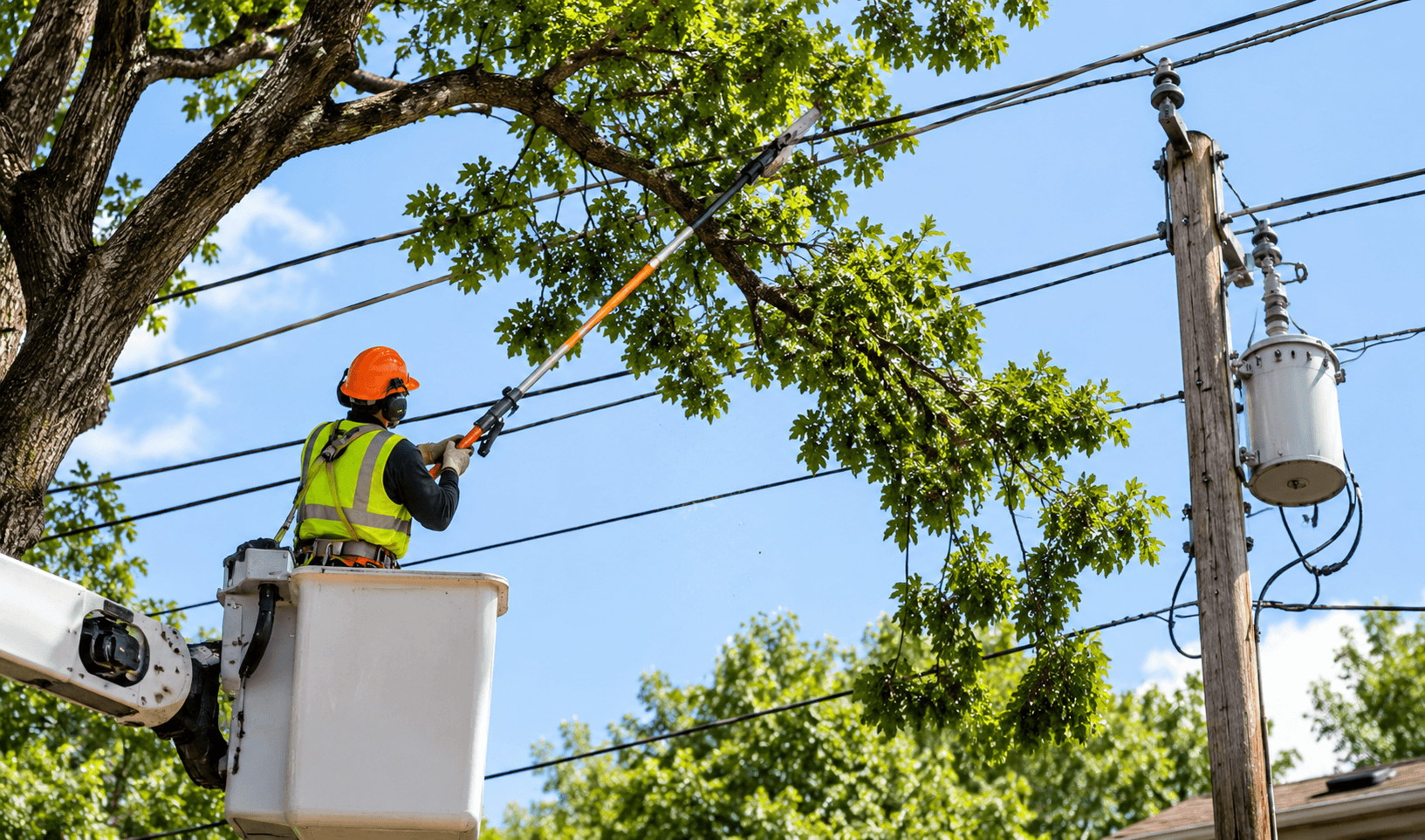
- Anything is near a power line, service drop, or your roofline
- The tree looks hollow, cracked, or leaning
- You are unsure whether the tree is alive
Ladders and chainsaws are a bad combination, and most tree injuries to homeowners happen exactly that way. A professional crew has the rigging, insurance, and training to do it safely.
A critical note on power lines: Never trim near them yourself. Contact your electric utility, which in most of Amarillo is Xcel Energy, and let them or a qualified line clearance crew handle it. And if you are digging to plant anything new, call 811 first.
Common Mistakes New Homeowners Make

Topping a tree. Cutting the top off a tree creates weak, fast growing shoots and invites decay. It is widely discouraged by arborists and the International Society of Arboriculture (ISA).
Taking off too much at once. A common rule of thumb is to avoid removing more than about a quarter of the live canopy in a single season.
Painting the cuts. Wound paint is generally not recommended. Clean cuts at the right spot let the tree seal itself.
Cutting flush to the trunk. Cut just outside the branch collar, the slightly swollen ring where the branch meets the trunk.
Hiring whoever knocks first. After storms, door to door crews appear. Some are fine, but many are uninsured. Take a day, ask questions, and get a written estimate.
Waiting until something breaks. If a tree has been flagged as a risk, do not leave it for the next windstorm. If a tree does come down, an emergency tree service can make the area safe quickly, but planned work is almost always cheaper and calmer.
How to Hire a Tree Service You Can Trust
Before you sign anything, ask:
- Do you carry liability insurance and workers’ compensation? Ask to see the certificate.
- Is there an ISA Certified Arborist on the job, or doing the assessment?
- What exactly will you cut, and what will you leave?
- Does the quote include cleanup and hauling?
- Will you follow ANSI A300 pruning standards?
Get more than one estimate on large jobs. An honest company will also tell you when a tree needs less work than you expected, or when it is time to say goodbye. If an arborist says a tree is too far gone, a safe tree removal is better than waiting on a failure.
How Much Does Tree Trimming Cost in Amarillo?
Cost depends on height, trunk size, canopy spread, access, and how much material has to be hauled away. A small ornamental tree is a fraction of what a mature cottonwood costs. Large cottonwoods can run from about $400 to well over $1,200 depending on the job. Anyone quoting a firm price over the phone without seeing the tree is guessing.
At Open Sky Tree Service, we walk the property first and give a written, free estimate, so you know exactly what you are paying for.
Frequently Asked Questions
1. When is the best time to trim trees in Amarillo, TX? Late winter, usually January through early March, when trees are dormant. Dead or hazardous branches should come off any time of year.
2. Should I trim trees right after buying a house? Walk and inspect first. Remove dead or dangerous limbs right away, then schedule the main trim for the dormant season.
3. How often should trees be trimmed? Mature trees usually benefit from an inspection every year and trimming every few years, depending on species and growth rate. Young trees often need light structural pruning more often.
4. Do I need a permit to trim or remove a tree in Amarillo? Usually not for a typical residential lot, but HOA rules and utility easements can apply. Check before you cut.
5. Can trimming trees increase my home value? Healthy, well shaped trees improve curb appeal, and trimming prevents damage to siding, gutters, and roofs that can cost you later.
6. Is it safe to trim my own trees? Light pruning from the ground is fine. Anything high, heavy, or near power lines should go to a professional.
Final Word
Your first year with trees comes down to three habits: look, plan, and act early. Walk the yard, photograph what you see, handle hazards first, and book a dormant season trim before the winds pick up. Do that, and most of the expensive surprises never happen.
If you want a second set of eyes on your trees, Open Sky Tree Service offers free estimates across Amarillo, Canyon, Bushland, Lake Tanglewood, and Randall County. Call (806) 450-9032 and we will walk your property with you.