Tree trimming in Amarillo, TX is the practice of removing dead, damaged, diseased, or overgrown branches to protect your property, keep trees structurally sound in the High Plains wind, and prevent small problems from turning into expensive emergencies. If you own a home in the Texas Panhandle, when and how you trim matters just as much as whether you trim at all, because our climate is nothing like the rest of Texas.
This guide covers everything a homeowner actually needs to know: timing, local tree species, wind and drought considerations, power line safety, cost factors, and how to choose the right service.
Why Tree Trimming Works Differently in Amarillo
Amarillo sits in USDA Hardiness Zone 7a, on a semi arid, short grass prairie with almost no natural windbreak. Winds regularly gust above 30 mph, winters bring sudden ice events, and summers swing between drought and violent thunderstorms. That combination puts unusual stress on trees compared to more sheltered regions.
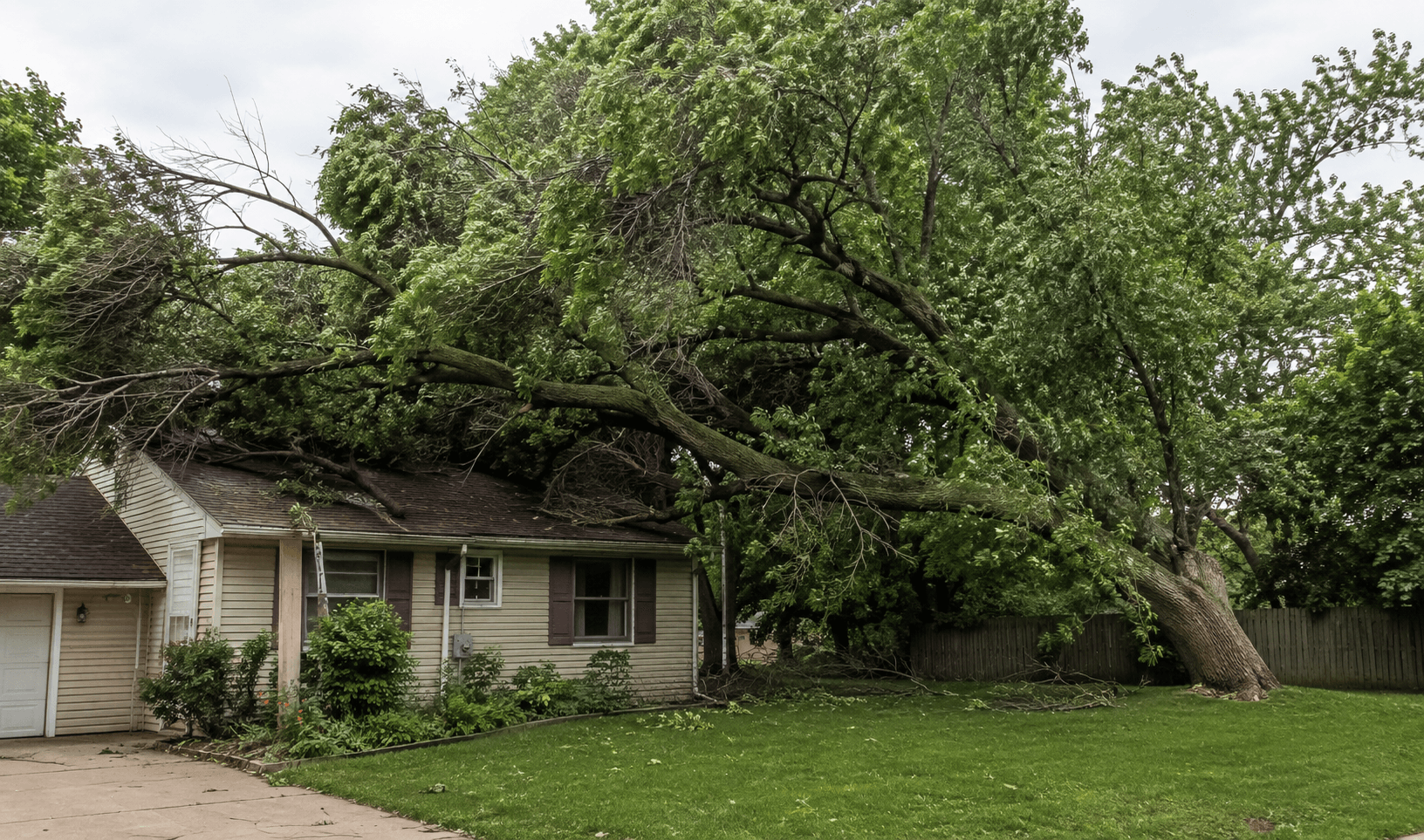
A tree that would be perfectly stable in a humid, low wind climate can become a hazard here simply because of a poorly balanced canopy or a weak branch union. Trimming isn't just cosmetic maintenance in Amarillo. It's structural risk management.
The Best Time to Trim Trees in Amarillo, TX
The best time to trim most trees in Amarillo is during late winter dormancy, roughly January through early March, before spring growth begins. Trimming during dormancy reduces stress on the tree, limits sap loss, lowers the risk of attracting pests and disease, and lets you see the tree's true branch structure without leaves in the way.
A few local exceptions matter:
Elms (including Siberian and cedar elm) should be trimmed only during the dormant season and never between April and June, since fresh wounds during that window attract the beetles responsible for spreading Dutch elm disease.
Oaks should avoid trimming from February through June in most of Texas due to oak wilt risk, which spreads through sap feeding beetles attracted to fresh cuts.
Storm damaged or hazardous limbs should be addressed immediately regardless of season. Safety always overrides ideal timing.
Spring flowering trees are best trimmed right after they finish blooming, not before.
Signs Your Tree Needs Trimming Now

You don't have to wait for the dormant season if any of these show up on your property:
- Branches hanging over your roof, driveway, or walkway
- Limbs touching or growing near power lines
- Visibly dead, cracked, or hollow branches
- A lopsided or overly dense canopy that catches wind like a sail
- New growth (called suckers or water sprouts) shooting up from the base or branches
- Branches rubbing against each other, which wears through bark and invites disease
- Visible pest activity, fungus, or peeling bark
Any of these can turn into a safety issue quickly once Panhandle wind gets involved, so they're worth addressing outside the normal schedule.
Trees Common to the Texas Panhandle and How They Should Be Trimmed
Different species growing in Amarillo yards need different approaches. Here's what shows up most often around town and what to watch for with each.
Siberian Elm
Fast growing and widely planted decades ago, Siberian elms are prone to weak branch unions and storm damage. They benefit from regular structural thinning to reduce wind resistance and prevent large limbs from snapping in high gusts.
Cottonwood
Common along the High Plains and in older Amarillo neighborhoods, cottonwoods grow large canopies quickly and drop limbs as they mature. Routine deadwooding (removing dead branches) is important since their wood is naturally brittle.
Hackberry
A tough, drought tolerant native that handles Amarillo's soil well but tends to grow dense, tangled canopies. Thinning improves airflow and reduces the sail effect during wind events.
Cedar Elm
A Panhandle favorite for its drought resistance, cedar elm is susceptible to Dutch elm disease, so dormant season trimming with clean, sanitized tools is essential.
Honey Mesquite
Slow growing and deeply rooted, mesquite trees generally need less frequent trimming, mostly to manage their spreading, low growing branch structure.
Pecan
Popular for shade and yard character, pecan trees benefit from formative pruning while young to build strong scaffold branches that can support the weight of mature limbs later on.
If you're not sure which species you have or how it should be handled, a quick photo consultation with a local arborist can save you from a trimming mistake that stresses the tree unnecessarily.
Tree Trimming Near Power Lines in Amarillo

Amarillo's electric service is provided primarily through Xcel Energy, and branches growing into or near power lines are one of the most common (and most dangerous) trimming issues homeowners face here. A few things to know:
Never attempt to trim branches that are touching or close to power lines yourself. Contact with an energized line can be fatal, and even branches that appear safe can conduct electricity if they're wet or in contact with a line.
Utility companies will typically clear branches that directly threaten power lines, but this clearance is usually minimal and focused on safety, not tree health or appearance.
If a tree on your property is growing toward a line, it's worth having a professional handle the trim proactively rather than waiting for a utility crew or, worse, a storm to force the issue.
DIY Tree Trimming vs Hiring a Professional
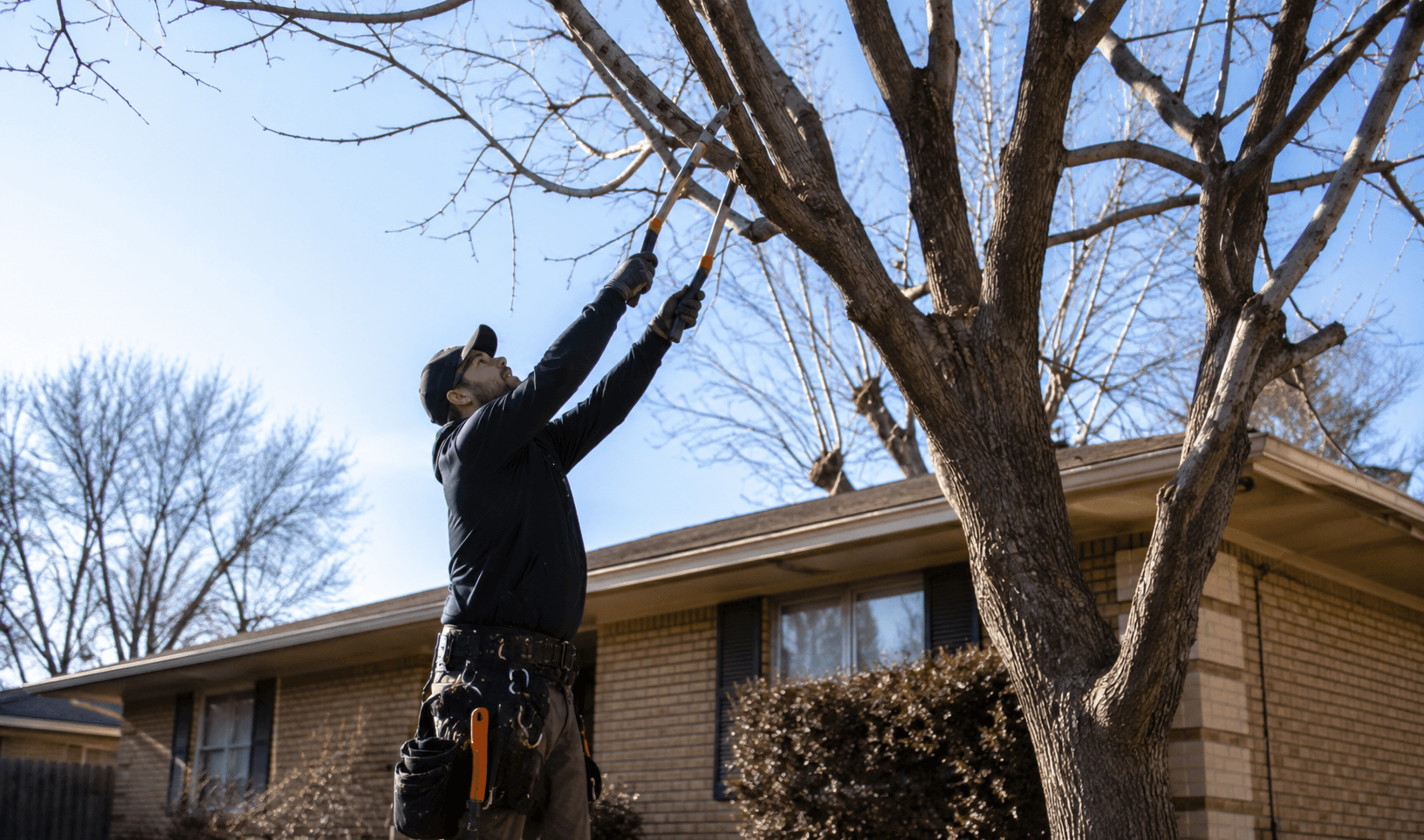
Small, low branches on young trees are reasonable for a homeowner to handle with basic tools like bypass loppers or a pole pruner. Anything beyond that starts to carry real risk.
Call a professional when:
- The branch is thicker than about 2 inches in diameter
- Trimming requires a ladder or climbing
- Branches are near power lines or your roof
- The tree is large, mature, or shows signs of decay
- You're unsure which cuts will help versus harm the tree's structure
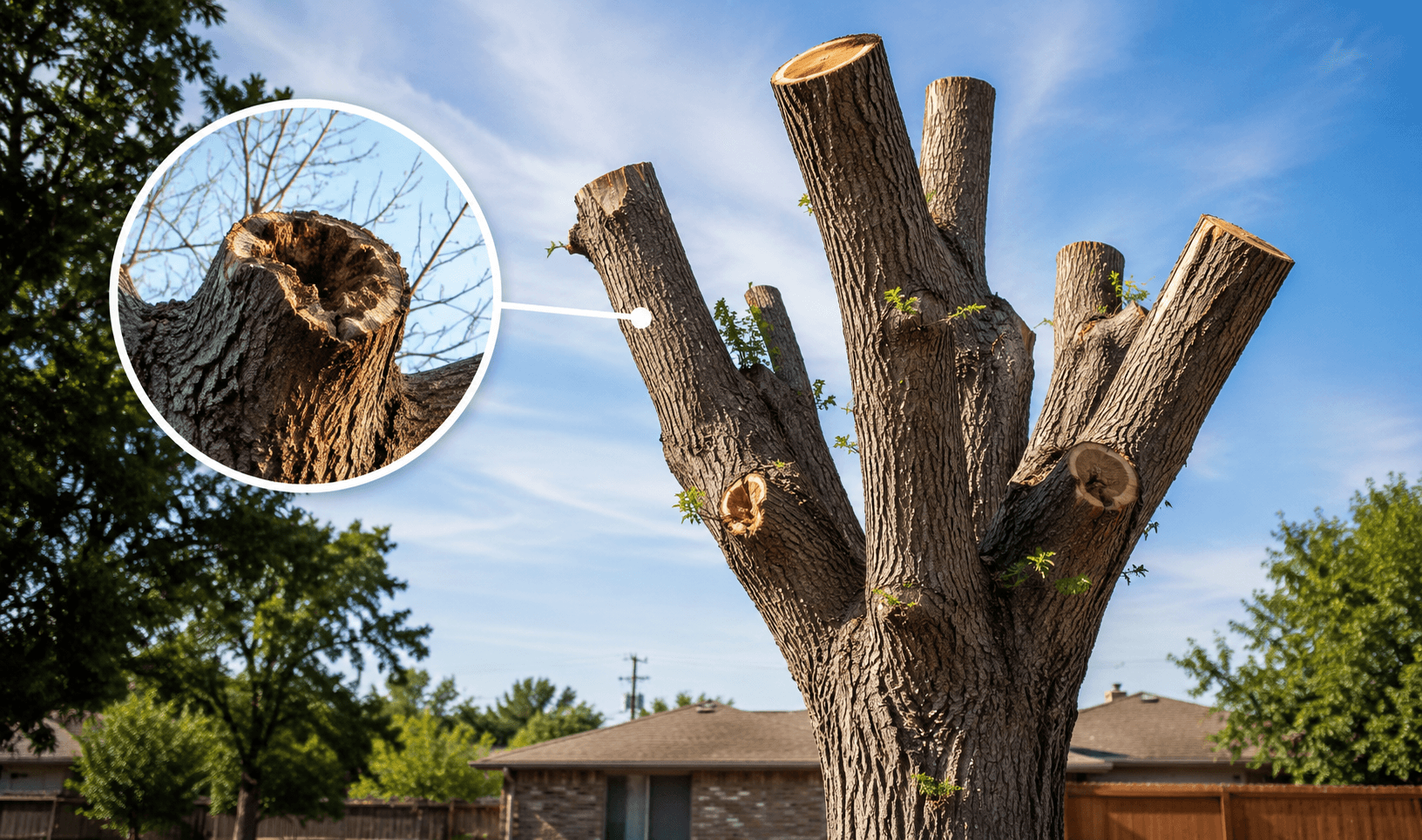
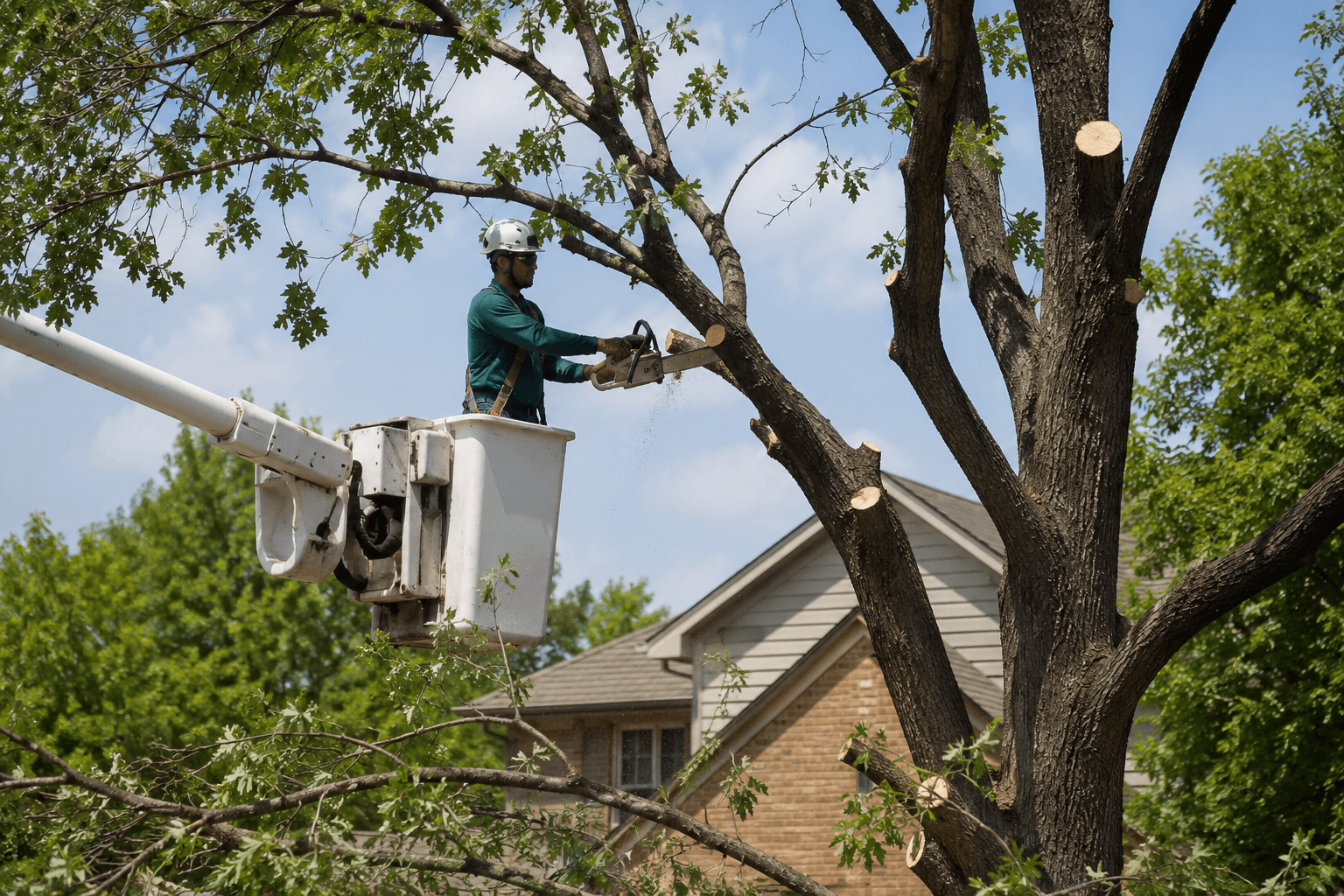
Improper trimming, like topping a tree or leaving stubs instead of clean cuts at the branch collar, can permanently weaken a tree and make it more likely to fail in a storm. Professional arborists follow ANSI A300 pruning standards, which govern proper cut placement and canopy management, precisely to avoid this.
What Affects the Cost of Tree Trimming in Amarillo
Pricing varies based on several factors rather than a flat rate, so it's worth understanding what drives the quote:
Tree size and height is the biggest factor, since taller trees require more equipment, time, and safety precautions.
Accessibility matters too. A tree in an open front yard costs less to trim than one wedged between a house, fence, and power line.
Condition plays a role: dead, diseased, or storm damaged trees often take longer to trim safely.
Debris removal is sometimes priced separately from the trimming itself, so ask whether hauling and cleanup are included in your quote.
Number of trees on the property can lower the per tree cost if you bundle the work into one visit.
Because these variables shift so much from yard to yard, the most accurate way to get a number is a free on site or photo based estimate rather than relying on a generic price list.
How to Choose a Tree Trimming Company in Amarillo

A few questions separate a solid local company from a risky one:
- Are they insured for liability and workers compensation? This protects you if something goes wrong on your property.
- Do they follow ISA (International Society of Arboriculture) pruning standards, or employ a certified arborist?
- Will they give you a written estimate before starting work?
- Do they clean up and haul away debris, or does that cost extra?
- Can they speak specifically to Amarillo's climate, common local species, and wind related risks, rather than giving generic advice?
A company that takes time to explain why they're recommending a particular trim, rather than just showing up and cutting, is usually a good sign of experience.
Common Tree Trimming Mistakes Homeowners Make
Topping the tree. Cutting main branches down to stubs might look like a quick fix for a tree that's grown too tall, but it triggers weak, fast growing regrowth that's more likely to break later.
Trimming too much at once. Removing more than about 25 percent of a tree's canopy in a single session can stress it severely, especially in Amarillo's dry climate.
Ignoring the branch collar. Cutting flush against the trunk instead of just outside the branch collar slows healing and invites decay.
Trimming during the wrong season. As covered above, trimming elms or oaks at the wrong time of year can expose them to disease.
Skipping deadwood removal. Dead branches left in place are one of the most common causes of property damage during Panhandle windstorms.
Frequently Asked Questions
How often should trees be trimmed in Amarillo, TX?
Most established trees do well with trimming every 2 to 3 years, though young trees benefit from lighter, more frequent formative pruning to build strong structure early on.
Can I trim my own trees in Amarillo?
Yes, for small branches on low, young trees using basic tools. Larger limbs, anything near power lines, or work requiring a ladder should go to a professional for safety reasons.
What time of year is best for tree trimming in the Texas Panhandle?
Late winter dormancy, generally January through early March, is best for most species. Elms and oaks have specific seasonal restrictions due to disease risk.
Does the City of Amarillo have rules about tree trimming?
The city maintains a landscape ordinance and recommended plant list, and separate rules can apply to trees near sidewalks, street right of ways, or utility easements. It's worth checking current city guidance if your trimming affects public right of way areas.
Is tree trimming necessary if my tree looks healthy?
Yes. Routine trimming prevents future problems like weak branch unions, overcrowded canopies, and wind resistance buildup, even in trees that currently look fine.
Final Thoughts
Tree trimming in Amarillo isn't just about appearance. Between the wind, the dry summers, and the specific species that grow well here, a proper trimming schedule is one of the most effective ways to protect your home and keep your trees healthy for the long run. Getting the timing, technique, and species specific care right makes the difference between a tree that thrives through Panhandle weather and one that becomes a liability during the next storm.
If you'd rather have an experienced local team handle it, reach out for a free assessment and we'll walk you through exactly what your trees need.