Topping the canopy, cutting at the wrong time of year, and ignoring how Panhandle wind stresses a tree are the three tree trimming mistakes that end up costing Amarillo homeowners the most money, either in dead trees, storm damage, or emergency removal bills that could have been avoided with a proper trim. If you have ever paid for a "quick trim" that left your tree looking worse a year later, or watched a limb come down in a spring windstorm right where a bad cut had been made, you already know this is not just theory. It is a pattern local arborists see across Wolflin, Sleepy Hollow, South Amarillo, and every neighborhood in between.
This guide breaks down the specific mistakes that show up again and again on Amarillo properties, why they matter more here than in other parts of Texas, and what to do instead so your trees survive our wind, drought, and hail rather than becoming another expensive lesson.
Why Amarillo Trees Are More Sensitive to Trimming Mistakes
Trees in the Texas Panhandle already live under more stress than trees almost anywhere else in the state. Amarillo sits on the High Plains at roughly 3,600 feet, with average winds of 15 to 25 miles per hour and gusts that can climb past 60 or even 75 miles per hour during a spring storm. Add in clay heavy soil, low rainfall, alkaline conditions, and wide temperature swings, and you get trees that are already fighting to hold on. Species that dominate local yards, such as cedar elm, Siberian elm, cottonwood, bur oak, chinkapin oak, and Chinese pistache, are tough by nature, but a bad cut removes the margin they need to recover from drought or a hailstorm.
That is the real reason a "small" trimming mistake in Amarillo tends to cost more than the same mistake somewhere with milder weather. A tree that is already stressed by wind and heat has far less energy in reserve to heal a wound, fight off disease, or push new growth after over pruning.
Mistake 1: Topping the Tree Instead of Trimming It
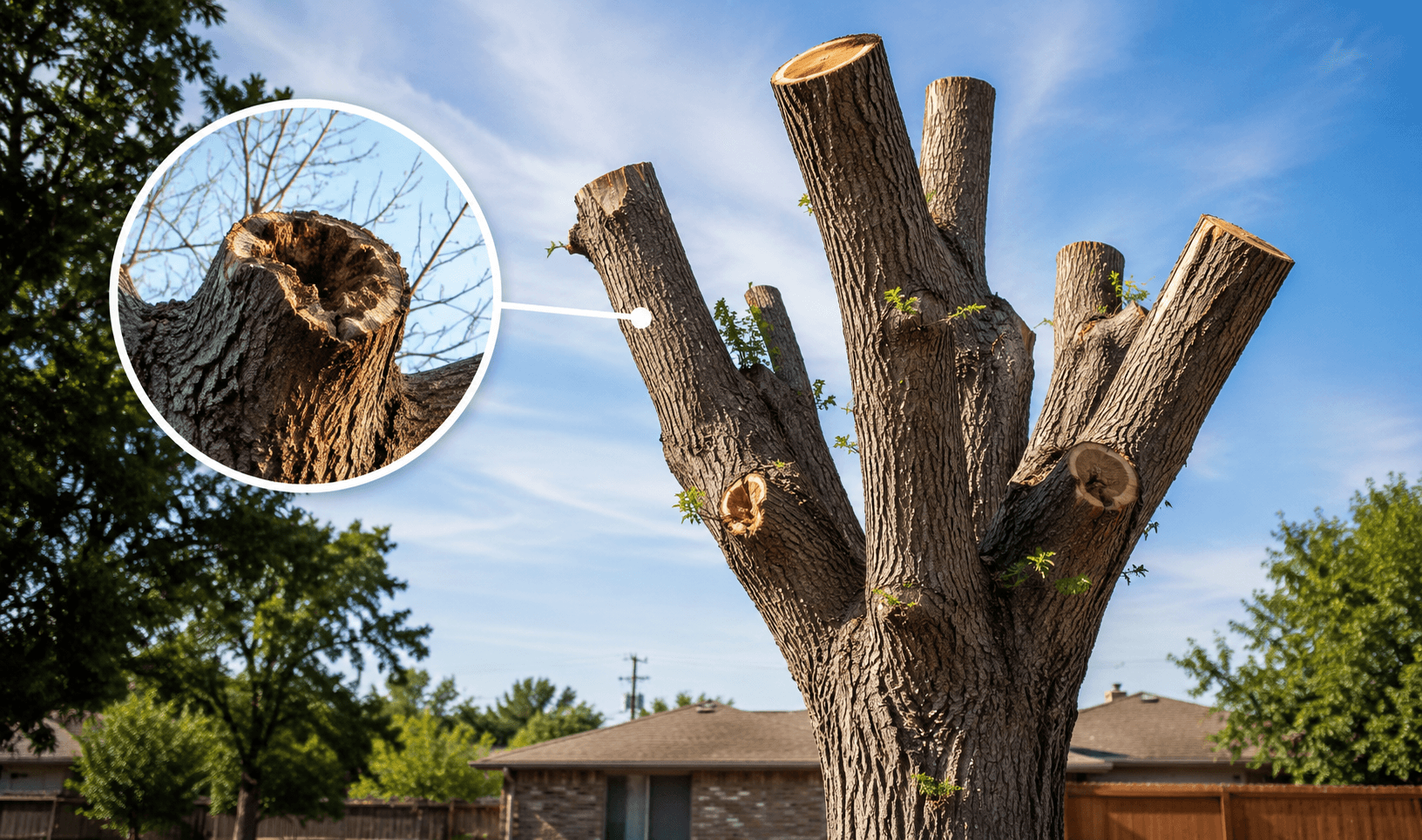
Topping means cutting large limbs or the main leader back to stubs to reduce a tree's height quickly. It is one of the most common requests homeowners make, usually because a tree looks too big for the yard or is getting close to the roofline. It is also one of the most damaging things you can do to a tree.
When a tree is topped, it loses a huge portion of the leaves it needs to produce energy. In response, it often pushes out a mass of weakly attached shoots called water sprouts, right at the site of the cut. Those sprouts grow fast, attach poorly, and are far more likely to snap off in high wind than a naturally formed branch. On a Panhandle property, that means the very trim meant to reduce storm risk actually increases it a few years later, along with opening the tree up to decay and pests. In many cases, a topped tree never recovers its natural shape and has to be removed within a decade, turning a routine trim into a full tree removal bill.
Mistake 2: Trimming at the Wrong Time of Year
Timing matters more in Amarillo than homeowners realize. Late winter, generally January through early March, is the best window for major trimming because deciduous trees are dormant. With no leaves in the way, an arborist can actually see the branch structure, and the tree handles the cuts with far less stress since it is not actively growing or trying to heal in the middle of summer heat.
Heavy trimming during the growing season, especially in the middle of an Amarillo summer, forces the tree to spend energy it needs for surviving drought and heat on wound recovery instead. It also opens fresh cuts right when insects and fungal pathogens are most active. That combination is how a routine summer trim turns into a tree fighting off borers or fungal decay by fall. Storm damaged or genuinely hazardous limbs are the exception. Those should never wait for the "right season," since a cracked or hanging branch is a safety issue regardless of the calendar.
Mistake 3: Removing Too Much Canopy at Once

A good rule most certified arborists follow is to never remove more than about 25 percent of a tree's live canopy in a single season. Homeowners who try to get ahead of future growth, or who let a tree go untrimmed for years and then overcorrect all at once, routinely blow past that number.
Removing too much foliage at one time cuts into the tree's ability to photosynthesize, which weakens the root system and makes the tree more vulnerable to Amarillo's drought cycles. A stressed tree also becomes an easier target for pests and disease, and a weakened root system is far more likely to fail in high wind, which is exactly the kind of failure that damages a roof, fence, or vehicle. If a tree genuinely needs significant work, spreading it across two or three seasons is safer and cheaper in the long run than one aggressive cut.
Mistake 4: Making Flush Cuts or Leaving Stubs
Where a branch meets the trunk, there is a slightly swollen ring of tissue called the branch collar. That collar contains the cells the tree uses to seal off a wound and stop decay from spreading inward. Two common DIY mistakes ruin that natural defense.
A flush cut removes the branch collar entirely by cutting it level with the trunk, which strips away the tree's ability to compartmentalize the wound and lets rot travel straight into the trunk. A stub cut does the opposite, leaving too much branch behind the collar, which prevents the wound from ever closing properly and gives insects and fungus an easy entry point. Both mistakes look fine the day they happen and turn into visible decay a year or two later, often well after the person who made the cut has forgotten about it.
Mistake 5: Using the Wrong Tools, or Dull Ones
A dull blade does not cut, it tears. Torn bark and jagged wood take longer to heal, create a larger wound for pathogens to exploit, and make the tree work harder to recover. The same problem happens when homeowners use a tool that is too small for the branch, forcing repeated cuts that shred the wood instead of slicing it cleanly.
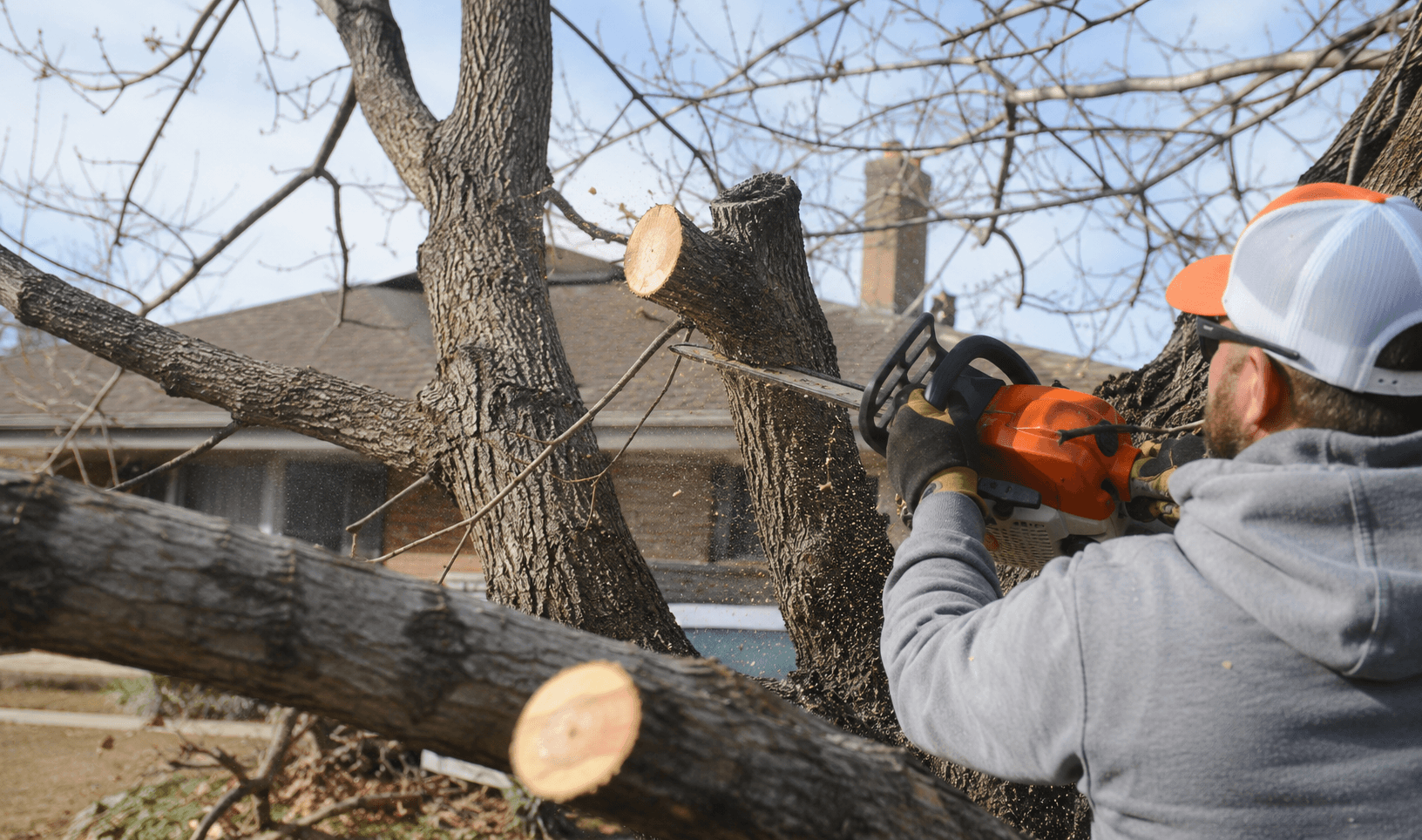
There is a safety angle here too. Using an oversized chainsaw on a small ornamental, or an undersized pruner on a thick limb, is one of the more common causes of DIY tree trimming injuries. In a region where many trees are also tangled with overhead lines, using the wrong equipment near a power line adds real risk on top of the tree damage.
Mistake 6: Trimming Too Close to Power Lines

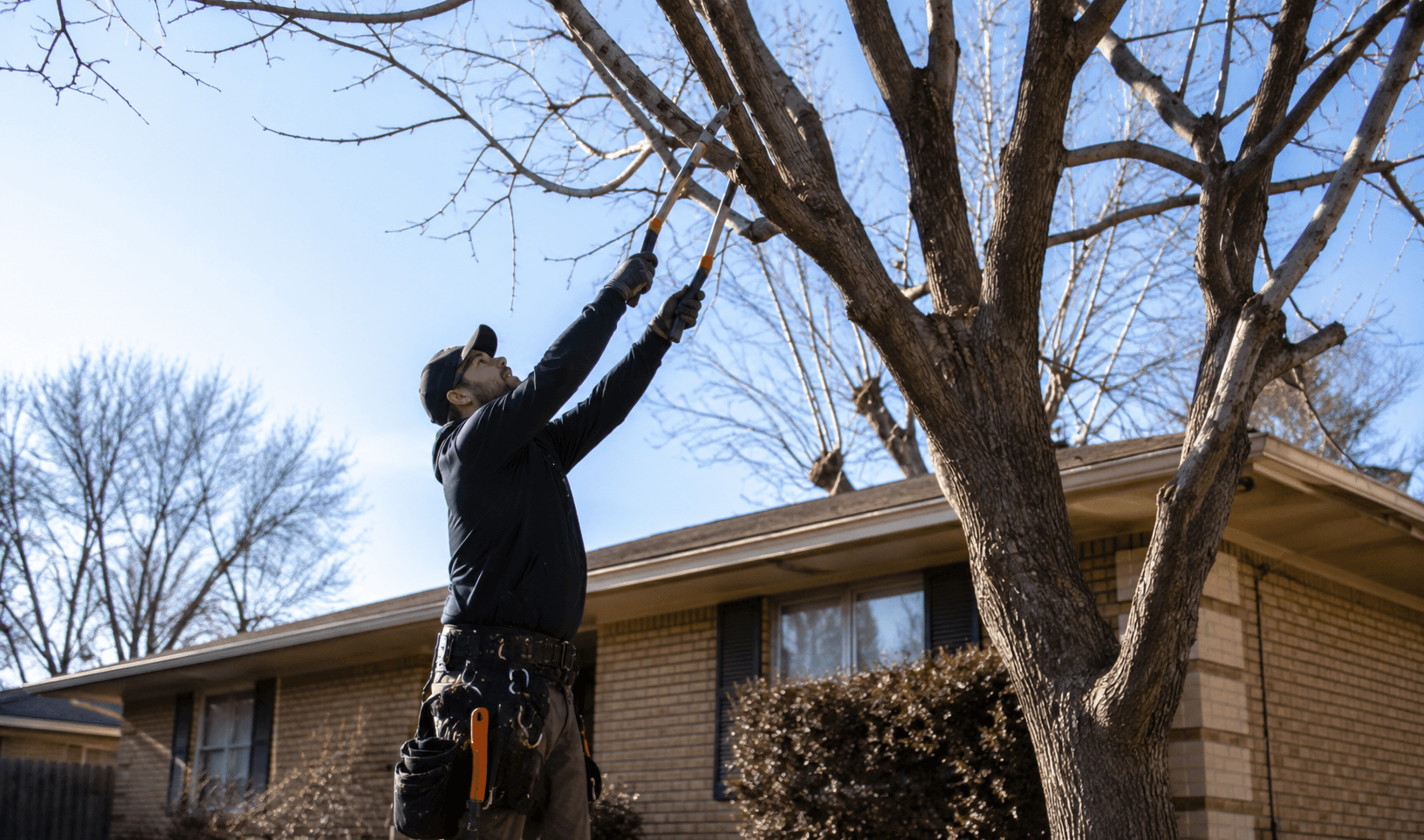
Amarillo yards, especially in older neighborhoods, often have mature trees growing near overhead utility lines. Homeowners who try to clear branches away from lines themselves are taking on one of the most dangerous jobs in tree care. Contact with an energized line can cause serious injury or death, and even branches that are not touching a line can conduct electricity if they are close enough. Utility companies and professional crews use insulated equipment and specific clearance procedures for exactly this reason. If a branch is anywhere near a power line, that is not a homeowner project.
Mistake 7: Ignoring the Tree's Species and Growth Habit
A cedar elm, a bur oak, and a cottonwood do not grow the same way, and they should not be trimmed the same way. Cottonwoods, common along Amarillo drainage areas, have brittle wood and a fast growth habit that makes them prone to dropping large limbs if the canopy is not properly thinned. Oaks are far more sensitive to timing because of oak wilt, a disease that spreads through fresh wounds and root systems and is best avoided by pruning only during the dormant season, never during active beetle activity in spring. Elms respond differently to canopy thinning than pistache or redbud does.
Trimming every tree on the property with the same generic approach, without accounting for species specific growth patterns and disease risk, is a quiet mistake that shows up as decline a season or two later rather than an immediate problem.
Mistake 8: Not Sanitizing Tools Between Cuts
Pruning tools carry bacteria and fungal spores from one cut to the next. If a homeowner prunes a diseased branch and then moves to a healthy tree without cleaning the blade, they can spread that infection across the whole property. This matters more in a region already dealing with drought stressed trees and known regional threats like oak wilt. Wiping blades with rubbing alcohol or a diluted bleach solution between cuts, especially when working on multiple trees, is a simple step that gets skipped constantly and costs homeowners entire trees when it is.
Mistake 9: Waiting Too Long to Call a Professional

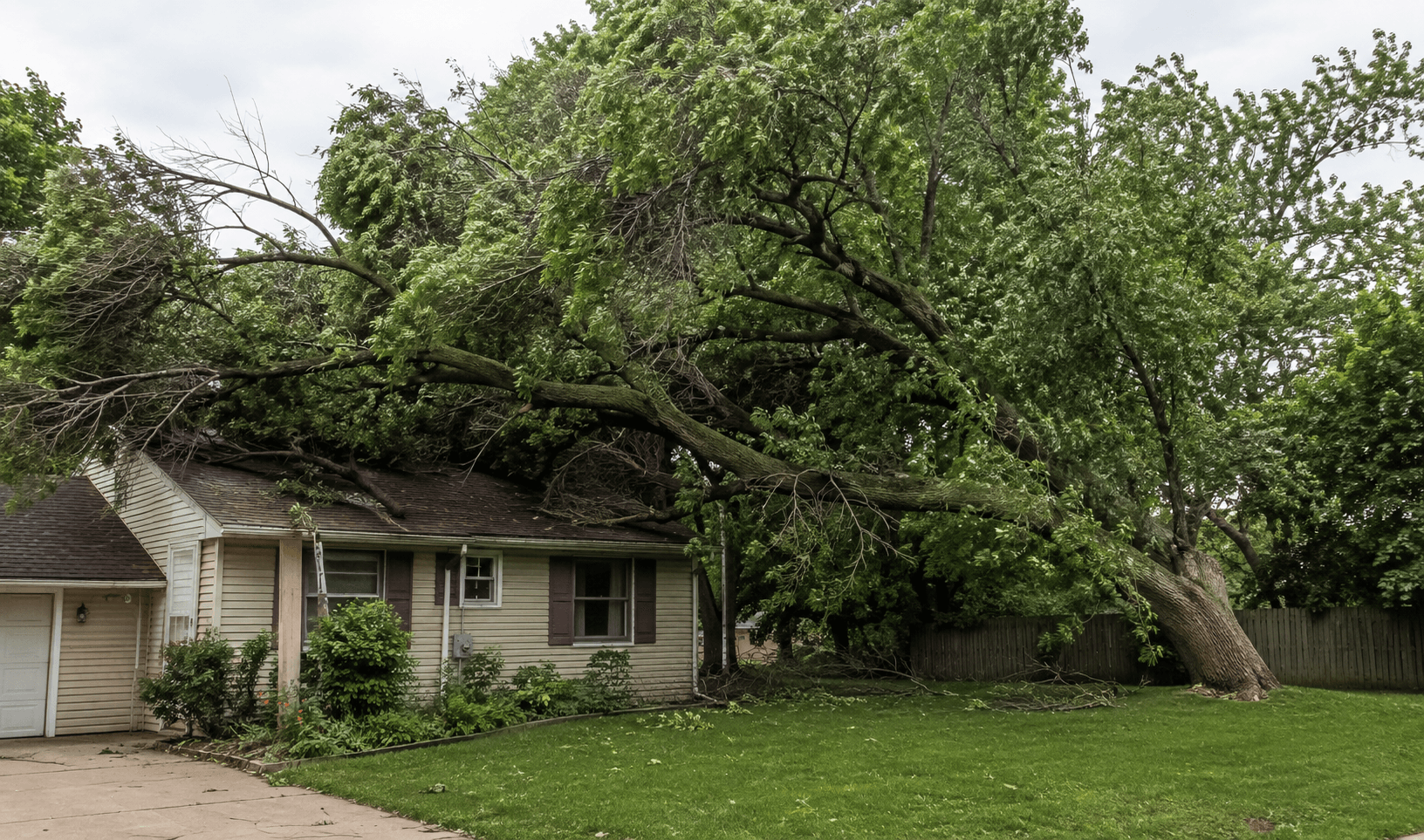
The mistake that costs the most money is often not a bad cut at all. It is delay. Homeowners frequently notice a leaning tree, a cracked limb, or a canopy that looks thin and hold off on calling anyone, either to save money or because the problem does not look urgent yet. In the Panhandle, where a calm week can turn into a 60 mile an hour wind event overnight, that delay is exactly how a $300 trim turns into a $3,000 emergency removal after a storm brings the whole tree down onto a fence, roof, or vehicle.
If a tree on your property looks stressed, has visible cracks, or has been through a recent hailstorm or dust storm, it is worth having it looked at before the next high wind event rather than after.
What Amarillo Homeowners Should Do Instead
The trees that hold up best around Amarillo, the old oaks in Wolflin and the pecans along Sleepy Hollow included, are the ones that get consistent, correctly timed care rather than occasional aggressive trims. A few habits go a long way toward avoiding the mistakes above.
Schedule major pruning for late winter dormancy, keep any single trim under roughly a quarter of the live canopy, and treat storm damage or dead limbs as an immediate priority regardless of season. Have trees near power lines or with any structural concern evaluated by someone trained to spot the difference between a healthy branch and a hazard. If you are ever unsure whether a tree needs a light trim or a full tree pruning plan, that is a conversation worth having before the wind decides for you.
Frequently Asked Questions
1. What is the most expensive tree trimming mistake homeowners make in Amarillo?
Topping a tree is generally the costliest mistake because it triggers weak regrowth and decay that often ends in full tree removal within a decade, on top of the increased storm risk in the years before that.
2. When is the best time to trim trees in Amarillo, TX?
Late winter, from January through early March, is best for major trimming since trees are dormant and handle the work with far less stress. Dead or storm damaged limbs should be addressed immediately, regardless of season.
3. How much of a tree's canopy is safe to remove at once?
Most certified arborists recommend staying under about 25 percent of the live canopy in a single season to avoid weakening the tree's root system and energy reserves.
4. Can a bad trim actually kill a tree?
Yes. Over pruning, flush cuts, and topping all reduce a tree's ability to produce energy and heal properly, which can lead to decline, disease, or death, especially in a drought prone climate like the Panhandle.
5. Is it safe to trim branches near power lines myself?
No. Branches near overhead lines should only be handled by professionals with the right insulated equipment and training, since contact with an energized line can be fatal.
6. Should I trim my trees myself or hire a professional in Amarillo?
Light, low branch trimming on small ornamentals is often manageable for homeowners. Anything involving major limbs, height, power lines, or a tree that looks stressed or storm damaged is worth a professional tree trimming evaluation, since the cost of a mistake almost always outweighs the cost of the service.
If a recent storm has already left a tree on your property cracked, leaning, or dropping limbs, do not wait on it. Reach out to our emergency tree service team and we will assess whether the tree can be saved or needs to come down before it becomes a bigger problem.