Expect a crew that shows up on time, walks your property with you, explains what they plan to do before touching a branch, and leaves your yard cleaner than they found it. That's the short version. If you've never had a tree trimmed by a professional crew before, the whole process can feel like a mystery, especially if you're picturing someone showing up with a chainsaw and just going to town on your cottonwood. That's not how it works, and it shouldn't be.
Here in the Texas Panhandle, our trees deal with a lot: constant wind, dry spells, sudden hailstorms, and soil that isn't always forgiving. A trimming visit from a real tree care company looks different than a rushed job from someone with a truck and a ladder. Below is a full breakdown of what actually happens, step by step, so you know what a proper visit should include and what a shortcut looks like.
Before the Crew Ever Shows Up
A good tree trimming visit starts before anyone touches a branch. Most reputable companies will ask a few questions up front: what kind of tree it is, how tall it seems, whether it's near power lines, and what your main concern is (storm risk, overgrowth, aesthetics, or a mix of all three).
This is also when scheduling matters more than people realize. Late winter, roughly January through early March, is the ideal window for most species here since the tree is dormant and handles pruning cuts with less stress. That said, a dead or hazardous limb doesn't wait for a season, and a legitimate crew will tell you that too.
Arrival and the Initial Walkthrough
When the crew arrives, expect them to walk the property with you first, not jump straight to work. A trained arborist will look at the tree's species, size, canopy shape, and growth pattern, then check the surrounding area for fences, power lines, roofs, and anything else that could be affected.
This is your chance to point out specific concerns, like a limb hanging over the driveway or a branch that scrapes the roof in high wind. A professional crew will also flag anything you might not have noticed, like early signs of disease, pest damage, or a weak branch union that could snap in a storm. If you're not sure whether your tree needs trimming or pruning, this is the moment they'll clarify the difference and recommend the right service.
The Assessment and the Plan
Once the walkthrough is done, the team will decide on an approach. This usually falls into one or more of these categories:
1. Crown thinning: Removing select branches to improve airflow and light penetration through the canopy, which reduces wind resistance during Panhandle storms.
2. Crown raising: Trimming lower limbs to clear space above driveways, walkways, or roofs.
3. Crown reduction: Carefully reducing the overall height or spread of a tree, often to protect it from wind stress or keep it clear of structures.
4. Deadwooding: Removing dead, damaged, or diseased branches before they become a falling hazard.
An ISA certified arborist, if one is on site, will typically follow ANSI A300 pruning standards, which are the industry benchmark for making clean cuts that heal properly instead of leaving the tree vulnerable to decay or pests.
Equipment You Can Expect to See
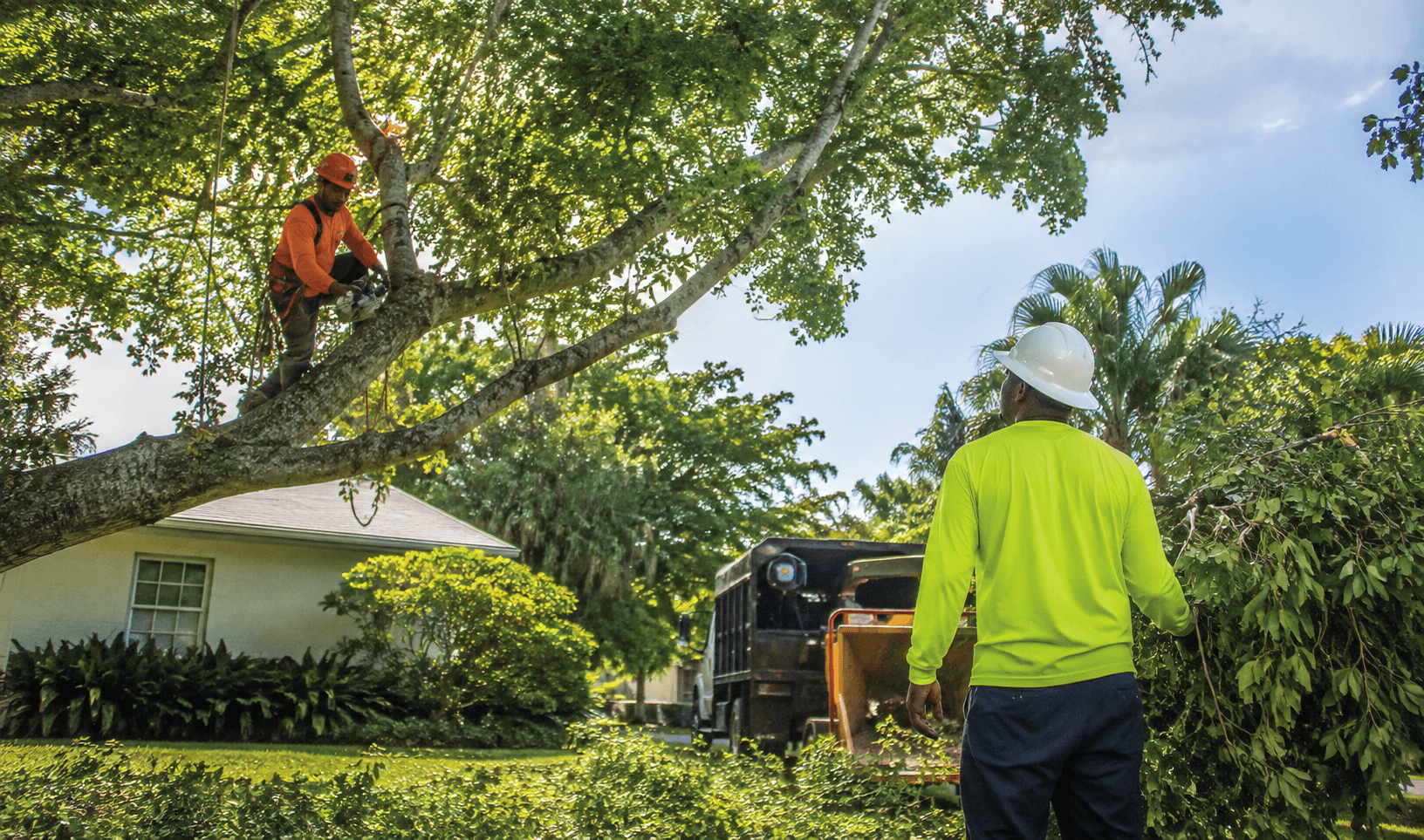
A professional visit usually involves more than a handsaw. Depending on the size and location of the tree, expect to see pole saws, chainsaws, pruning shears, and possibly a bucket truck for taller cottonwoods, elms, or locust trees that are common around Amarillo. Safety gear like harnesses, hard hats, and eye protection is standard, along with cones or barriers if the work is happening near a street or driveway.
Safety Comes First, Every Time

Before any cutting starts, the crew should identify hazards: nearby power lines, unstable limbs, and anything on the ground that could get in the way once branches start coming down. If a tree is close to a power line, expect the crew to either work extra carefully around it or recommend the utility company handle that specific section.
Safety isn't just about the crew either. Expect them to secure the work area, especially if kids, pets, or vehicles are nearby, and to communicate clearly if you need to stay clear of a section of the yard while they work.
The Actual Trimming Process
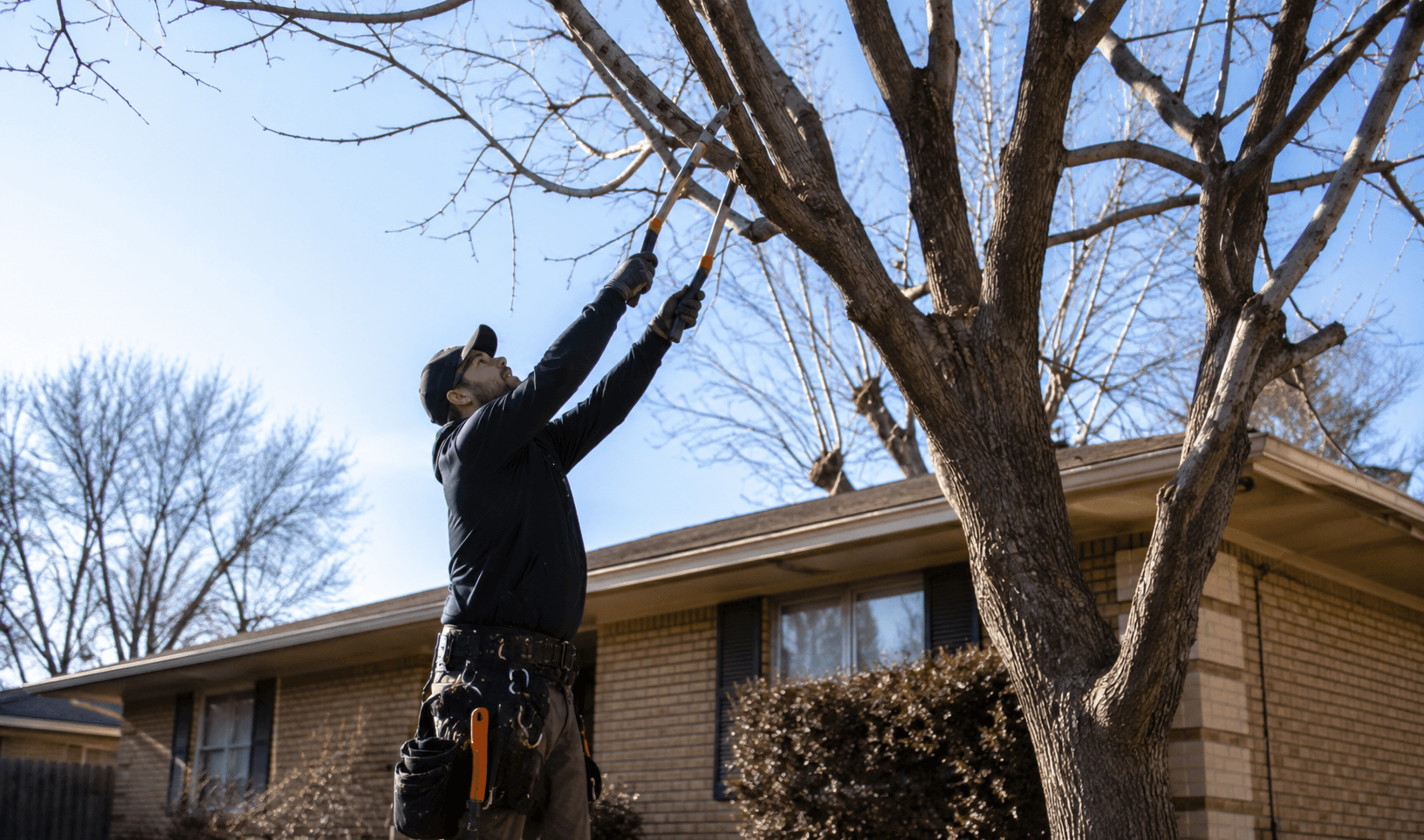
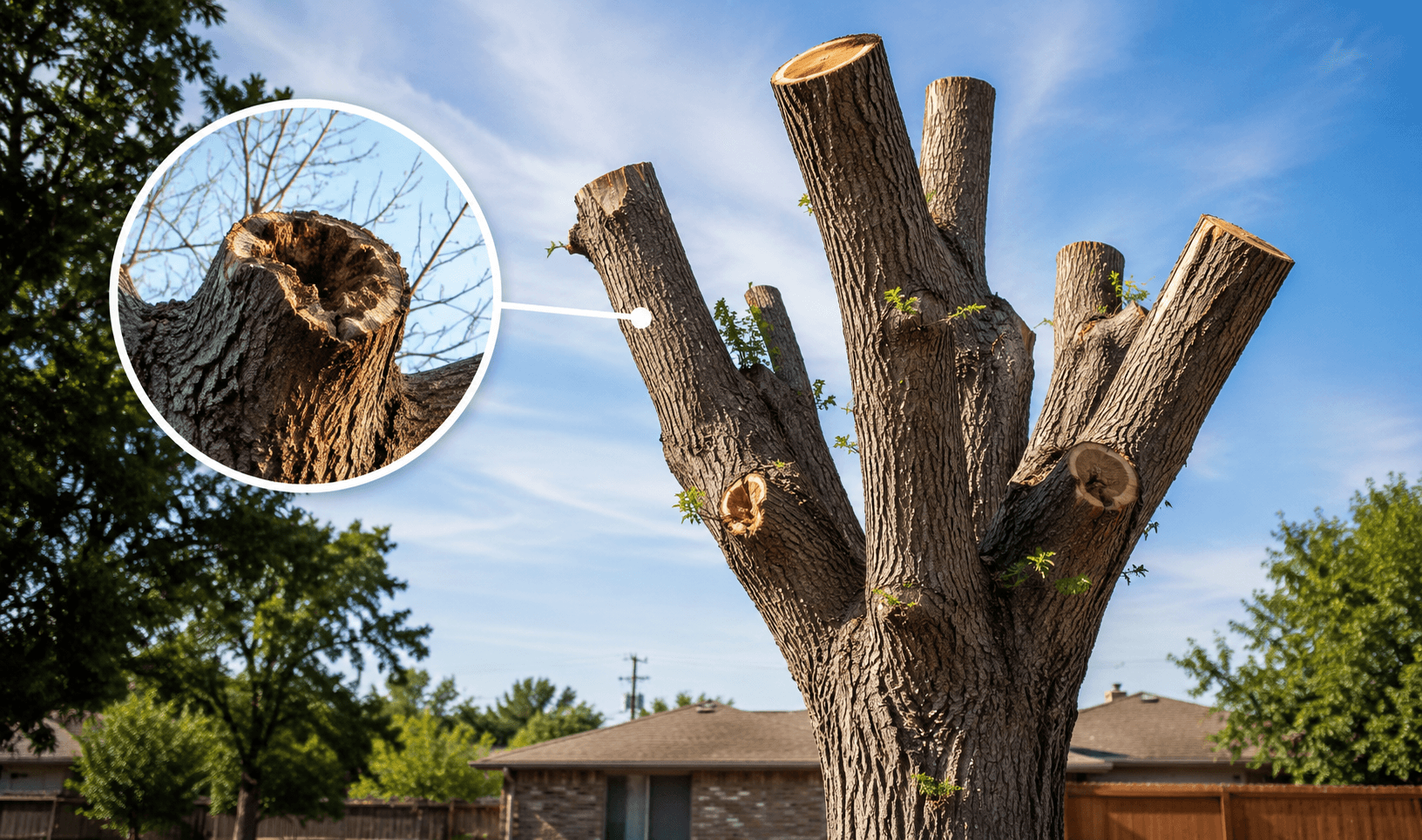
This is the part most homeowners picture, but it's usually the fastest and most controlled step. The crew works methodically, one section of the canopy at a time, making clean cuts at the branch collar rather than flush against the trunk, which helps the tree seal the wound naturally.
You shouldn't see random hacking or excessive removal. A good rule most arborists follow is never removing more than about 25 percent of a tree's canopy in a single visit, since taking too much at once can stress the tree and open it up to disease.
If you want a closer look at how this process is tailored to different situations, our tree pruning services page breaks down the techniques we use most often for Panhandle trees like cottonwood, elm, and locust.
Cleanup and Debris Removal

Once the trimming is finished, expect the crew to gather every branch, twig, and pile of sawdust before they leave. Most companies run everything through a wood chipper on site, which means you're often left with either a clean lawn or a pile of fresh mulch you can keep for your garden beds if you'd like it. A visit isn't really finished until your yard looks better than it did that morning, not just less overgrown.
What Happens After the Visit
A professional crew won't just pack up and disappear. Expect some quick guidance on watering, general care, or what to watch for as the tree recovers, especially if a larger amount of canopy was removed. If they noticed anything concerning during the walkthrough, like early pest activity or a structural weakness, they should mention it and let you know whether a follow up visit makes sense.
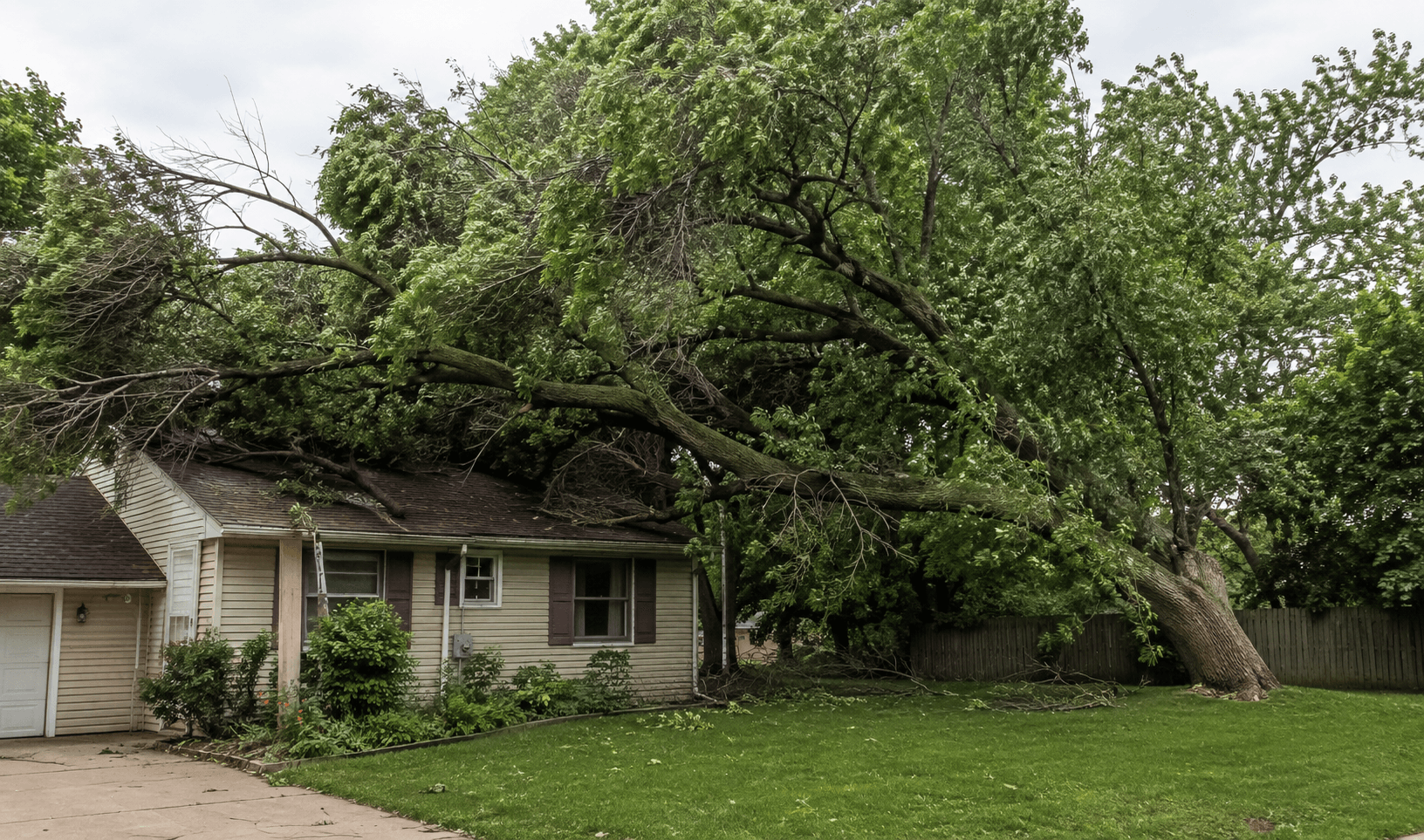
If your tree took storm damage or you're dealing with something urgent instead of routine maintenance, that's a different situation entirely. Our emergency tree service team handles those same day when it's a safety issue rather than a scheduled trim.
How Long Does a Trimming Visit Take?
Most residential trimming visits take anywhere from one to three hours, depending on the tree's size, how much work is needed, and how easy the tree is to access. A large cottonwood with a wide canopy will naturally take longer than a smaller ornamental tree near the house.
Frequently Asked Questions
1. Do I need to be home during the visit?
Not always. Many homeowners aren't present for the actual trimming, though it helps to be there for the initial walkthrough so you can point out specific concerns and get a clear explanation of the plan.
2. Will the crew remove all the debris?
Yes, a reputable crew hauls away or chips all branches and debris before leaving. You shouldn't be left with cleanup work afterward.
3. How often should trees be trimmed?
Most trees benefit from trimming once a year, though some species can go longer between visits if there's no active hazard or overgrowth.
4. Is trimming different from pruning?
The terms are often used interchangeably, but pruning typically refers to more targeted, health focused cuts, while trimming often addresses shape and overgrowth. Either way, both should follow the same careful, standards based approach.
Ready to Book a Visit?
If you're planning your next trimming and want a crew that walks you through every step, our tree trimming services page has more on pricing, timing, and what to expect for your specific property. You can also call us directly at (806) 450-9032 for a free, no obligation quote before we ever pick up a saw.