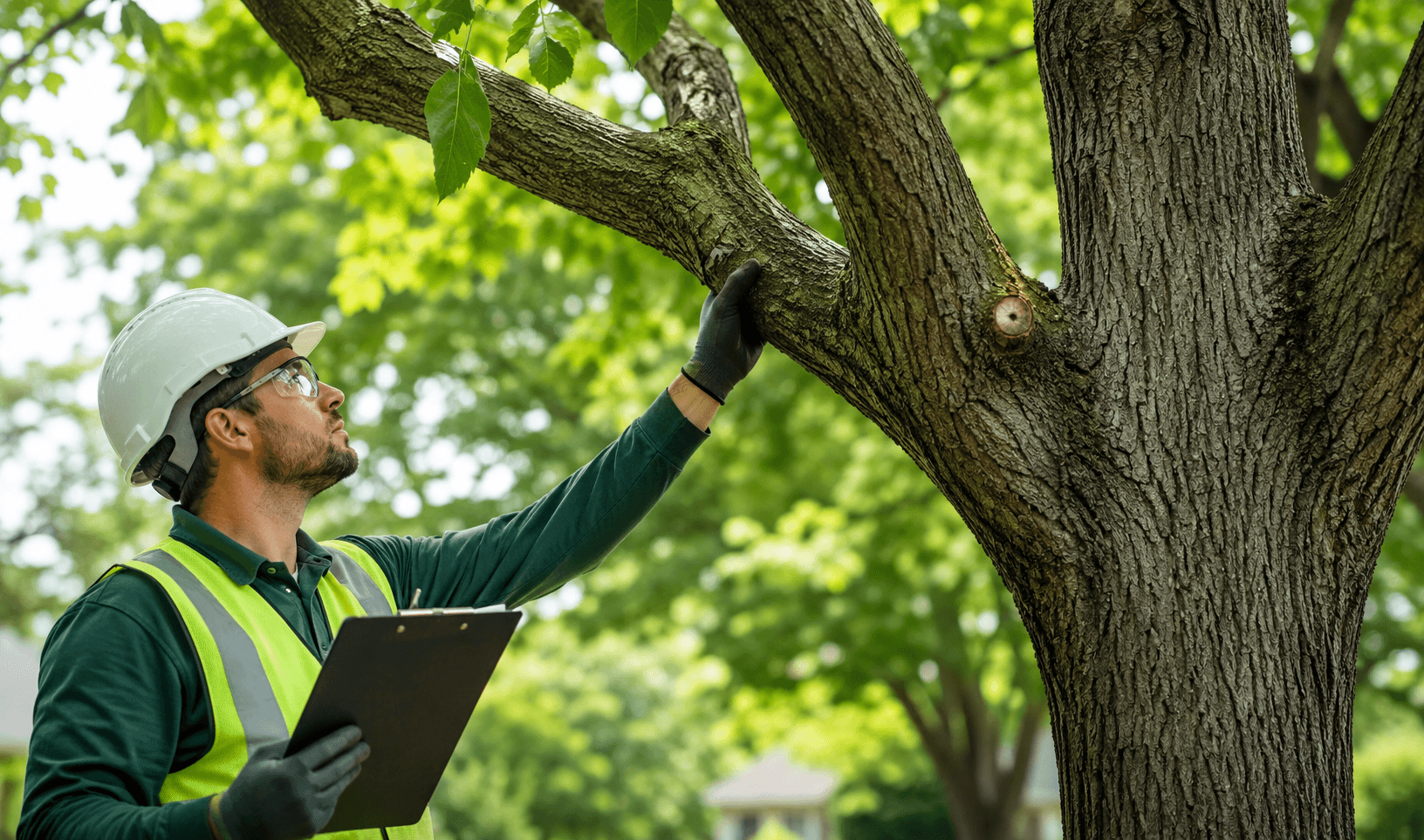
Certified arborists look at five things before a blade ever touches your tree: species and growth pattern, branch structure, signs of disease or decay, timing, and what's nearby that could get damaged if a cut goes wrong. None of it happens by guesswork. A trained arborist walks the property, studies the canopy from multiple angles, and builds a plan before making a single cut, because the wrong cut on the wrong branch at the wrong time can do more harm to a tree than no trimming at all.
If you've ever watched a crew stand around a tree for ten minutes before they even pick up a saw, this is why. Here's exactly what's going through their heads during that walk around, and why it matters for anyone in Amarillo or the Texas Panhandle trying to keep their trees standing through the next dust storm or ice event.
Species and Growth Habit Come First
Every tree species grows differently, and a good arborist treats them differently too. Cottonwoods put on fast, weak wood and drop limbs without much warning. Elms tend to develop tight, narrow branch angles that split under wind load. Honey locusts have an open, airy canopy that usually just needs light shaping rather than heavy reduction. An arborist who knows the local species mix isn't applying a one size fits all approach. They're asking what this particular tree is doing right now: is it pushing new growth in a direction that will crowd a structure in five years, or is the canopy already balanced and just needs cleanup?
This is also where they decide how much can safely come off. Removing more than about a quarter of a tree's live canopy in one visit stresses the tree and can trigger a defensive growth response that makes future problems worse, not better.
Branch Structure and Attachment Points

This is the part most homeowners never think to check, and it's arguably the most important. Arborists look closely at how branches attach to the trunk. A branch with a wide, U shaped attachment is strong. A branch growing at a tight angle, especially one with what's called included bark (bark trapped between two branches growing too close together), is a structural weak point that can fail years later, often without warning, sometimes onto a roof or a car.
They're also checking for codominant stems, which is when two trunks of roughly equal size grow up side by side instead of one clear leader taking over. That configuration is a common cause of trees splitting in storms. Spotting it early, and correcting it while the tree is still young enough to respond well, is one of the biggest reasons early tree pruning pays off later. This is also the point where an arborist decides between crown thinning, crown raising, or crown reduction, and if you want to understand the real difference between those approaches, it's worth a quick read before your appointment.
Signs of Disease, Decay, and Pest Damage
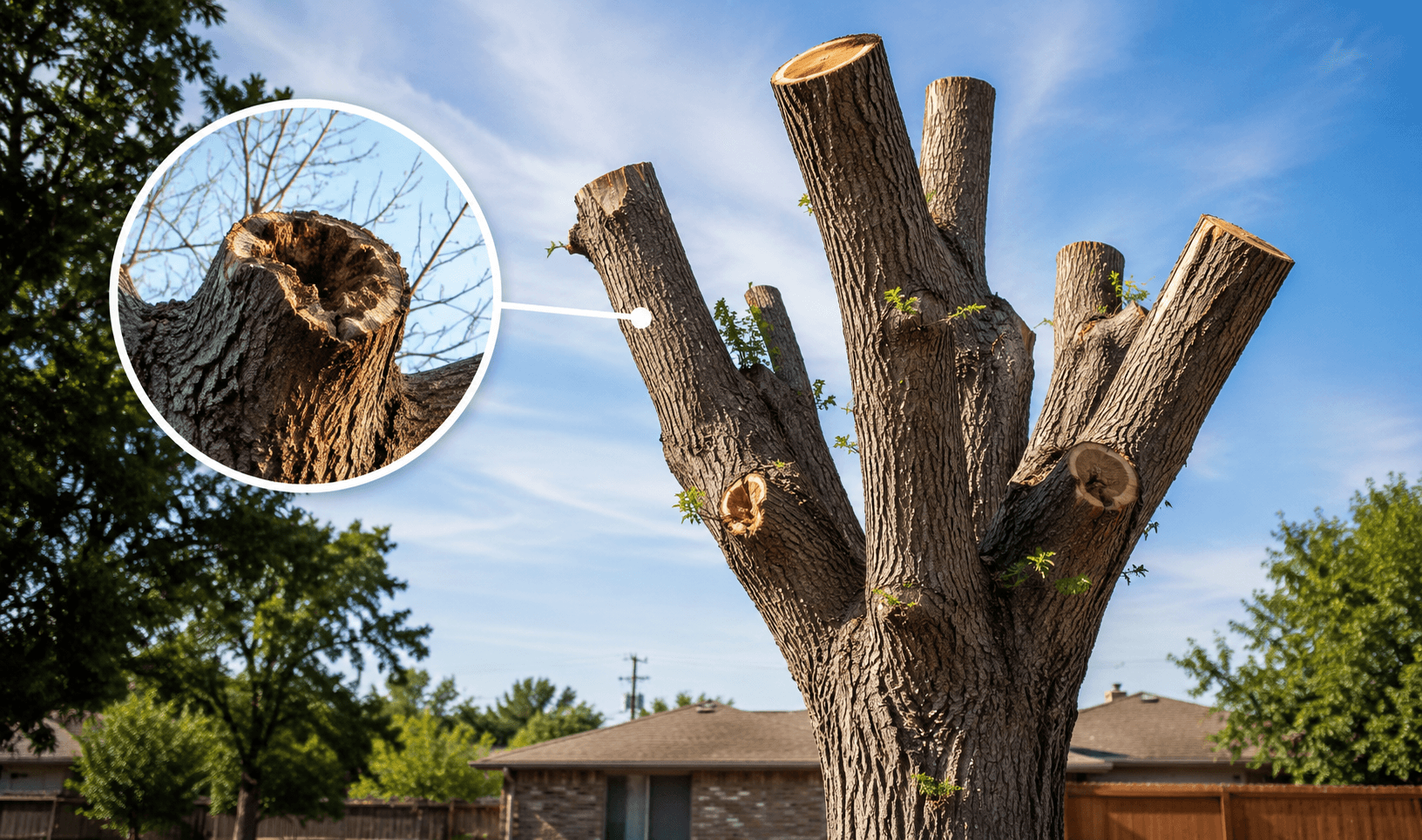
Before making any cut, an arborist is scanning for trouble: cracked bark, oozing sap, fungal growth at the base, hollow sounding wood when tapped, dieback in the upper canopy, or holes that suggest woodpeckers have found something worth digging for (woodpeckers rarely target healthy wood). Any of these can change the entire trimming plan. A tree with internal decay might need a much more conservative approach, or in some cases, the arborist may recommend removal instead of trimming if the risk outweighs the benefit.
This is also where tools matter. A certified arborist disinfects blades between trees, and sometimes between cuts on the same tree, to avoid spreading disease from one plant to another. It's a small step that gets skipped by crews without real training, and it's one reason certification matters as much as it does.
Deadwood and Storm Damage
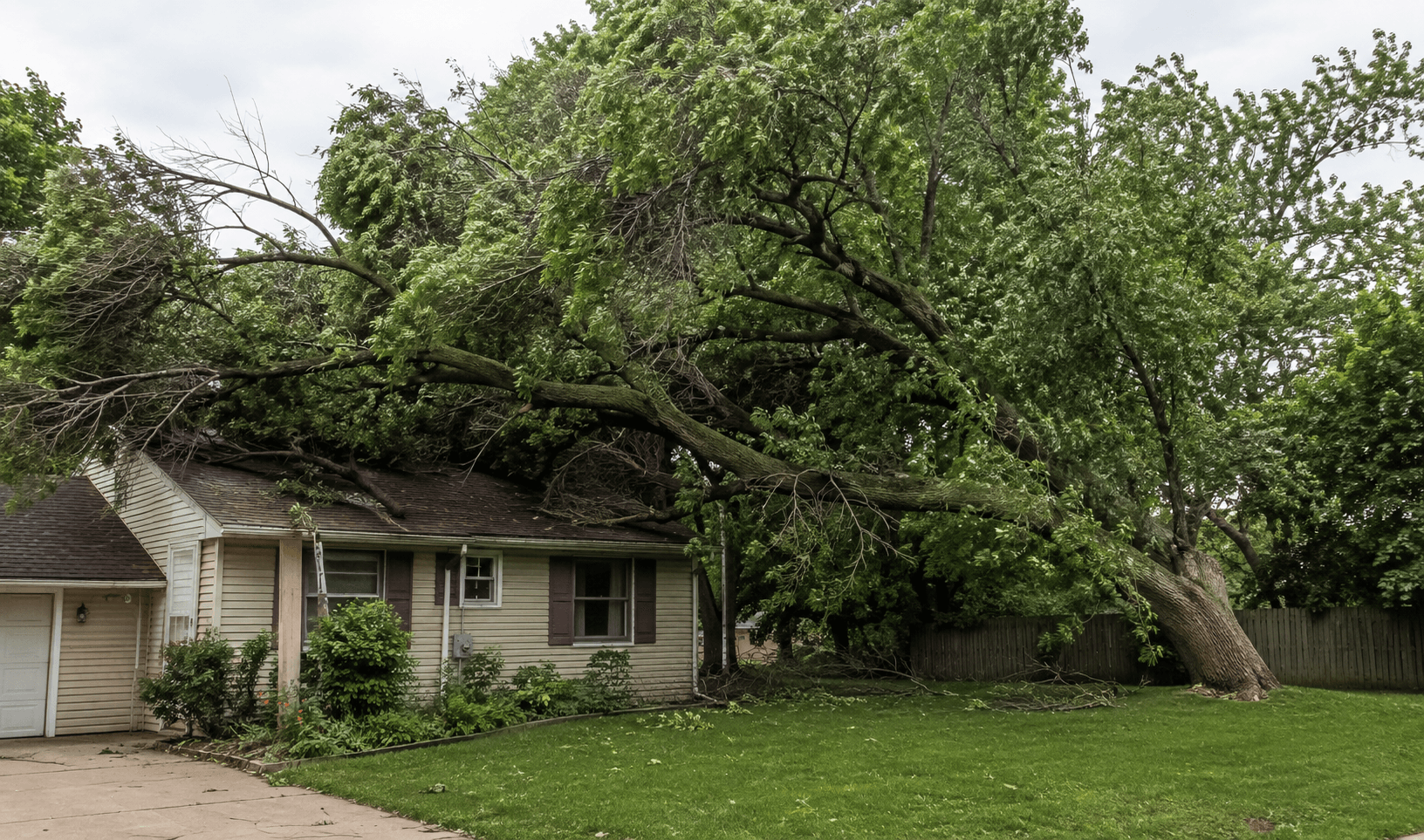
Dead branches don't behave like living ones. They're brittle, they don't bend in the wind, and they're one of the leading causes of property damage during Panhandle storms. Arborists specifically look for deadwood throughout the canopy, not just the obviously bare limbs, because a branch can be dead on the inside while still holding a few leaves. They also check for cracks, splits, and hanging limbs left over from a previous storm that never got fully addressed.
If your tree took a hit during a recent dust storm or high wind event, this assessment step becomes the priority before anything else happens. Left unaddressed, a cracked limb can fail weeks or months later with no warning at all.
Timing and the Panhandle Growing Season
When a tree gets trimmed matters almost as much as how it gets trimmed. In the Texas Panhandle, late winter, roughly January through early March, is generally the best window because trees are dormant and handle the work with less stress. Trimming during active spring growth can slow healing and, depending on species, make the tree more attractive to certain pests and diseases. An arborist checks the calendar and the tree's current growth stage before deciding whether a job is routine maintenance or something that needs to happen now regardless of season, like a dead limb hanging over a driveway.
For a closer look at how this plays out locally, our post on how often trees actually need trimming in the Texas Panhandle breaks down realistic timelines by species.
What's Nearby: Structures, Power Lines, and People
A tree doesn't exist in isolation, and neither does the trim job. Arborists map out what's within falling distance of every major limb: the roof, a fence line, a parked car, a power line, a neighbor's yard, or a walkway people use every day. This changes the cutting order, the direction each piece is dropped, and sometimes the equipment needed. Work near overhead lines in particular calls for extra caution and, in some cases, coordination with the utility company rather than DIY effort.
This step is also where an arborist decides whether the job is a straightforward tree trimming visit or something that needs a larger crew, rigging, or a different access plan entirely.
Choosing the Right Cuts and Tools
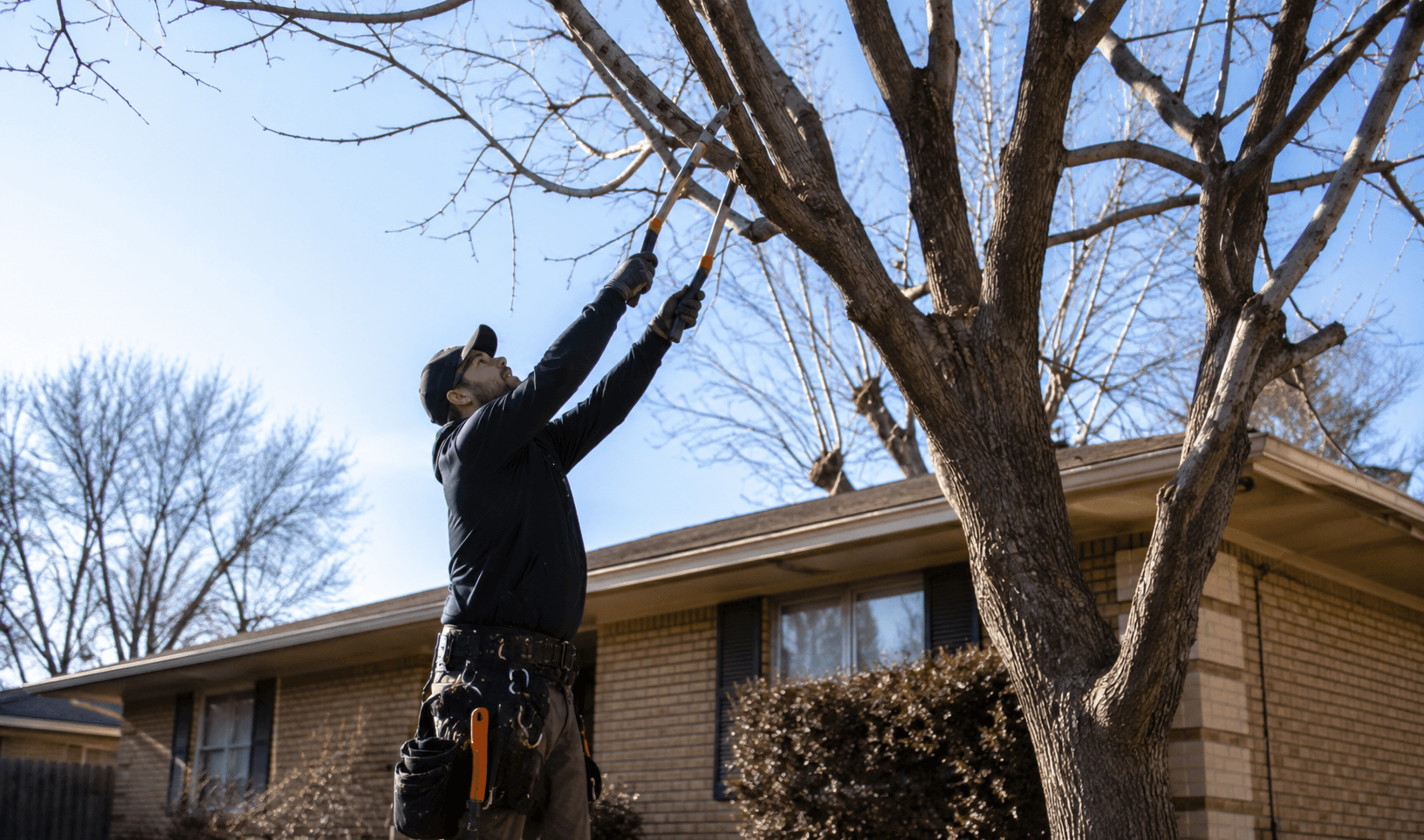
Finally, arborists plan the actual cuts. Every cut is made just outside the branch collar, the slightly swollen area where a branch meets the trunk, because cutting flush against the trunk removes the tree's natural ability to seal the wound. Tools are matched to branch size: hand pruners for small growth, loppers or pole saws for mid sized limbs, chainsaws for larger cuts, always kept sharp so the cut is clean rather than torn. A torn or ragged cut heals slower and opens the door to decay and pests.
None of this is visible to a homeowner watching from the yard, but it's the difference between a tree that heals cleanly and one that develops problems two or three years down the road.
Why This Assessment Actually Matters
Skipping this process is exactly how trees get damaged by well meaning but untrained trimming. Topping, over thinning, and flush cuts are among the most common mistakes, and they're avoidable with a proper assessment first. If your tree has been showing signs it needs attention, it's worth reading through the warning signs an Amarillo tree needs trimming before deciding whether to wait or call someone out.
Frequently Asked Questions
1. How long does an arborist's assessment take before trimming starts?
For a typical residential tree, the walkaround assessment takes a few minutes to about twenty, depending on size and how many concerns come up. Larger or more complex trees, especially those near structures or power lines, take longer.
2. Do I need to be home for the assessment?
It helps, mainly so the arborist can point out specific concerns and explain the plan, but it isn't required if you're comfortable getting a written summary afterward.
3. Can a tree be too far gone to trim safely?
Yes. If decay has compromised too much of the trunk or major limbs, trimming won't fix the underlying structural risk, and removal may be the safer recommendation.
4. Is a free estimate visit the same as a full arborist assessment?
It covers the same core checks (species, structure, health, hazards) but focused on scoping the job and pricing it accurately, rather than a formal diagnostic report.