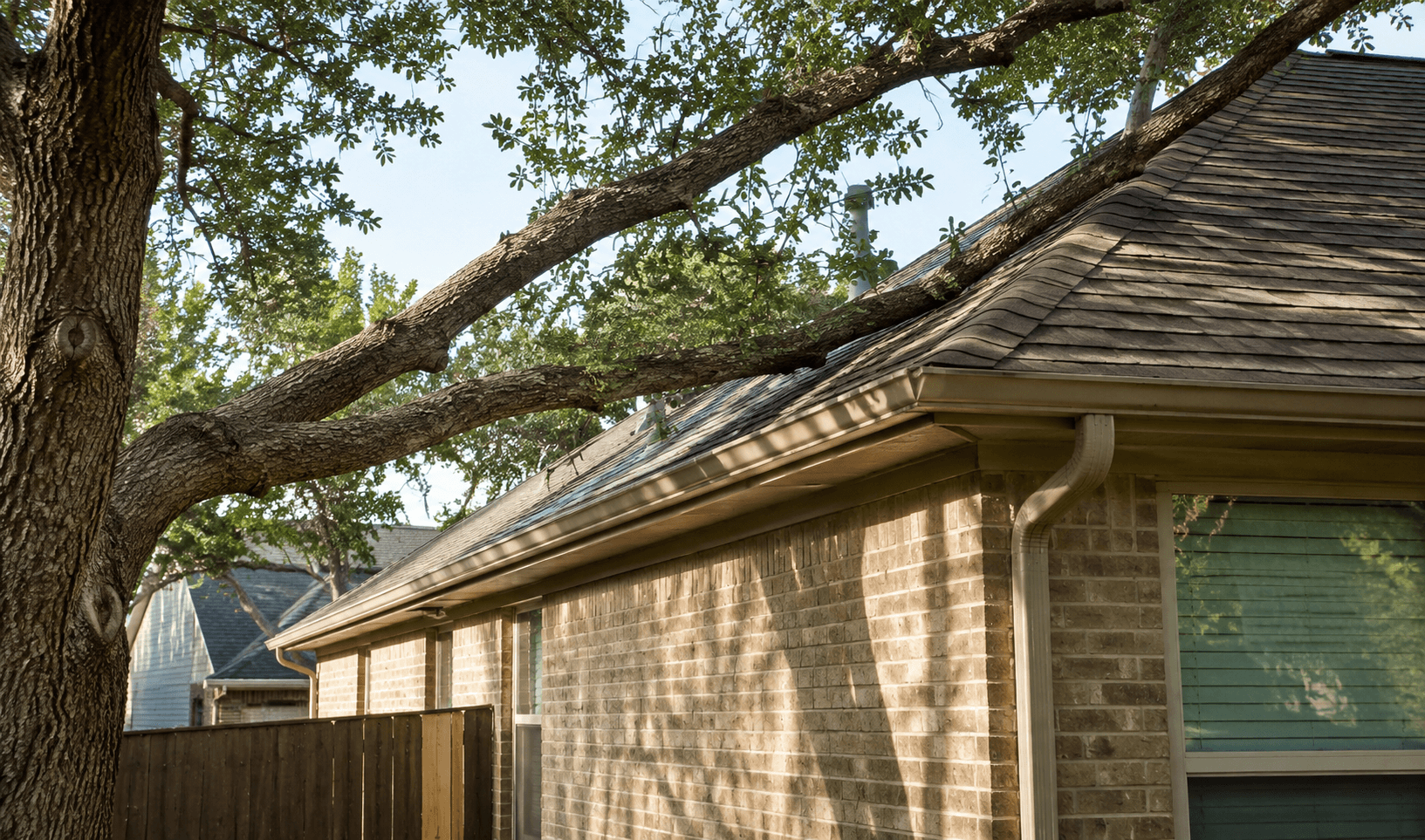
Branches should stay at least ten feet away from your roofline, siding, and gutters, and no part of a mature tree should ever touch your home. That's the number most certified arborists agree on, but the real distance you need depends on the tree's mature size, its species, and how much wind your property sees each year. In Amarillo, where Panhandle gusts regularly top 40 mph, that buffer often needs to be even wider.
If you're staring up at a cottonwood or elm that's crept closer to your roof than you'd like, here's what actually determines a safe distance, and what to do about it.
Why This Distance Matters More in the Texas Panhandle
Most tree spacing guides are written for calmer climates. Amarillo doesn't have that luxury. Our region sees frequent high wind events, spring dust storms, and the occasional ice event, all of which put extra stress on limbs that are already close to a structure. A branch that might be a minor nuisance in a sheltered suburb somewhere else can become a serious hazard here once a 50 mph gust catches it.
Add in our clay heavy soil, which shifts as it dries and swells with moisture, and you get root systems that behave differently than textbook averages suggest. That's part of why local recommendations tend to run a little more conservative than what you'll find in a generic gardening article.
The General Rule, Broken Down by Tree Size
Distance requirements scale with how big a tree will eventually get, not how big it is today. Use these ranges as a starting point:
1. Small ornamental trees (under 20 feet at maturity): Keep them at least eight to ten feet from the house. Redbuds and crabapples fall into this group.
2. Medium trees (20 to 40 feet at maturity): Plan for 15 to 20 feet of clearance. Many locust varieties land here.
3. Large shade trees (40 feet and taller): Give these 25 to 35 feet minimum. Cottonwoods and mature elms, two of the most common trees in Amarillo yards, both belong in this category, and their canopy spread often exceeds their height.
These figures describe the trunk's distance from the foundation. Branch clearance from the roof and walls should still be ten feet minimum, regardless of species, once the tree reaches full size.
What Happens When Branches Get Too Close

It's not just about looks. Branches that hang over or brush against a house create several compounding problems.
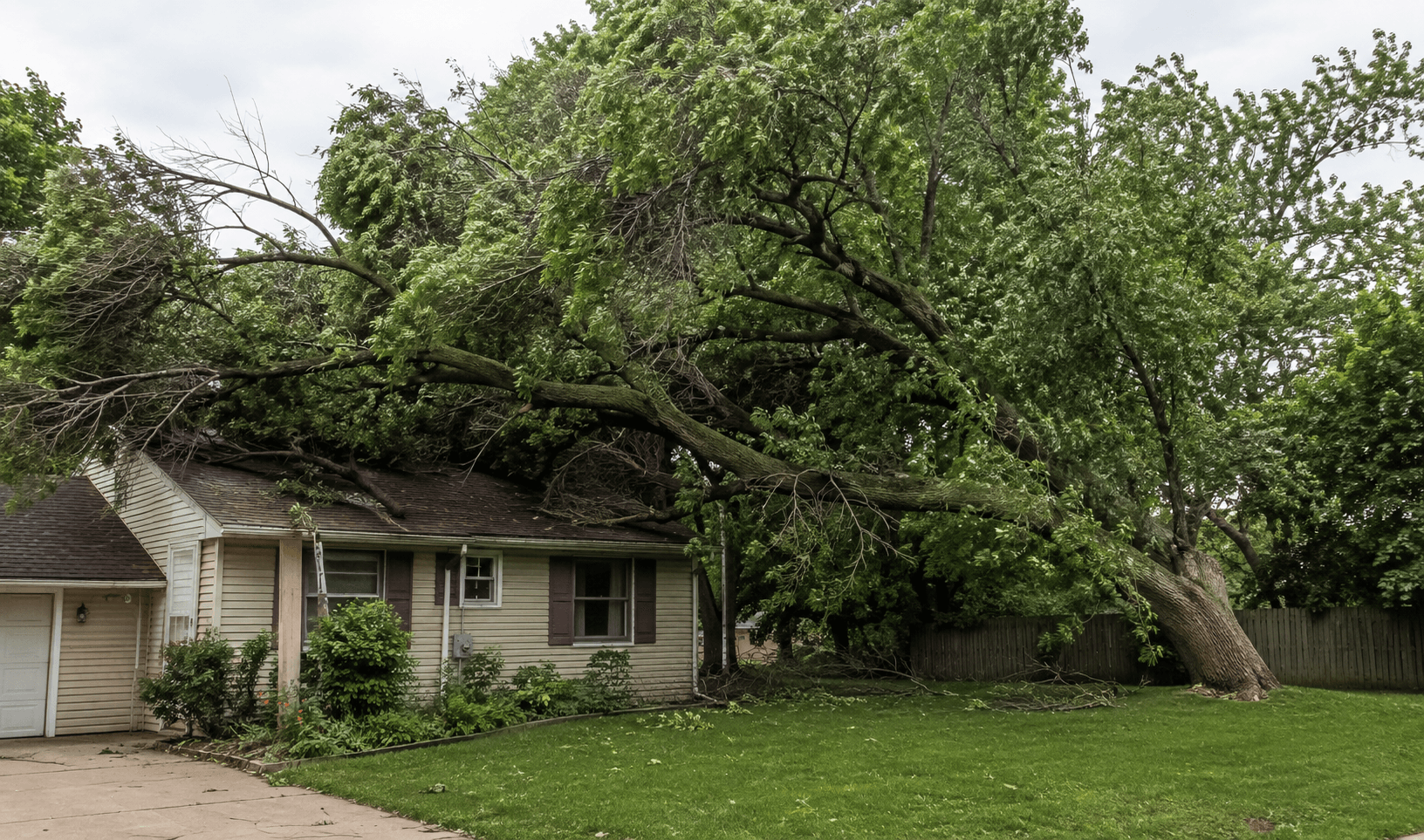
Constant contact wears through shingles and siding faster than normal weathering would. During a windstorm, that same contact turns into repeated scraping or, worse, a limb strike that punches through a roof deck. Overhanging canopy also traps moisture against the roofline, which invites mold, mildew, and rot in ways a sun exposed roof never experiences.
Then there's the wildlife factor. Squirrels, raccoons, and various insects treat a touching branch as a bridge straight into your attic. Once they're in, the cost of dealing with an infestation usually outpaces whatever the original trim would have cost.
Signs Your Trees Have Already Crossed the Line
A few red flags tell you it's past time to act:
Branches that touch the roof, gutters, or siding even in calm weather. Limbs low enough that they scrape a second story window. Leaves or debris collecting on the roof after every windy day. Visible rubbing marks or bark wear where a branch meets the structure.
If any of these sound familiar, it's worth reading through our breakdown of signs your Amarillo tree needs trimming right now, which covers the warning signs in more detail before they turn into an emergency call.
The Local Species That Push the Limits Fastest

Not every tree grows at the same rate, and that matters when you're judging clearance.
Cottonwoods are notorious around Amarillo for fast, wide growth, sometimes adding several feet of canopy spread in a single good growing season. Siberian elms follow a similar pattern and are prone to weak branch unions, meaning limbs can fail even when they look healthy. Honey locust trees grow more slowly but eventually spread wide enough to surprise homeowners who planted them thinking they'd stay compact.
If you're not sure which category your tree falls into, an onsite look from someone familiar with Panhandle species is far more reliable than a general online chart.
Pruning or Removal: How to Tell Which One You Need
Not every tree that's crept too close needs to come out. In many cases, a properly planned pruning schedule keeps a large, healthy tree safely away from the house indefinitely. The tree stays, the canopy gets shaped back, and the homeowner keeps the shade and curb appeal.
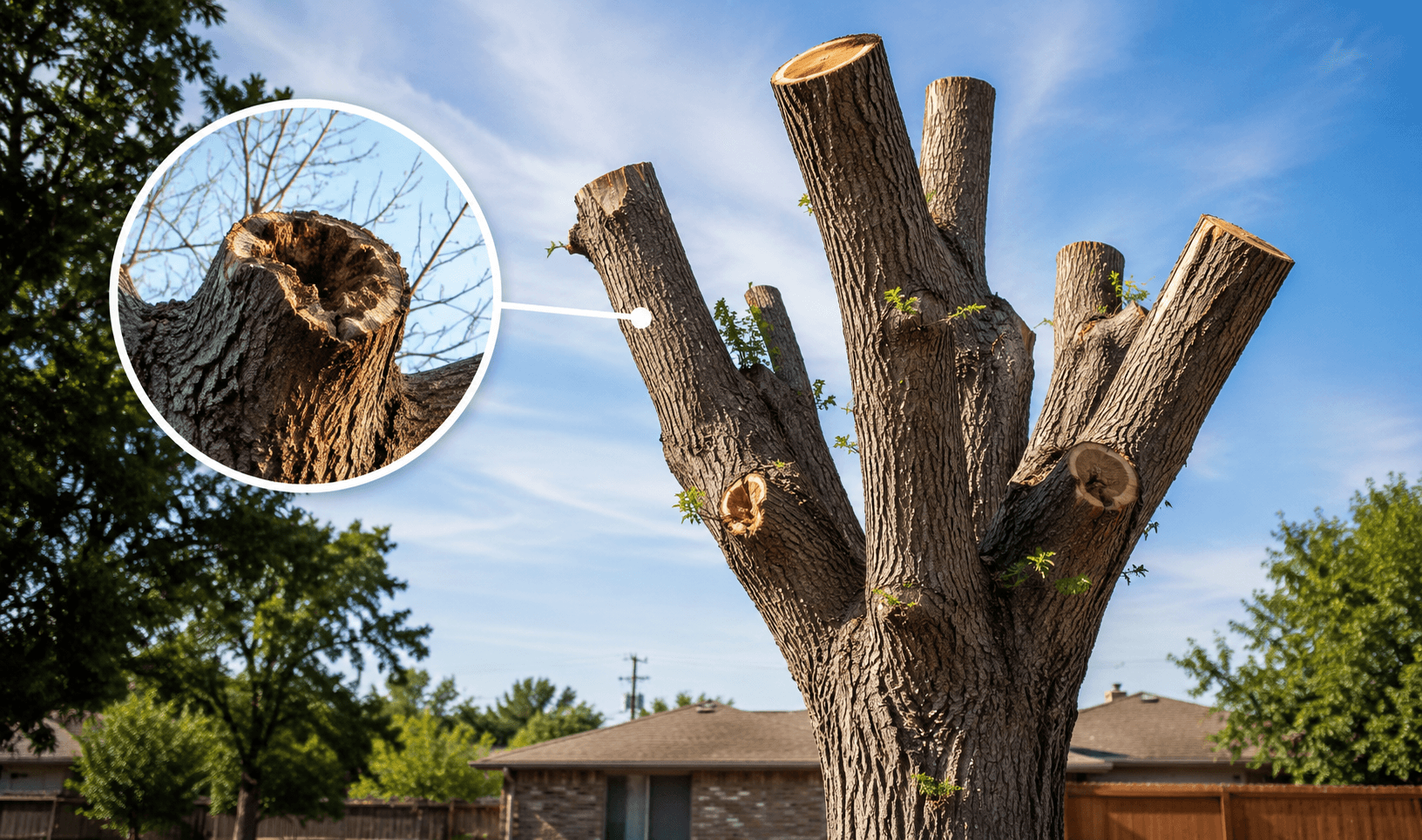
Removal becomes the better call when the tree's structure is already compromised, when the trunk itself is too close to the foundation for any amount of trimming to fix, or when repeated storm damage has left the tree unstable. Our guide comparing tree trimming and tree pruning walks through how each approach affects long term tree health, which is useful reading before you decide.
When to Bring in a Professional

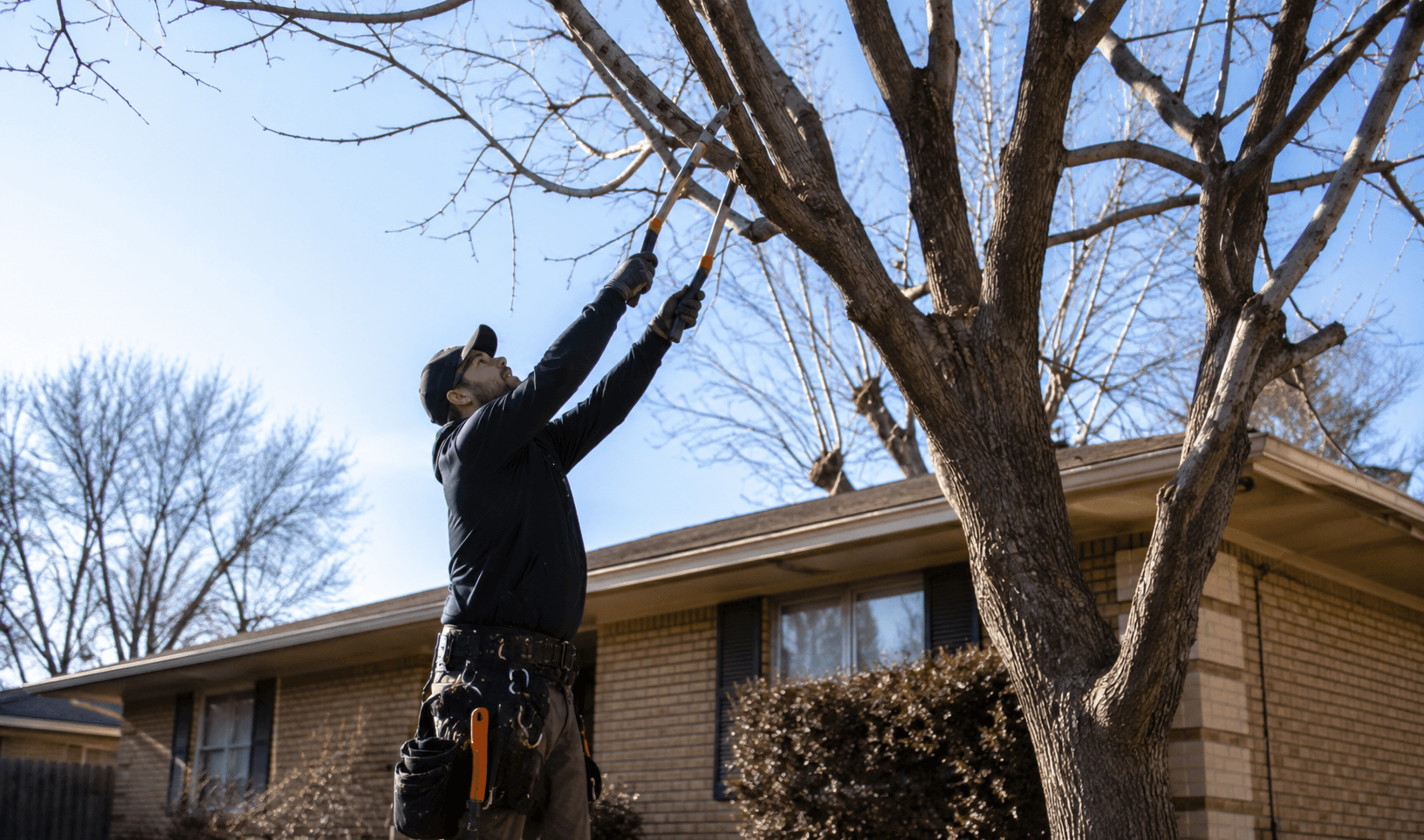
A homeowner with a pole saw can handle small ornamental branches. Anything involving a ladder, a large limb, or proximity to power lines is a different situation entirely. Misjudged cuts on a large branch can send it toward the roof instead of away from it, and climbing near a structure without the right equipment is how most tree related injuries happen.
If your trees are within that critical ten to twenty foot zone, a professional tree trimming service can assess canopy weight distribution and remove the right limbs without destabilizing the tree. For trees that need more precise, health focused cuts rather than a full clearance trim, tree pruning is the better fit. And if a storm has already brought a limb down against your house, don't wait, our team handles those situations as part of our emergency response work.
Frequently Asked Questions
1. How close is too close for a tree branch to a house?
Any branch that physically touches the roof, siding, or gutters is too close. Even a gap of less than ten feet is considered risky once the tree reaches full size.
2. Can tree roots damage a house even if branches are far away?
Yes. Root systems and canopy spread aren't always symmetrical, so a tree can have safe branch clearance while its roots still reach toward the foundation, particularly in clay soil that shifts with moisture.
3. Do I need a permit to trim branches near my house in Amarillo?
Generally no, for routine trimming on your own property, though some HOAs have their own guidelines. It's worth checking your neighborhood's rules or asking a local tree service before major removal work.
4. What's the fastest way to know if my tree needs trimming?
Look for branches resting on or near the roof, visible wear marks on the bark where it meets the house, and debris buildup on your roofline after windy days.
5. Is it cheaper to trim now or wait until a branch falls?
Trimming proactively almost always costs less than storm damage repair, roof replacement, or emergency removal after a limb failure.
If you're unsure whether your trees meet a safe distance, a quick onsite assessment settles it fast. Contact us for a free estimate, and we'll tell you honestly whether your trees need a trim, a full prune, or nothing at all.